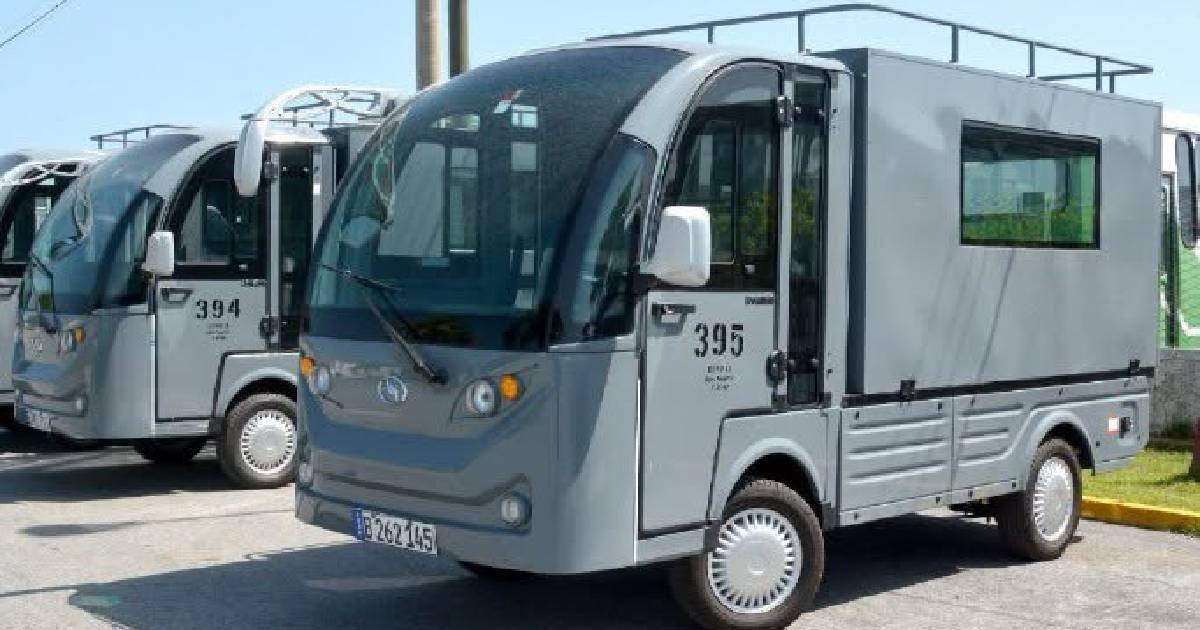
In Pinar del Río, funeral service drivers were left idle at home due to a lack of operational vehicles, as admitted by a provincial official this week, according to the state-run ACN agency. This disclosure was buried beneath the celebratory tone of the official report announcing the arrival of seven new hearses in the province.
Alberto Weekes Hernández, the general director of the provincial passenger bus company, acknowledged that these new vehicles are a much-needed "boost" for the organization, stating that the drivers had been homebound due to fuel shortages.
The newly acquired fleet consists of four combustion vehicles and three electric ones, purchased with funds from the Ministry of Transport to enhance public transportation, as explained by Carlos Rodríguez González, the provincial Transport delegate.
The vehicles have been distributed with one going to the municipalities of Guane, Mantua, and Sandino; another to Consolación del Sur; and the remainder to the provincial capital. This allocation is particularly significant as, in January 2025, mourners in Consolación del Sur were forced to carry a coffin to the cemetery on foot due to the absence of funeral transport.
The electric vehicles boast a range of 120 kilometers and can be fully charged in three and a half hours using the National Electric System, according to Luis Alberto Palacios Rivero, a transport operation technician. These will be operated by a single driver, while the combustion vehicles will require two.
The breakdown of funeral services is not unique to Pinar del Río. On July 13, a deceased woman in Holguín was transported to the cemetery using a pair of oxen because the hearse had no fuel. In February 2025, Ciego de Ávila was operating only eight out of its 19 hearses.
The regime has responded with staggered measures that have failed to address the structural deficit: in May 2026, the government announced the arrival of Chinese-made JMC pickup hearses at the Port of Mariel; the Ministry of Transport is collaborating with the Union of Military Industry to assemble 50 electric hearses for municipalities across the country; and in Havana, the state company ServiAxess has operated 15 electric vehicles since December 2025.
The timing of the delivery is no coincidence: Pinar del Río was chosen as the venue for the national central event on July 26, marking the 73rd anniversary of the Moncada and Carlos Manuel de Céspedes barracks assaults. The ACN report explicitly notes that the province is the "host of the central event for July 26" as part of the justification for the service improvements.
The new hearses join electric vehicles from Tabacuba and a diesel minibus that also recently arrived in the province, yet the acknowledgment that drivers have been out of work for some time highlights the depth of the crisis that these seven vehicles are only beginning to address.
Challenges Facing Funeral Services in Cuba
What caused funeral drivers in Pinar del Río to stay at home?
Funeral drivers in Pinar del Río were unable to work because there were no operational vehicles available due to fuel shortages, as confirmed by a provincial official.
How is the Cuban government addressing the funeral service crisis?
The government has implemented phased measures including the arrival of Chinese-made hearses, collaboration with the Union of Military Industry to assemble electric vehicles, and the operation of electric hearses by state companies.
What is the significance of the new vehicle distribution in Pinar del Río?
The distribution of new vehicles is crucial as it begins to address the severe shortage, exemplified by past incidents where mourners had to carry coffins on foot due to the lack of transport.