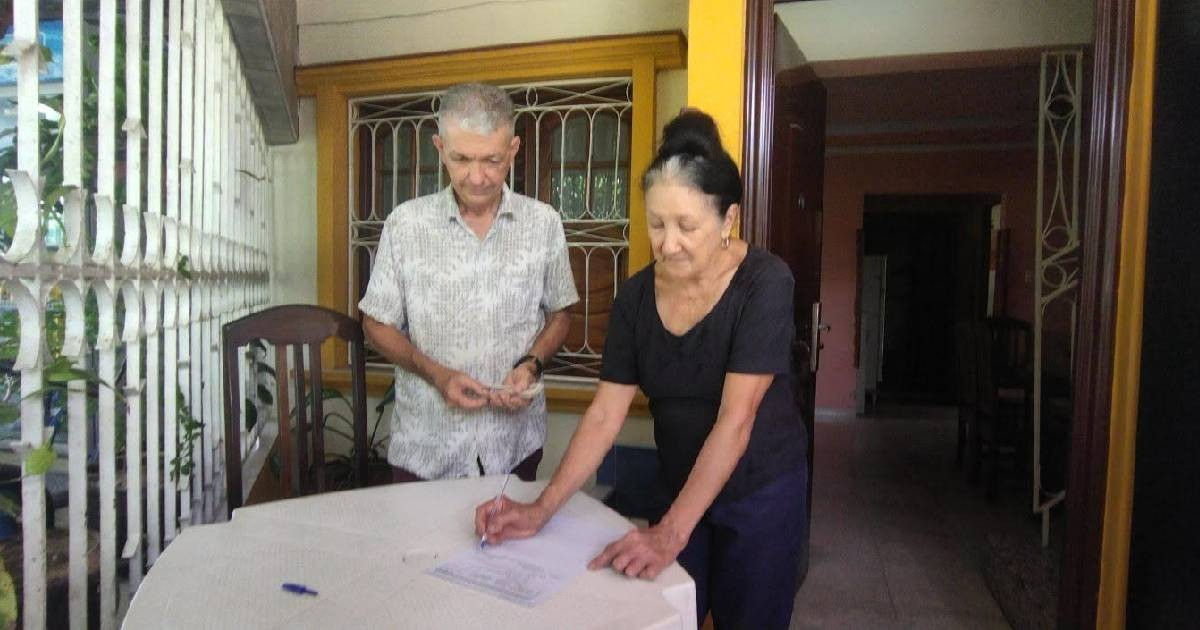
The state-run outlet Cubadebate published a report titled "A Shorter Path to the Pension" on Thursday, portraying a new payment system as progress. This system involves private micro-enterprises and self-employed workers delivering cash pensions to retirees near their businesses.
The public's reaction, however, is a mix of relief and skepticism: "Hope the path isn't utopian."
The report highlights the story of Deisy Rodríguez, an 84-year-old woman who no longer has to travel long distances to collect her pension. According to the article, Roberto Alejandro González Quintero, the manager of the micro-enterprise "Los Garajes," provides her with the money directly.
The New Pension Payment Mechanism
The business receives a "mini-payroll" containing the retiree's name, identification number, and the exact amount. It has up to 72 hours to present the documentation to the bank, which then automatically reimburses the account.
In Colón, approximately 40 retirees are already benefiting from this setup through one micro-enterprise and two self-employed workers, as reported by Radio Caibarién.
A System with a Past
This system is not entirely new. It started as a pilot program in April 2026 in four Havana municipalities—La Lisa, Playa, Plaza de la Revolución, and Old Havana—under the name "Caja Extra."
By May, it expanded to Holguín, where about 20 micro-enterprises began servicing pensions for nearly 5,000 retirees, representing 9.6% of the municipal total.
Economic Measures Amidst Collapse
On July 17, the Central Bank of Cuba announced a package of 176 emergency economic actions, which includes this payment method, the issuance of new 2,000 and 5,000 peso bills, and the indefinite removal of the 5,000 peso limit for cash transactions between economic entities.
The monthly cap for electronic transfers was also increased to 2.5 million pesos, as per Resolution 74/2026 effective July 20.
The backdrop of these changes is one of collapse. Over 1.7 million Cuban retirees receive pensions of less than $10 per month and must line up at dawn to withdraw cash, according to Infobae. The minimum pension was set at 4,000 pesos—about seven or eight dollars—from September 2025.
Worsening Provincial Situations
In the provinces, the situation is even more dire. Granma's government admitted in June it lacked enough cash to pay over 111,000 retirees. That same month, Banco Metropolitano reduced the withdrawal limit from 5,000 to 3,000 pesos per transaction, and in May, more than 50% of the country's ATMs were non-operational.
The compulsory banking system pushed by the regime has failed in practice. In April, even the official press acknowledged that "banking works poorly," with Cubans complaining that "the card is only good as a keychain." The government's touted banking process flounders amid cash shortages and public mistrust.
Cubans' Distrust Persists
On July 19, RTVE described "endless lines" to collect pensions worth barely four euros and warned that the Cuban monetary system is "on the brink of collapse," noting that "retirees are the hardest hit" by the crisis.
Cubadebate's report paints the scheme with a human and optimistic tone, but the public's response encapsulates the pent-up distrust after years of unmet promises: "Hope the path isn't utopian."
Understanding Cuba's Pension Payment Changes
What is the new pension payment system in Cuba?
The new system allows private micro-enterprises and self-employed workers to deliver cash pensions directly to retirees near their businesses, aiming to reduce long travel distances for pension collection.
How widespread is this new payment method?
Initially piloted in four Havana municipalities, the system has expanded to Holguín and is now benefiting retirees in Colón, with plans to grow further.
Why are Cubans skeptical about this initiative?
Many Cubans remain doubtful due to a history of unfulfilled governmental promises and ongoing economic hardships, including cash shortages and banking issues.