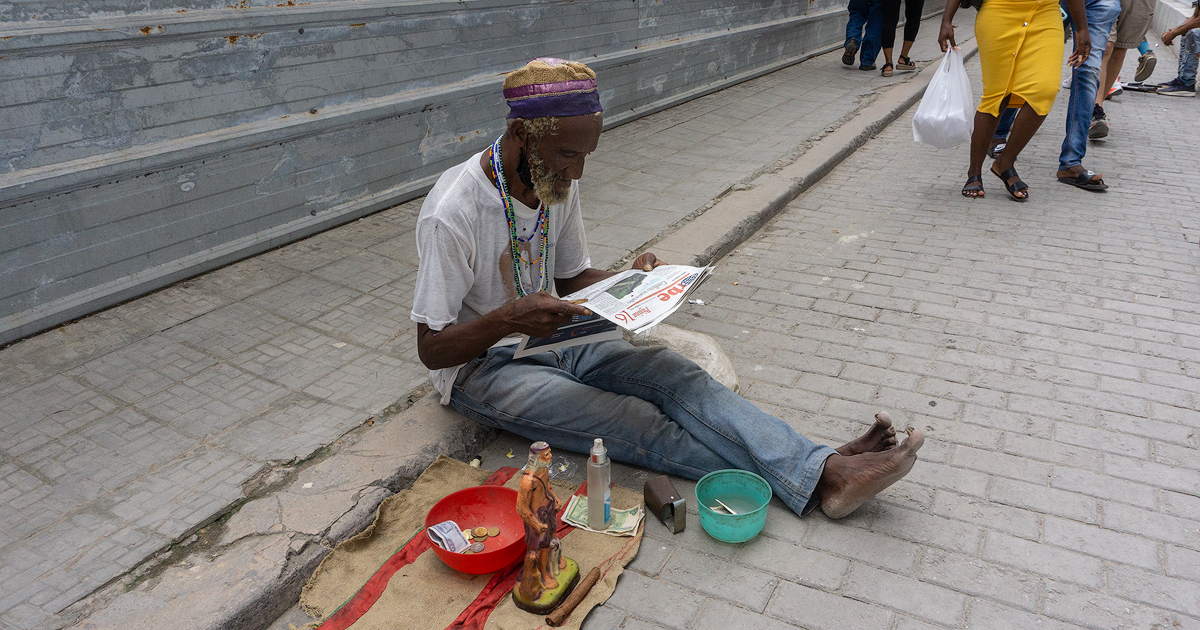
One of the earliest signs of a democracy in decline is the erosion of a fundamental right: the right to access the truth.
Authoritarian regimes do not always start by stripping away all freedoms at once. Often, the initial step is subtler: controlling the flow of information, dictating what can be said, published, and which reality the populace should accept.
The Cuban experience stands as one of the longest-running examples of this phenomenon in Latin America. From the early days of the revolution, those in power realized that controlling information was tantamount to controlling the collective consciousness.
Truth as State Property
When the state transforms truth into its own commodity, society becomes defenseless. Citizens cease to be active participants in public life and instead become passive recipients of a dictated narrative.
The concept of a singular truth as a tool of power is perilous: it asserts that there is only one truth, owned by the government. Independent media vanish, criticism becomes criminalized, and dissent is painted as betrayal.
The Cuban Media: A Political Extension
In Cuba, for decades, the official press has operated as an arm of the political power. The state's narrative infiltrates all platforms: television, radio, newspapers, educational institutions, and social organizations. The impact is profound: entire generations may grow up exposed to a single version of history, a unilateral explanation for national issues, and a singular answer for all failures. Without a contrast of ideas, propaganda replaces critical thought.
Controlling Speech to Control the Citizenry
Authoritarian governments recognize that an informed society is harder to manipulate. Thus, censorship aims not only to prevent the publication of criticism but also to instill fear. Citizens learn that certain questions may have repercussions, certain opinions must be kept to themselves, and caution can become a means of survival.
History shows that no society remains free when its people are fearful of expressing their thoughts. Enforced silence does not equate to agreement; it often signifies fear.
The Internet's Role in Challenging the Monopoly
For decades, the Cuban state nearly monopolized the flow of information. However, with the advent of the internet and social media, small windows to alternative realities began to open. Cubans started sharing images of daily life: shortages, blackouts, protests, economic deterioration, and calls for change.
As reality began to extend beyond the official narrative, authoritarian regimes typically responded with increased surveillance, restrictions, and persecution of those using information as a tool for citizenship.
A Lesson Beyond Cuba
The Cuban lesson serves as a warning for the entire continent. Democracies must not wait for elections to vanish before defending their freedoms. A democracy starts to falter when the free press is attacked, when opponents are silenced, and when a government seeks to become the sole arbiter of truth.
The danger is not solely in shuttering newspapers or radio stations. It also lies in creating societies where a portion of the population accepts that only one voice has the right to be heard.
History teaches that no power that controls information remains unchallenged indefinitely. Official lies may persist for years, but eventually, reality prevails.
Cuba offers a stark lesson: a nation where the state dictates what to think, remember, and say gradually loses a critical part of its freedom. The freedom of information is not just a privilege of journalists; it is a right of all citizens. Because when a nation loses the ability to hear diverse voices, it also loses the ability to correct its mistakes.
The first battle for freedom begins in a seemingly simple place: the defense of the truth.
Understanding the Impact of State-Controlled Information in Cuba
How does controlling information affect a society?
Controlling information limits access to diverse perspectives, leading to a less informed population that is easier to manipulate. It creates an environment where citizens may fear expressing opinions, stifling public discourse and innovation.
Why is the Cuban media considered an extension of political power?
In Cuba, the media is tightly controlled by the state, ensuring that only the government's narrative is broadcast. This results in the suppression of independent journalism and the promotion of propaganda that aligns with the state's interests.
What role does the internet play in challenging state narratives?
The internet provides a platform for sharing diverse viewpoints and real-time information that may contradict official state narratives. It empowers citizens to communicate and organize, challenging the state's control over information.