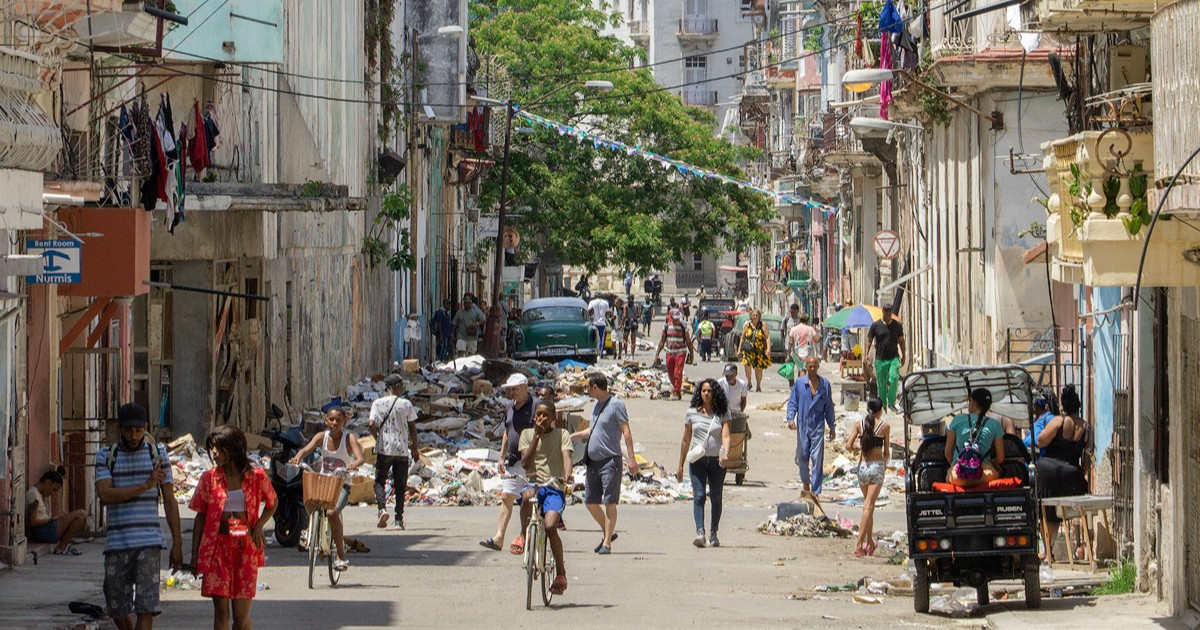
In a gathering held in Miami, a group of business leaders, academics, and engineers assessed that restoring Cuba's infrastructure, which has deteriorated over decades under Castro's communist regime, could demand between $275 billion and $375 billion and take approximately 10 to 15 years.
These evaluations were put forward during the "Initiative for a Democratic and Economic Alternative for Cuba" forum, hosted at the American Museum of the Cuban Diaspora.
More than a dozen experts specializing in energy, civil engineering, urban planning, and economics gathered to tackle a pressing question: How much money and time would it take to rebuild the nation in the event of a democratic transition?
Rafael Romeu, president of the Association for the Study of the Cuban Economy, projected that merely the initial 180 days of stabilization would necessitate between $180 million and $270 million. This funding would predominantly come from private U.S. investors rather than governmental aid.
Significant Challenges in Energy Revitalization
The energy sector was a major focus of the discussions. Jorge Piñón, a researcher at the University of Texas Energy Institute, highlighted that revamping Cuba's electrical grid could cost between $5 billion and $8 billion, requiring three to five years to complete.
"These plants are worn out, outdated, and rely on poor technology while using Cuban crude that exacerbates the energy system's decline," Piñón explained. He emphasized that more than a dozen power-generating units have been operational for over 40 years.
Piñón also noted that any contracts with floating power plant providers would be dependent on a future democratic government repaying debts exceeding $100 million and offering financial assurances to investors.
Water and Sewage: Another Major Undertaking
The water and sewage systems present a challenge of similar scale. Josenrique Cueto, former interim director of the Miami-Dade County Water and Sewer Department, estimated the cost of this sector at around $8 billion.
"An initial recovery might be achievable in about 24 months. However, establishing a stable and consistent system would take a minimum of five to ten years," Cueto stated.
Transportation Infrastructure and Private Investment
Regarding transportation, Carlos A. Penín, president of CAP Engineering, emphasized that private capital would not invest without guaranteed returns. "The government needs a plan to allocate funds annually for road maintenance. The private sector won't participate unless there are tolls to ensure a return on their investment," he explained.
The forum's attendees agreed that sectors such as tourism, telecommunications, and the cruise industry could progress more swiftly and generate essential revenue to support subsequent phases of reconstruction.
Political Context and Future Prospects
The forum coincided with a statement by Secretary of State Marco Rubio in the Philippines, where he remarked that Cuba poses a direct threat to U.S. national security, labeling it a "failed state." Rubio reiterated Washington's aspiration for a prosperous Cuba, though he abstained from discussing specific timelines or actions beyond current pressures.
On July 11, Rubio disclosed that the U.S. had formally offered reconstruction assistance, contingent upon tangible political and economic reforms.
The forum reached a consensus that no plan could be enacted without a regime change. In this regard, Marcell Felipe, president of the American Museum of the Cuban Diaspora, articulated a clear and direct message.
"Cuba's future could be remarkably bright. We have the human talent, the capability, and private capital in exile ready to invest promptly in rebuilding the country without American government involvement, but this hinges on a crucial factor: regime change. This won't happen as long as the Castro and Díaz-Canel families lead the system."
This forum is part of a broader initiative that includes various exile organizations, such as the FIU Cuban Studies Institute, the Association of Cuban-American Engineers, and the Foundation for Human Rights in Cuba. In September, a forum focused on Cuba's legal system, featuring jurists, is scheduled as part of the same planning agenda.
Key Questions About Cuba's Reconstruction
What is the estimated cost to rebuild Cuba's infrastructure?
Experts estimate that rebuilding Cuba's infrastructure could cost between $275 billion and $375 billion.
How long might it take to complete Cuba's reconstruction?
Reconstruction could take approximately 10 to 15 years, according to specialists.
What challenges does Cuba face in rebuilding its energy sector?
Revamping the energy sector may cost between $5 billion and $8 billion and could take up to five years due to aging infrastructure and poor technology.