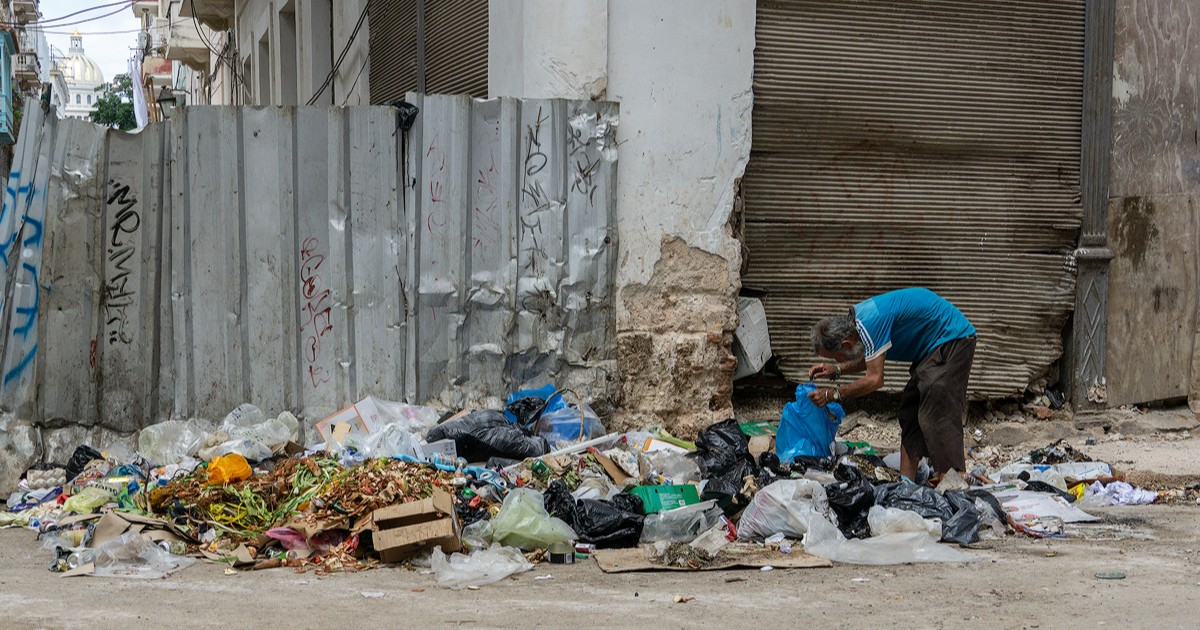
The European Commission announced on Thursday an extra €10 million in humanitarian aid for Cuba, as the nation's crisis worsens.
The Directorate-General for European Civil Protection and Humanitarian Aid Operations disclosed that this new aid package is a response to the "ongoing deterioration of the humanitarian situation" on the island.
The funds will be directed towards essential medicines, support for primary and maternal health centers, emergency food assistance, nutritional treatment for children and mothers, water system rehabilitation, logistical support to hard-to-reach areas, and renewable energy solutions.
Those who will benefit the most are the elderly, children, pregnant women, nursing mothers, and communities in remote areas suffering severely from fuel shortages and the ongoing energy crisis.
Hadja Lahbib, European Commissioner for Crisis Management, stated, "For communities in Cuba, daily life has become increasingly challenging, with energy shortages making it difficult to access basic supplies, healthcare, and other essential services. Once again, the EU demonstrates its solidarity with the Cuban people, with additional funding that will enable our partners to provide food, healthcare, clean water, and other basic needs."
This new allocation brings the total committed by the EU to Cuba in 2026 to at least €16 million: €4 million approved earlier in the year as a regional allocation for the Caribbean—primarily aimed at Cuba—€2 million more approved in April, and the €10 million announced on Thursday.
Adding to this are nearly €6 million mobilized in 2025 for disaster preparedness and emergency response, largely following the severe damage caused by Hurricane Melissa in eastern Cuba.
All EU humanitarian aid is channeled exclusively through humanitarian partners operating on the ground, bypassing the Cuban government entirely.
The scale of the crisis prompting this response is unprecedented in recent history. The National Electric System suffered its fourth total collapse of 2026 on July 10, with power outages in Havana averaging 15 hours daily, while Matanzas endured up to 87 consecutive hours without electricity.
By April 2026, 461 out of 651 essential medications—over 70% of the basic list—were unavailable in state pharmacies, and infant mortality rose to 9.9 per 1,000 live births in 2025, more than doubling from 2018, when it was 4.0.
In May 2026, the UN launched an emergency humanitarian appeal for $94 million for Cuba, highlighting that nearly one million people receive drinking water from tanker trucks and that 84% of pumping equipment relies on electricity.
Amidst the humanitarian response, political relations between Brussels and Havana are at their tensest in years. In June, the European Parliament passed a resolution calling for individual sanctions against Díaz-Canel and urging the suspension of the Political Dialogue and Cooperation Agreement signed in 2016, although the formal decision rests with the EU Council.
FAQs on European Aid to Cuba
Why is the EU providing additional aid to Cuba?
The EU is providing extra aid due to the worsening humanitarian crisis on the island, with significant shortages in essential supplies and services.
How will the €10 million aid package be used?
The funds will be allocated to essential medical supplies, health center support, emergency food assistance, water system rehabilitation, and renewable energy solutions.
What is the current political situation between the EU and Cuba?
Political relations are strained, with the European Parliament calling for sanctions against Cuban leadership and urging the suspension of a cooperation agreement.