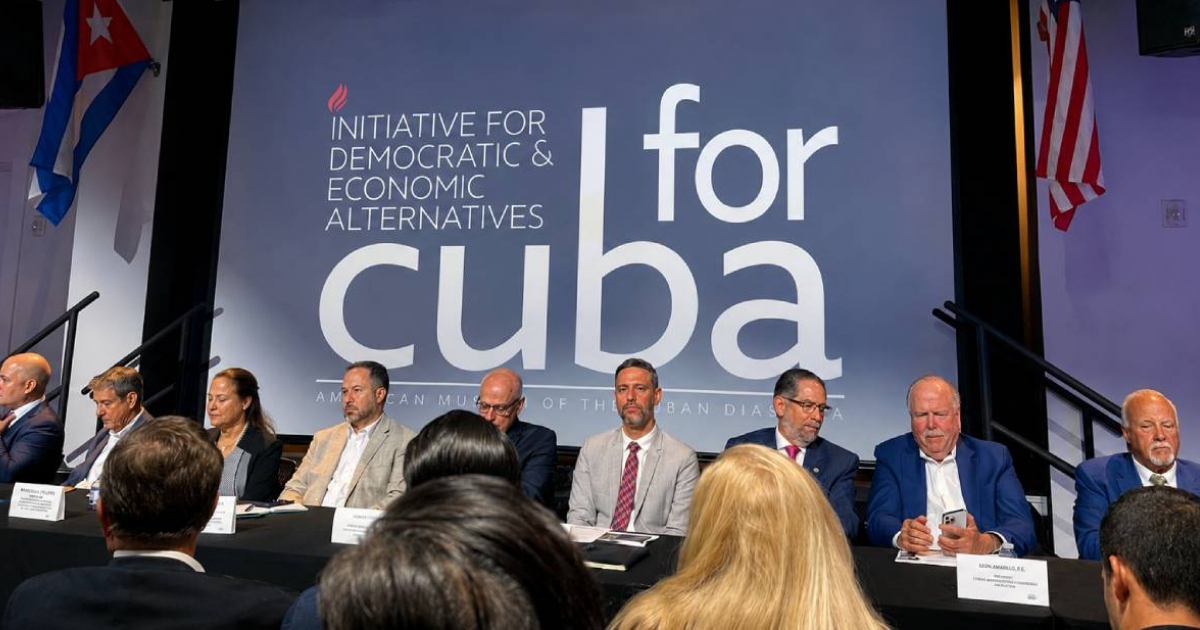
In Miami, a group of a dozen Cuban specialists in fields such as infrastructure, economics, engineering, urban planning, and law are diligently crafting a blueprint for Cuba's future restoration in the event of a democratic transition.
Rather than engaging in mere political debate, this initiative aims to address a specific question: What actions need to be taken in the initial months and years to revive a nation plagued by deteriorating basic services and a struggling economy?
Strategizing for Cuba's Future
This was the central theme of the forum titled "Initiative for a Democratic and Economic Alternative for Cuba," held on Wednesday at the American Museum of the Cuban Diaspora. Experts from various disciplines began to present sector-specific plans with cost estimates, timelines, and priorities.
Bringing together organizations like the American Museum of the Cuban Diaspora, Florida International University's Cuban Studies Institute, the Cuban-American Engineers Association, the Foundation for Human Rights in Cuba, and others, the initiative seeks to prepare technical proposals in anticipation of a potential political shift on the island.
Foundational Steps for Recovery
In interviews with TNT24, several experts emphasized that Cuba's recovery should begin not with grandiose projects but with the restoration of essential services and the creation of conditions conducive to attracting investment.
"We are starting with infrastructure, which is the main economic engine for this reconstruction, but other areas like housing will follow. The legal system, which is crucial, will be addressed in September with the help of prominent jurists," stated Marcell Felipe, president of the American Museum of the Cuban Diaspora.
Key Proposals for Cuba's Reconstruction
Some of the main proposals presented include:
- Revamping the electrical system, a priority to end power outages. Researcher Jorge Piñón estimated that this sector's recovery would cost between $5 billion and $8 billion and take three to five years.
- Restoring potable water and sewage systems. Engineer Josenrique Cueto calculated that the necessary investment would be around $8 billion. Initial recovery might be feasible within 24 months, but achieving a stable, consistent system would take at least five to ten years.
- Modernizing roads, ports, railways, and cities. The forum highlighted that much of the national infrastructure, while operational, suffers from decades of wear and tear, necessitating significant rehabilitation.
- Addressing the housing deficit, estimated at about one million homes, through specific future programs to be discussed in upcoming conferences.
- Designing a new legal framework to ensure private property, legal security, and investment protection, essential for attracting capital.
- Gradual economic recovery. Initial efforts could focus on reviving tourism and port activities to generate revenue for funding other investments.
- Restructuring the energy sector. Proposals include reassessing existing refineries and redesigning fuel production and supply strategies.
The Financial Challenge
Figures presented during the forum underscore the enormity of the task. Rafael Romeu, president of the Association for the Study of the Cuban Economy, estimated that the first 180 days of stabilization would require $180 million to $270 million, primarily financed through private American capital.
Luis Ajamil, president and CEO of Bermello Ajamil & Partners, mentioned that several phases would follow the regime's fall for Cuba's reconstruction.
"Initially, focusing on tourism and bringing in large ships makes the most sense, as it generates revenue and investment. Gradually, as the economy starts to recover, cargo activities will also resume," he explained.
Experts estimate that a comprehensive recovery of the nation — including energy, infrastructure, housing, agriculture, tourism, and telecommunications — would require between $275 billion and $375 billion over a period of 10 to 15 years.
Planning for the Inevitable
Organizers assert that an eventual transition will necessitate immediate decisions, and waiting for a political change to start planning would waste valuable time.
Marcell Felipe emphasized that the diaspora has the technical knowledge and capital necessary to contribute to the country's recovery.
"We have the human talent, the capacity, and the private capital in exile willing to invest immediately to rebuild the country, without American government involvement in these areas. However, all of this hinges on a crucial factor: a regime change."
Political Change: A Prerequisite
Beyond the figures and technical projects, the forum's consensus was that none of these proposals could be implemented without a transformation of Cuba's political system and laws.
Architect and urban planner Willy Bermello highlighted the importance of a legal system to develop Cuba: "There must first be a system of laws that protects all types of private investment; otherwise, capital won't flow. There must be the assurance of a democratic balance in Cuba, something that currently doesn't exist."
The significance of these plans lies in their aim to avoid improvisation during a transition scenario. The goal is to have diagnostics, projects, and priorities already defined to accelerate the restoration of public services, build investor confidence, and lay the foundation for long-term economic reconstruction.
Frequently Asked Questions About Rebuilding Cuba
What are the estimated costs for Cuba's electrical system recovery?
The recovery of Cuba's electrical system is estimated to cost between $5 billion and $8 billion, with a time frame of three to five years.
How long would it take to modernize Cuba's water systems?
An initial recovery of the water systems could be feasible within 24 months, but achieving a stable and consistent system may take at least five to ten years.
What role does the legal system play in Cuba's reconstruction?
A robust legal system is essential for protecting private investments and ensuring democratic balance, which are critical for attracting capital and rebuilding Cuba.