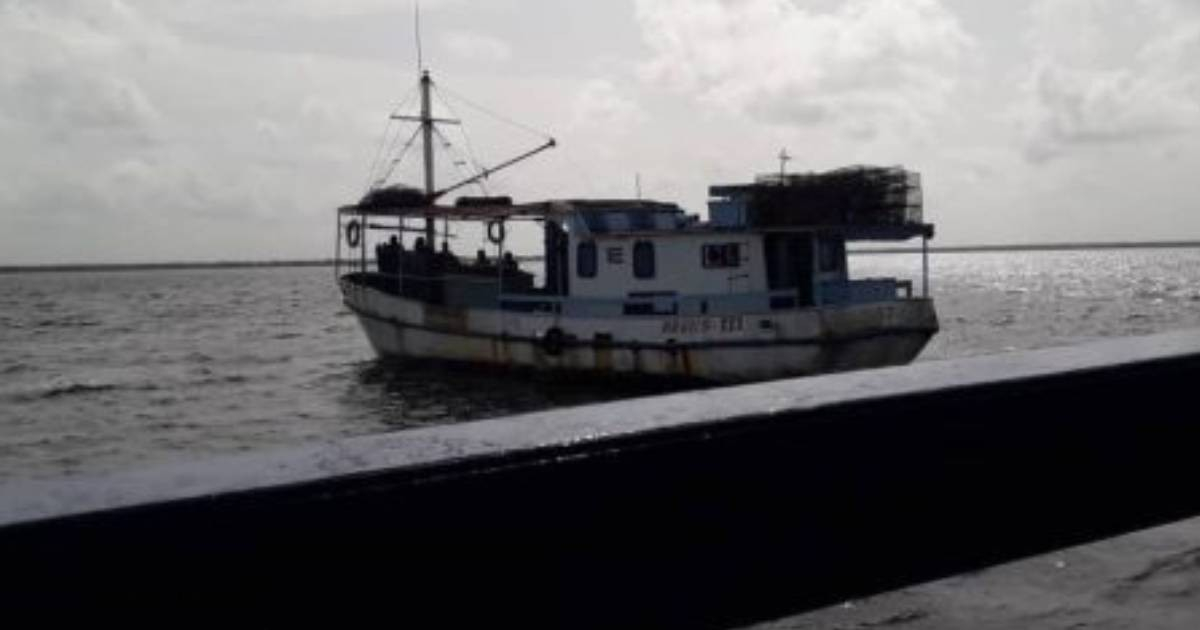
This past Wednesday, the Cuban regime kicked off its lobster fishing season, with the Industrial Fishing Company La Coloma (EPICOL) in Pinar del Río taking center stage, as reported by the state-run media outlet Cubadebate.
The announcement fits into the official narrative of "revitalizing the national economy," but in reality, the vast majority of the lobster is earmarked for export, leaving the Cuban people with virtually no access to it—or even to fish.
The vessel Argus L-9, led by Sandy Manduy Hernández, set sail with a crew of six, aiming to haul in 100 tons of lobster throughout the season.
"This will require a lot of effort from everyone. But this team is known for its discipline and dedication," said Manduy Hernández, who commands the ship with the highest lobster catch record in the country.
EPICOL's Role in the Export-Driven Economy
EPICOL is responsible for 45% of the national lobster catch and 80% of the bonito, generating approximately $30 million annually from exports, primarily to China and the European Union. Lobster, conch, and sea cucumber are its main export products.
One of the highlights of the 2026 season is the introduction of photovoltaic energy both on the vessels and onshore.
The ships are now equipped with solar panels and ecoflow devices to sustain their time at sea and for cooking, compensating for the shortage of liquefied petroleum gas.
Renewable Energy Amid Economic Challenges
Yoan Nogueiras Tapia, EPICOL's general director, revealed that the company is also building a photovoltaic park, which is "80% complete," featuring 1,000 panels with a capacity of 2.3 MW to power the industrial area and an ice plant.
"These are tough times, but the company has not been defeated," Nogueiras Tapia stated, promoting the energy transformation as a response to the "blockade imposed on Cuba."
The island's energy crisis—stemming from decades of the regime's mismanagement—forces the fishing sector to seek alternatives due to fuel shortages, unrelated to the U.S. embargo.
Environmental and Operational Challenges
The start of the season is also shadowed by a severe incident: a fire in October 2025 severely damaged EPICOL's processing plant in La Coloma, necessitating the diversion of some lobster to facilities in Isla de la Juventud and Batabanó.
The sector also grapples with climate change effects. The average catch per fishing gear plummeted from 19 kg in 2019 to just 5.8 kg in 2024, while water temperatures in fishing zones rose from 27°C to 30°C over four decades, driving lobsters into deeper waters.
The sector's structural paradox is that 80% of Cuba's lobster production is exported, according to France 24, while the local population cannot access it.
The official line, reiterated for years, claims that the foreign currency earned is used to import basic food items distributed through the ration book, a system that also fails to meet Cubans' minimum needs.
In April 2025, the regime also announced a project with Vietnam to commercially cultivate lobster in Quemado de Güines, aiming to boost exports and foreign exchange without increasing the product's availability for the Cuban people.
Lobster Season and Economic Impact in Cuba
Why is most of the lobster production exported from Cuba?
Most of the lobster production is exported to earn foreign currency, which the government claims is used to import basic necessities for the Cuban population.
What challenges is the Cuban fishing sector facing?
The sector is facing challenges such as energy shortages, climate change impacts, and operational disruptions like the fire at EPICOL's processing plant.
How is EPICOL adapting to the energy crisis?
EPICOL is adapting by implementing photovoltaic energy solutions, such as solar panels on vessels and building a photovoltaic park to power its operations.
What is the significance of the project with Vietnam?
The project with Vietnam aims to cultivate lobster commercially in Quemado de Güines, intended to increase exports and generate foreign exchange, but it doesn't improve local availability.