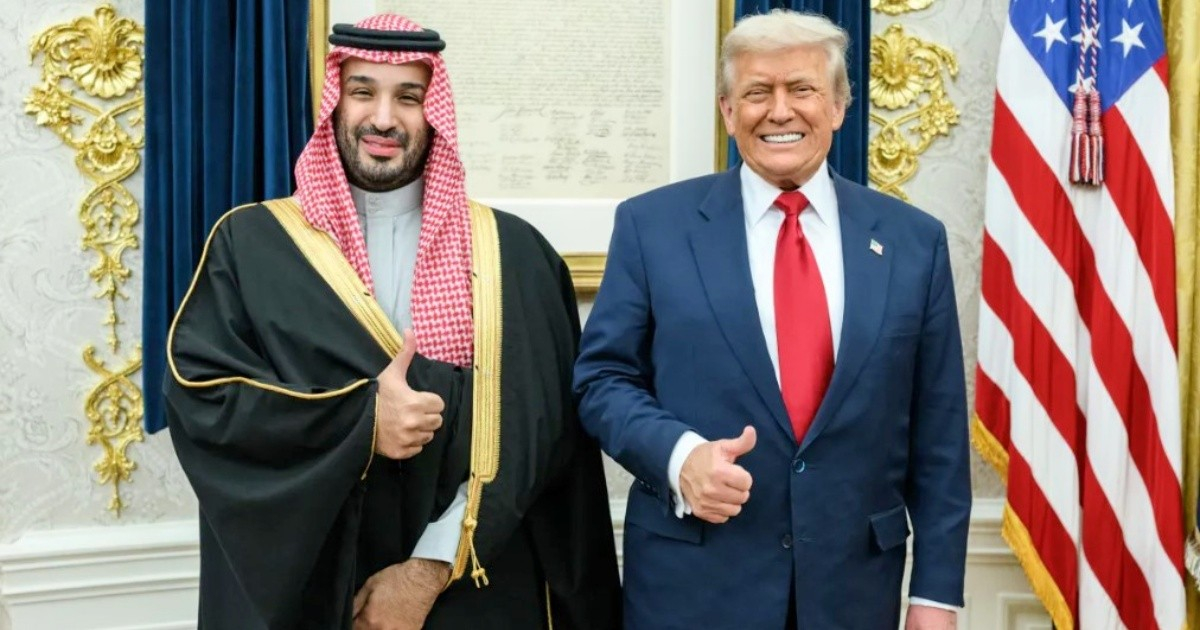
In a significant move last week, Donald Trump greenlit a pivotal 30-year civil nuclear cooperation agreement with Saudi Arabia, reportedly worth tens of billions of dollars. This landmark deal, disclosed by administration officials to The Wall Street Journal, aims to redefine the nuclear landscape in the Middle East.
Signatures and Stakeholders
The formal signing took place on Wednesday, officiated by U.S. Secretary of Energy Chris Wright, alongside Saudi Energy Minister Prince Abdulaziz bin Salman. The agreement is crafted to give American companies a crucial role in developing Saudi Arabia's nuclear infrastructure, strategically outmaneuvering competitors like Russia and China.
Westinghouse Electric, with its AP1000 reactor capable of generating approximately 1,100 megawatts of electricity, stands out as a principal beneficiary of this arrangement.
Contentious Clauses: Uranium Enrichment
Among the most debated aspects is a clause allowing Saudi Arabia to enrich uranium on its own soil. This step will only proceed after a joint two-year study by both nations to determine its justification and commercial feasibility.
If the study endorses it, American firms will construct the facility under a "black box" system, preventing the transfer of sensitive technology to Riyadh. Should the U.S. oppose the enrichment based on findings, Saudi Arabia would be barred from developing this capacity independently or with other foreign partners for a decade.
Non-proliferation experts have warned that any active centrifuge in Saudi Arabia could potentially pave the way for a future weapons program.
Concerns Over International Standards
Additional concerns arise from Saudi Arabia's refusal to join the Additional Protocol of the International Atomic Energy Agency (IAEA), which allows for more rigorous inspections. As per a U.S. official quoted by CNN, Riyadh resisted signing this protocol due to fears it might theoretically permit inspectors into sacred sites like Mecca or royal palaces.
Furthermore, unlike the United Arab Emirates, which accepted the "gold standard" in 2009 allowing them to build the Barakah nuclear plant, Saudi Arabia has rejected this permanent renunciation of domestic enrichment and spent fuel reprocessing. Instead, the agreement includes a bilateral safeguards mechanism that must be approved by the IAEA Board of Governors.
Debate Among Experts
Robert Einhorn, a former senior State Department official specializing in non-proliferation, highlighted the potential benefits but also the risks:
"This agreement could revive the U.S. nuclear industry, strengthen ties with Saudi Arabia, and prevent Russia and China from gaining a strategic foothold. However, insufficient restrictions, particularly on uranium enrichment, could heighten nuclear proliferation risks in the Middle East and beyond."
More critical was Henry Sokolski, executive director of the Nonproliferation Policy Education Center:
"If Saudi Arabia takes this step, the UAE, Turkey, and Egypt will likely follow suit. Assuming this will end well is naive."
Geopolitical Tensions
The agreement comes amidst heightened regional tensions. In 2018, Crown Prince Mohammed bin Salman stated that if Iran developed a nuclear weapon, Saudi Arabia would swiftly follow suit. Iran continues to maintain enriched uranium reserves and has vowed to sustain its nuclear program despite ongoing U.S. bombings.
Recently, Saudi Arabia and nuclear-capable Pakistan signed a mutual defense pact. Pakistan's defense minister declared their nuclear arsenal would be available to Saudi Arabia if needed, a statement interpreted as a warning to Israel.
The Biden administration had tied nuclear cooperation with Riyadh to normalizing relations with Israel, a process stalled after the Hamas attacks on October 7, 2023. Trump resumed negotiations without such conditions, aligning with a $600 billion trade agreement package announced during his visit to Riyadh in May 2025.
Pending Congressional Review
The agreement is now set to be reviewed by the U.S. Congress in the coming days. Blocking it would require a joint resolution and a two-thirds majority to overcome a potential presidential veto, making its rejection technically challenging.
Several lawmakers have already requested details on non-proliferation assurances, and the debate over balancing technology transfer, regional security, and preventing an arms race in the Middle East remains ongoing.
Key Questions on the U.S.-Saudi Nuclear Agreement
What are the main objectives of the U.S.-Saudi nuclear agreement?
The agreement aims to involve U.S. companies in developing Saudi Arabia's nuclear infrastructure, reducing reliance on Russian and Chinese competitors, and potentially reviving the American nuclear industry.
Why is the uranium enrichment clause controversial?
The clause allows Saudi Arabia to enrich uranium domestically, raising concerns about potential nuclear weapons development. A joint study will assess its feasibility, but the provision lacks the "gold standard" restrictions accepted by the UAE.
What are the geopolitical implications of this deal?
The agreement increases regional tensions, especially with Iran's nuclear activities and Saudi Arabia's defense pact with Pakistan. It also affects U.S. diplomatic dynamics, particularly regarding Israel and Middle Eastern stability.