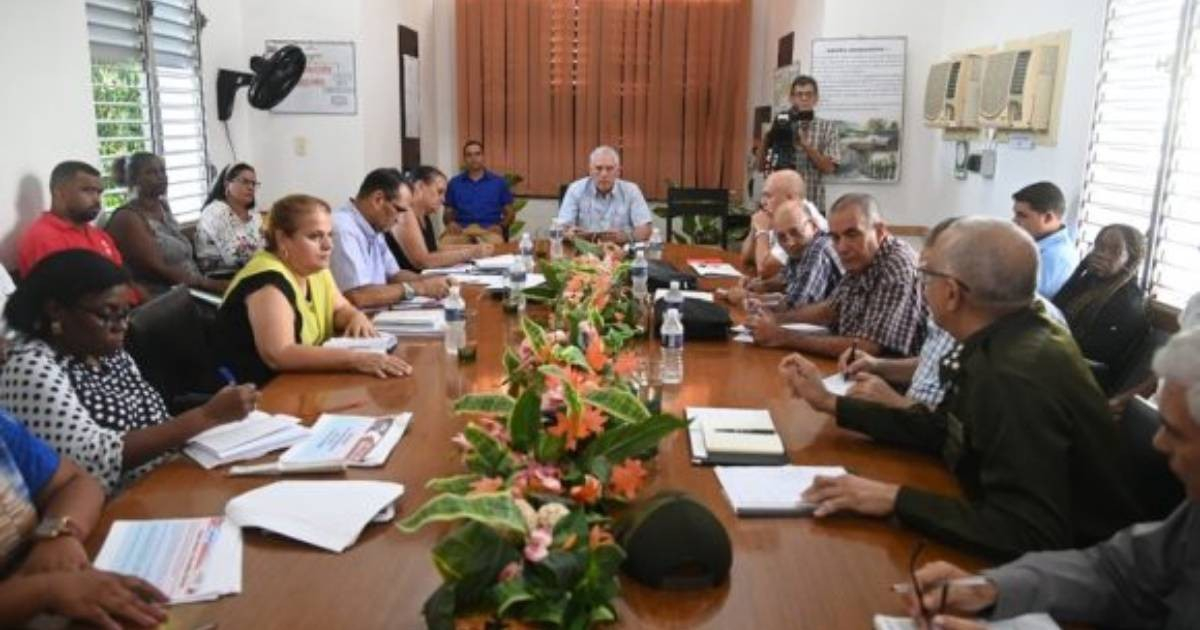
During a recent visit to the Municipal Defense Councils of San Miguel del Padrón and Diez de Octubre in Havana, Cuban ruler Miguel Díaz-Canel Bermúdez emphasized the crucial need for appointing "the most capable individuals" to lead Defense Zones. These zones are essential components of the regime's territorial organization, designed to manage situations deemed exceptional.
This visit coincided with a particularly challenging time for Cuba, as the country's National Electric System experienced an unprecedented deficit of 2,341 megawatts just a day earlier. This represents the largest reported shortfall in power generation to date, with Cuba facing four nationwide power system collapses in 2026, the most recent on July 10.
Accompanying Díaz-Canel were Roberto Morales Ojeda, a member of the Political Bureau and secretary of Organization of the Communist Party of Cuba's Central Committee; Havana's Provincial Defense Council president, Liván Izquierdo Alonso; and the capital's governor, Yanet Hernández Pérez.
Strengthening Defense Infrastructure
During his tour of Diez de Octubre, a municipality with approximately 200,000 residents and nine Defense Zones, Díaz-Canel stressed the necessity of reinforcing these structures. "It's critical for a Defense Zone to be well activated, and that capable people lead such a structure," he stated.
Defense Zones form the foundation of Cuba's defensive framework, tasked with managing local responses to scenarios the regime considers exceptional, such as natural disasters and internal disturbances.
Responding to Energy and Social Challenges
In San Miguel del Padrón, home to around 163,000 individuals, officials presented a municipal energy map to track the status of electrical services. The ongoing energy crisis has led to growing social unrest across the country.
Besides energy concerns, meetings addressed water supply issues, solid waste management, support for vulnerable populations, employment disconnection, renewable energy development, food production, and pension payments.
Díaz-Canel's visit is part of a tour initiated on June 30 across Havana's 15 municipalities, as part of the "Year of Defense Preparation 2026." By July 17, he had visited nine capital territories, including inspections in Cerro's "War of All the People" preparations.
Underlying Motives Behind the Visits
The true intent of these visits was revealed on July 17 when Canal Caribe inadvertently disclosed an official slide indicating these tours are part of a plan to implement "political, economic, social, and communication actions to prevent social unrest," in line with National Defense Council Directive No. 2.
This disclosure occurred amid rising social tensions. Just three days later, on July 20, central Havana residents staged pot-banging protests demanding electricity, which included political slogans beyond mere opposition to blackouts.
Upon concluding his tour, Díaz-Canel announced plans to return soon to further assess municipal operations. "In the near future, there will be another session to closely examine and evaluate this small yet vital part of the Island, the municipality," he declared.
This recent visit highlights the increasing importance the regime places on territorial defense structures amidst a backdrop of worsening energy crises, declining basic services, and growing public dissatisfaction.
Key Insights into Cuba's Defense Zones and Energy Crisis
What are the main responsibilities of Cuba's Defense Zones?
Cuba's Defense Zones are responsible for coordinating local responses to exceptional situations, such as natural disasters, emergencies, or internal disturbances.
Why is the energy crisis a significant issue for Cuba?
The energy crisis is critical for Cuba as it leads to widespread power shortages, causing escalating social unrest and exacerbating existing economic and social challenges.
How has Díaz-Canel addressed the energy and social crisis?
Díaz-Canel has been visiting municipalities to evaluate and strengthen local defense infrastructures, as well as addressing various social issues like energy supply, water access, and food production.