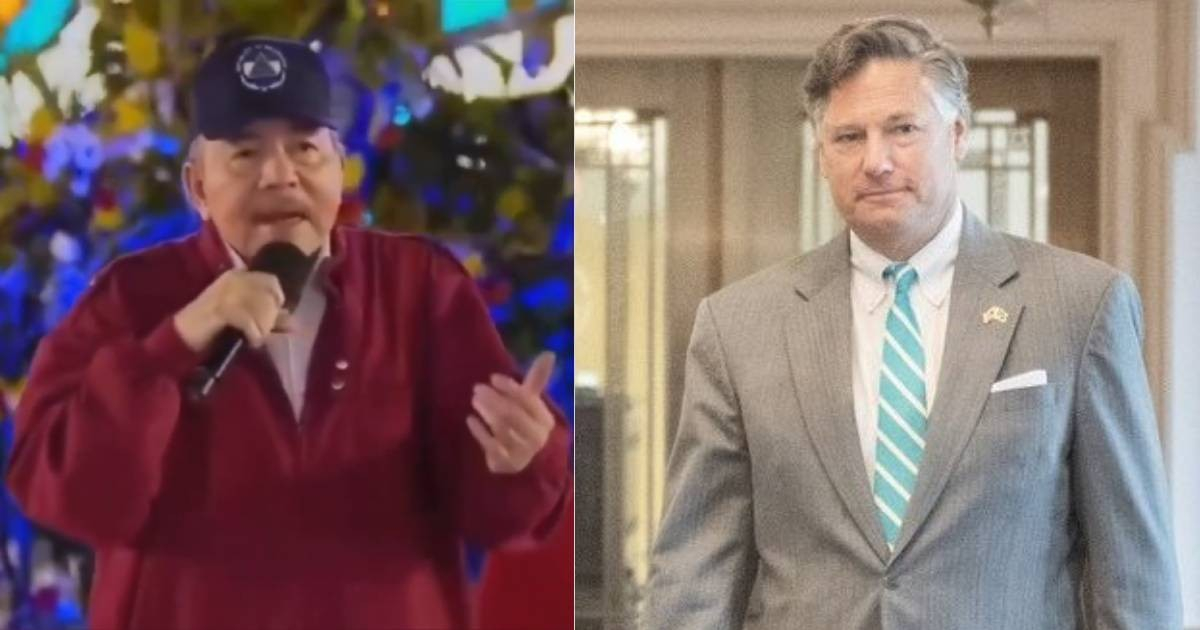
In a bold statement, U.S. Undersecretary of State, Christopher Landau, drew a parallel between Nicaragua and Cuba after President Daniel Ortega declared that his country will no longer hold elections. Landau emphasized that abolishing elections equates to oppressing the population, as Cuba has exemplified over the past 67 years.
Reacting on his official X account, Landau addressed the remarks made by Ortega during a ceremony celebrating the 47th anniversary of the Sandinista revolution in Managua. Ortega explicitly dismissed the idea of future elections in Nicaragua.
"When people show you their true character, believe them," the Undersecretary remarked, referencing Ortega's controversial assertion: "Elections will not take place here again!"
Landau argued that while Ortega perceives elections as a threat to his power, the reality is quite the opposite.
"In Ortega's view, elections endanger his regime. Yet, by eliminating them, the government ends up ensnaring its citizens, as Cuba has shown for decades," Landau asserted.
The official reaffirmed Washington's support for the Nicaraguan people: "The United States stands with the Nicaraguans in their pursuit of democracy."
Ortega's Firm Stance on Elections
During his Monday address, the 80-year-old Ortega insisted that the opposition would never regain power through the ballot box.
"They might dream of winning elections (...). But forget it: elections will not return here," he declared.
Ortega further announced that the National Assembly would introduce new legislation to intensify crackdowns on those he labeled as "coup plotters" and "traitors," while challenging the U.S. by asserting that despite any financial support from the "Yankees," his adversaries would not achieve their goals.
Calls for International Isolation
Landau's remarks add to the condemnation voiced by Secretary of State Marco Rubio on Tuesday, who stated that Ortega's words "expose the truly authoritarian nature" of the Ortega-Murillo regime.
Rubio stressed that the Nicaraguan people "deserve to choose their leaders through democratic elections" and urged the international community to further isolate the Managua government diplomatically.
Ortega's announcement follows a significant constitutional overhaul approved in January 2025, where 185 of the 198 articles were altered. Notably, the changes include extending the presidential term from five to six years, creating a co-presidency for Rosario Murillo, and enabling indefinite re-election. Consequently, elections planned for November 2026 were postponed to November 2027.
Heightened U.S. Pressure
The U.S. administration has steadily increased its measures against the Sandinista regime. In April 2026, sanctions were imposed on several of Ortega and Murillo's children, along with seven government-linked mining companies. Two months later, visa restrictions were extended to over a hundred officials and their families, bringing the total number of sanctioned individuals to over 2,350 under the current U.S. administration.
Managua's international isolation has also intensified. In June 2026, the Organization of American States (OAS) unanimously passed a resolution demanding the restoration of democracy and the release of all political prisoners in Nicaragua. That same year, Human Rights Watch reported at least 87 political prisoners in the country.
For Nicaraguan opposition leader Juan Sebastián Chamorro, Ortega’s statements merely confirmed long-standing accusations that the leader "has removed yet another mask" and never intended to allow genuine electoral competition.
Key Questions on Nicaragua's Political Crisis
Why did Daniel Ortega decide to abolish elections in Nicaragua?
Daniel Ortega claimed that elections pose a threat to his regime's power, though critics argue that abolishing elections allows the government to control and suppress the population, similar to Cuba's long-standing dictatorship.
How has the international community responded to Ortega's announcement?
International figures like U.S. officials have condemned Ortega's decision, calling for increased diplomatic isolation of Nicaragua and emphasizing the right of the Nicaraguan people to democratic elections.
What are the recent changes to Nicaragua's constitution?
Recent constitutional changes in Nicaragua include extending the presidential term, creating a co-presidency for Rosario Murillo, and allowing indefinite re-election, delaying elections initially scheduled for November 2026 to November 2027.