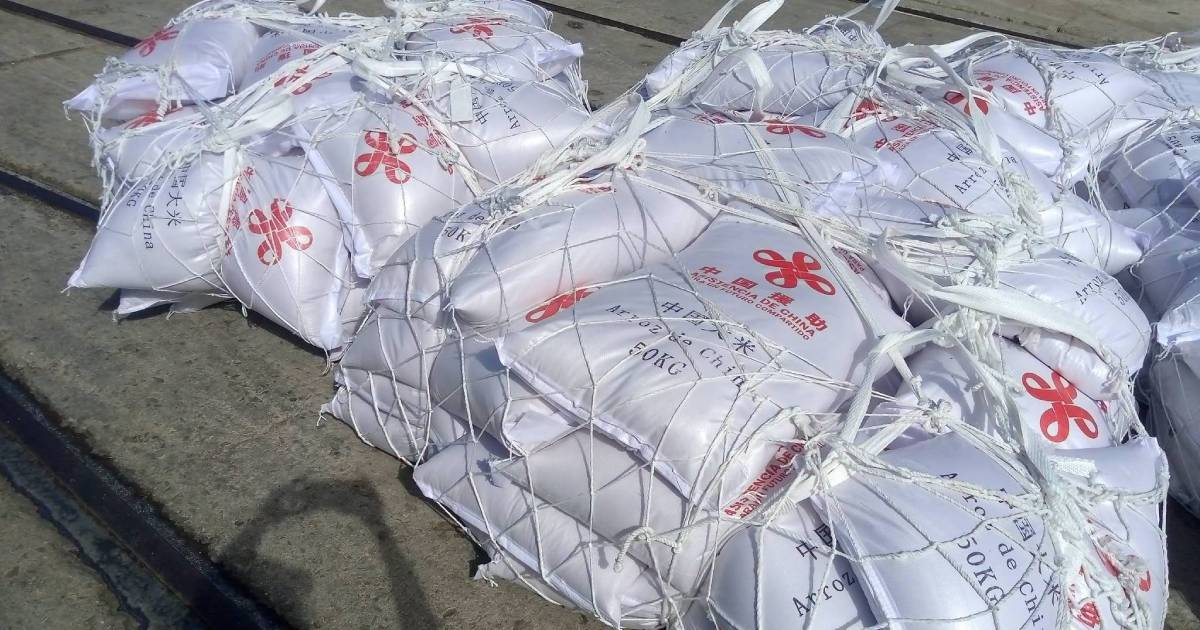
The Ministry of Domestic Trade (MINCIN) revealed on Tuesday that residents of Camagüey will receive a donation of three pounds of rice from China at no cost, as part of the regulated family basket. Instead of bringing relief, this announcement triggered a wave of criticism on social media, where numerous Cubans voiced their frustration over ongoing delays in food deliveries and criticized the government for touting what is perceived as inadequate assistance.
The report, which was shared on MINCIN's social media channels and relayed by the Telegram channel Bodegas Camagüey, acknowledged "limitations and delays in deliveries" and mentioned that the donated rice has yet to arrive in the province.
Distribution Challenges and Unmet Needs
The ministry also noted progress in distributing peas in the municipalities of Guáimaro, Camagüey, Florida, Carlos Manuel de Céspedes, and Sibanicú, as well as the delivery of powdered milk for infants up to six months and baby food, with Nuevitas being the only municipality still waiting.
However, the report admitted to a lack of coverage for essential products such as oil, coffee, and sugar, while the cigarette distribution remains partial, with several municipalities facing overdue quotas.
Public Outcry and Accusations of Inequality
Reactions were swift and critical. "Misery begets misery," one user commented. Another succinctly captured the sentiment of many: "Celebrating poverty."
Numerous comments highlighted the long-standing delays of some announced products. "It's embarrassing that you're announcing that rice meant for June, and we're already at the end of July," wrote Osmany Toledo Álvarez.
Other users pointed out that the peas now being distributed are actually from the February quota.
The allocation of rice to Camagüey further fueled dissatisfaction. While other provinces will receive a larger share of the Chinese donation—up to eight pounds per person in Las Tunas, Holguín, and Granma, and five in Santiago de Cuba—Camagüey residents will get only three pounds.
"Why three pounds here and five in other provinces? Is this discrimination?" asked another user. Another remarked that the original donation was supposed to be eight pounds per person, sarcastically adding, "Did they steal the other five?"
Broader Implications of a Flawed Distribution System
An internet user criticized the official narrative with a direct jab at the government: "Cuba's policy is all about appearances. We know three pounds aren't enough, and giving out February's peas in July is absurd... Ultimately, they don't care if people eat or not; they just want to make headlines and look good."
The complaints extended beyond Camagüey. From Santiago de Cuba, a user lamented that cigarettes from the ration book have been missing for months and are only available on the black market, where a pack costs 500 pesos.
This situation underscores the continuous deterioration of the state distribution system. In May, Camagüey authorities admitted to selling expired toothpaste in stores, claiming it was "safe" to use. Shortly after, the Minister of the Food Industry confessed on state television that it had been impossible to guarantee the distribution of products like oil, chicken, and yogurt throughout 2026, with coffee barely reaching Havana once.
MINCIN attributes the delays to fuel shortages, which hinder the transport of food from ports and storage facilities. Nonetheless, disruptions in basic supply deliveries have become a regular occurrence nationwide.
The uncertainty increased further on June 18, when Miguel Díaz-Canel announced that the ration book would no longer be universal and would focus instead on retirees, families with children suffering from chronic illnesses, and vulnerable individuals. This reform marks the most significant cutback to the rationing system since its inception in 1962.
Frequently Asked Questions about Cuba's Food Distribution Challenges
Why is Camagüey only receiving three pounds of rice?
The allocation of three pounds of rice to Camagüey has sparked criticism, especially since other provinces are receiving larger portions from the same donation. The reasons for this discrepancy have not been clarified by the authorities, leading to allegations of inequality.
What are the main challenges facing Cuba's food distribution system?
Cuba's food distribution system is plagued by delays, lack of essential products, and an inconsistent supply chain. Fuel shortages and logistic issues exacerbate these problems, leading to widespread public dissatisfaction.
How are residents reacting to the current distribution issues?
Residents are increasingly vocal about their dissatisfaction, using social media to criticize the government's handling of the situation and highlight the delays and inadequacies of the distribution system.