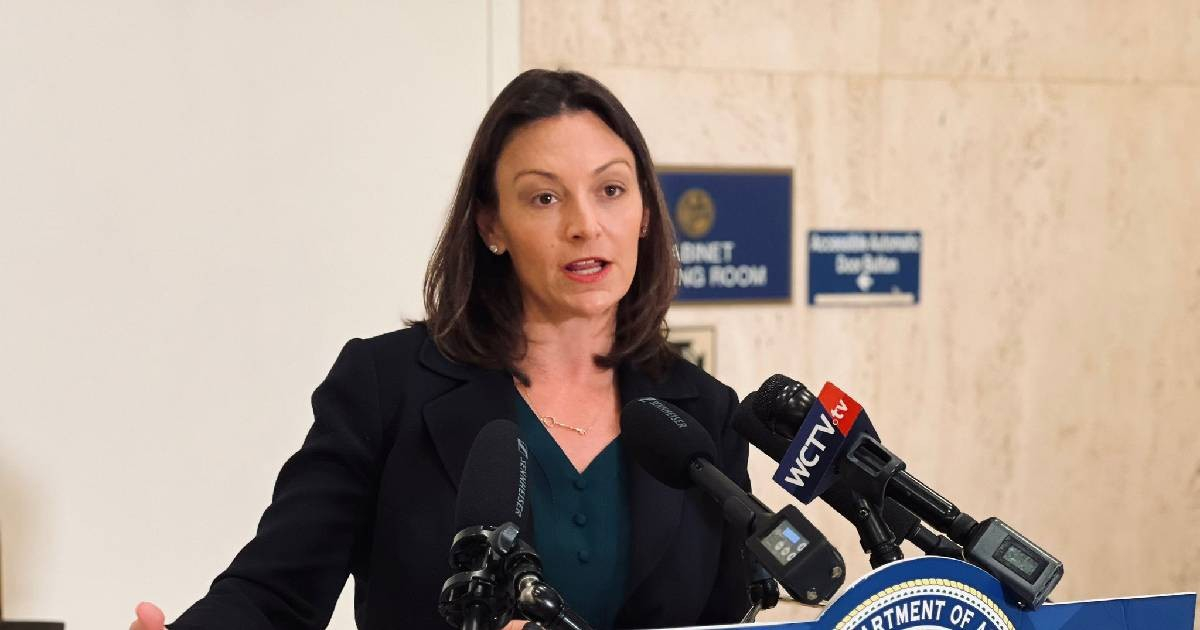
Nikki Fried, chair of the Democratic Party in Florida, has openly admitted that socialism is not a politically viable option in the state, largely due to the substantial presence of Cuban and Venezuelan exiles who have fled from communist and authoritarian regimes.
During an interview with Local 10 News on Sunday, Fried addressed a question regarding the rise of socialist candidates in other parts of the country by stating plainly, "You've hit the nail on the head. Florida is different. The coalitions that need to be built here in Florida are different."
The Democratic leader emphasized the influence of the exile community on state politics: "We have hundreds of thousands, if not millions, of people who call Florida home, who left communist, socialist, and authoritarian regimes to find a better way of life here in the state of Florida."
Fried highlighted the necessity for any aspiring candidate in Florida to build a coalition that crosses party lines: "That coalition has to involve Democrats, Republicans, and independents, incorporating the values of those of us living here in the state of Florida."
Her comments come at a time when radical left candidates are winning Democratic primaries in other states. In Colorado, 29-year-old democratic socialist Melat Kiros defeated 15-term incumbent Diana DeGette with 53.2% of the vote on June 30. In New York, Mayor Zohran Mamdani, a member of the Democratic Socialists of America, represents another facet of this progressive wave.
This trend has raised concerns even within the party itself. Nancy Pelosi, 86, publicly admonished young socialist candidates for challenging Democratic incumbents, warning, "You can't win by losing," indicating that these internal disputes jeopardize the party's chances of regaining a majority in Congress in the November 2026 midterm elections.
The electoral reality in Florida supports Fried's assessment. According to official state data, Republicans outnumber Democrats by over 1.5 million registered voters—5,569,028 compared to about 4,040,000—a gap that began widening in November 2021 and has continued to grow. Only eight of the state's 67 counties have a Democratic voter registration majority.
This shift is partly due to the demographic makeup of South Florida, where over 1.3 million Cuban Americans and tens of thousands of Venezuelans predominantly vote Republican, driven by their aversion to socialism associated with the regimes they escaped from.
Former President Donald Trump has tapped into this sentiment with his consistent anti-communist rhetoric. On July 11, he declared on Truth Social that Democrats "skipped socialism and went straight to communism," and on June 28, he asserted that communism is "the greatest threat to the United States since World War II."
In the Florida Democratic primaries set for August 18, 2026, there are no candidates identifying as socialists; the leading contenders are moderates and centrists, aligning with the strategy Fried advocates for the state.
Fried herself summarized Florida's unique political landscape with a phrase encapsulating her party's challenge: "Florida is certainly a different beast when it comes to politics."
Understanding Florida's Political Landscape
Why is socialism unpopular in Florida?
Socialism is unpopular in Florida primarily due to its large population of Cuban and Venezuelan exiles who fled communist and authoritarian regimes, creating a political climate that favors anti-socialist sentiments.
How do demographics influence Florida's politics?
The demographics in South Florida, with a significant number of Cuban Americans and Venezuelans, largely influence the state's politics by voting predominantly Republican due to their experiences with socialism in their home countries.
What is the current voter registration trend in Florida?
The trend in Florida shows a widening gap in voter registration, with Republicans outnumbering Democrats by over 1.5 million voters, a shift that began in November 2021 and continues to expand.