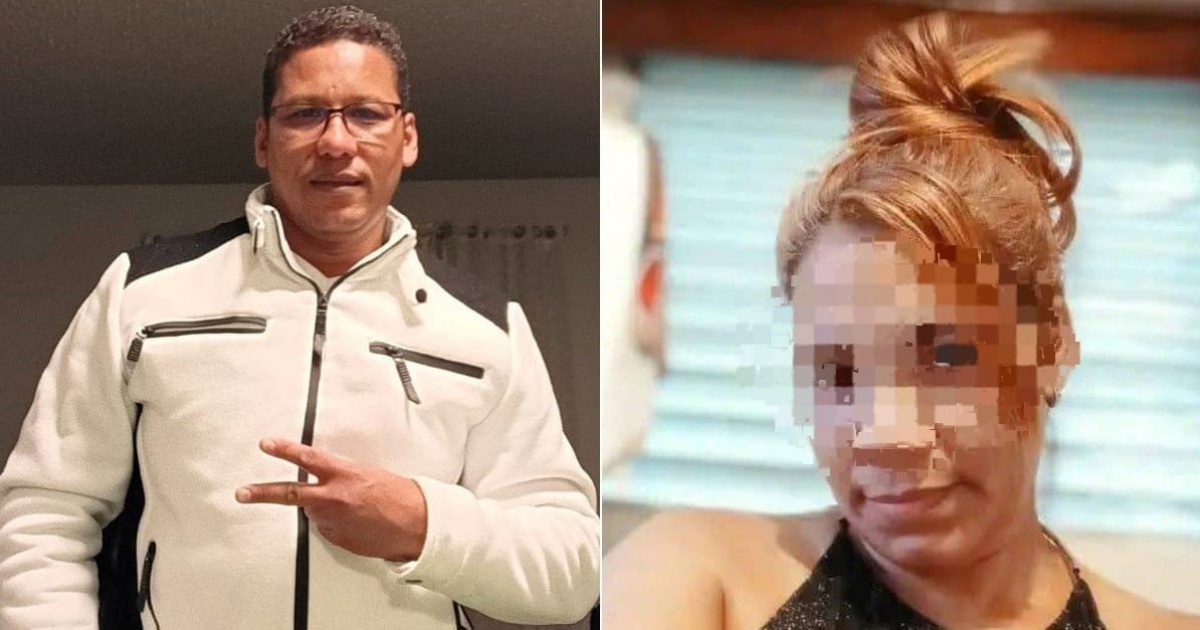
A Nevada court has sentenced José Emilio Galán Preval, a 47-year-old Cuban national, to a prison term ranging from 14 to 35 years for the murder of his partner, Yaimara Leyva-Cadet, in Las Vegas. The crime occurred on January 23 following a domestic dispute.
Originally from Santiago de Cuba and working as a doctor, Galán Preval admitted to second-degree murder with a deadly weapon. This plea led to a deal with the prosecution, setting a base sentence between 10 and 25 years.
District Judge Jacqueline Bluth denied an additional 20-year sentence requested by Clark County Deputy District Attorney Phil Froehlich for the weapon used in the crime. Instead, she imposed an extra four to ten years, culminating in a total sentence of 14 to 35 years.
According to the Las Vegas Review-Journal, the public defender, Jin Kim-Steadman, stated in court that Yaimara was unemployed and refused to do manual labor, despite being "qualified," while Galán Preval was working. The attorney pointed out that this caused tension and psychological stress for Galán Preval, who was also suspected by Yaimara of infidelity.
The couple had emigrated from Cuba to the United States seeking a better life and fresh start. However, as the lawyer mentioned, "she became more controlling" and demanded to see José Emilio's cellphone.
On the day of the incident, the couple was in a rented room on Canosa Avenue. Galán Preval asked Yaimara to cook rice, and when she refused, he briefly left the room, returning with a kitchen knife and repeatedly stabbing her.
The son of the property's owner heard the cries for help and disarmed Galán Preval. The perpetrator only stated, "I am responsible for what I did," and fled through the back door in a vehicle registered to the victim.
Police received a distress call around 12:56 pm. Upon arrival, they found Leyva-Cadet with multiple stab wounds to her face and back. She was taken to Sunrise Hospital, where she succumbed to her injuries the same day.
Hours later, Galán Preval contacted 911, expressing suicidal thoughts. Authorities tracked his phone to a desert area east of Las Vegas, where he surrendered without resistance.
The defense also noted that Galán Preval had consumed alcohol and was preparing for work when the argument erupted.
During sentencing, Galán Preval apologized through an interpreter, expressing regret: "I would rather be in her place instead of her. I apologize to this country that let me in. I am very sorry."
Judge Bluth acknowledged the case's complexity during sentencing: "I recognize that Mr. Galán Preval took immediate responsibility, expressed deep remorse from the beginning, and has no criminal record. I believe he simply lost control. It has been hard to reconcile these things because it's a horrific way to die."
Patterns of Violence Against Cuban Women Abroad
This case is part of a documented pattern of femicidal violence against Cuban women abroad. A study by Observatorio de Alas Tensas and Yo Sí Te Creo en Cuba reported twelve femicides of Cuban women outside the island in 2025, six of which occurred in the United States. In 2024, there were 18 cases abroad, with 14 happening in the U.S., accounting for 77.8% of the total.
Las Vegas has witnessed at least two fatal domestic violence cases involving Cubans this year. In April, another Cuban man was arrested in the city, accused of strangling his wife during a domestic argument.
According to the Centers for Disease Control and Prevention in the United States, more than half of female homicide victims in the country are killed by a current or former male partner.
Understanding Domestic Violence in Cuban Communities
What was the sentence given to José Emilio Galán Preval?
José Emilio Galán Preval was sentenced to 14 to 35 years in prison for the murder of his partner, Yaimara Leyva-Cadet, in Las Vegas.
Why did the judge reject the additional 20-year sentence?
Judge Jacqueline Bluth rejected the additional 20-year sentence requested for the weapon used, instead ordering an extra four to ten years, considering the complexity of the case and Galán Preval's immediate remorse and lack of a criminal record.
What patterns of violence against Cuban women abroad have been observed?
There is a documented pattern of femicidal violence against Cuban women abroad, with a significant number of cases occurring in the United States, as reported by Observatorio de Alas Tensas and Yo Sí Te Creo en Cuba.