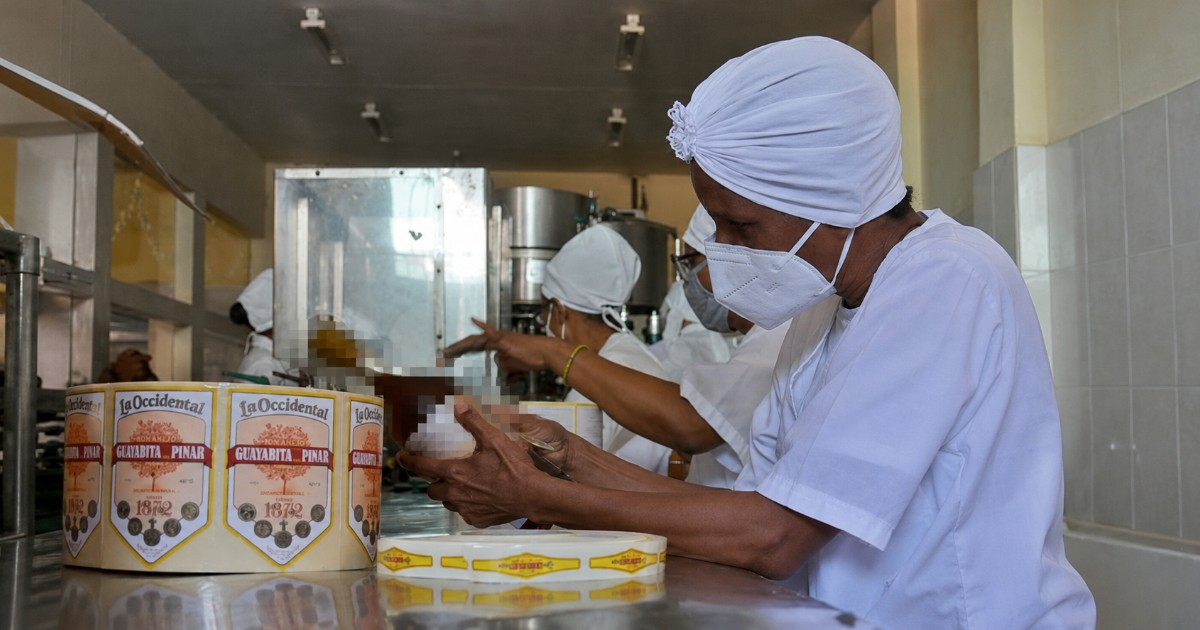
The historic Guayabita del Pinar factory, established in 1892 in Pinar del Río and unique in its kind worldwide, has resumed production thanks to a partnership with the private enterprise Veneeryes. This small and medium-sized enterprise (SME) provides the factory with essential supplies like alcohol and containers, whose scarcity had previously stalled the production of this renowned liquor.
According to a report from the state-run ACN, the factory has already produced 112 boxes of the liquor intended for export. These will reach European markets through the La Conchita export hub, located in the same province of Pinar del Río.
Oviamna Martínez Barrera, the provincial director of the food industry, mentioned that this collaboration with Veneeryes enabled the production of around 100 boxes in 2025, followed by an additional 112 boxes in 2026. Some of the products will also supply foreign currency stores and the domestic market.
"Guayabita del Pinar production had been sporadic due to an alcohol shortage, a crucial component of this popular drink highly sought after in Cuba and abroad," acknowledged Martínez Barrera.
During periods of disrupted production, the factory turned to alternative products like Guayabero rum and guayabita wine, showcasing a technological innovation process.
The Role of Veneeryes in Reviving Production
Osmel Hernández Cejas, operations director at Veneeryes, explained that their SME initially collaborated with the Beverage and Soft Drink Company and later with the food industry.
He emphasized that the partnership benefits both parties, with Veneeryes supplying raw materials and packaging to facilitate the product's commercial reach both domestically and internationally.
The Cuban regime highlights these partnerships as a sign of economic reform progress, though in reality, state industries have long struggled to independently secure essential production inputs.
Challenges and Opportunities in Foreign Markets
Aside from domestic challenges, the brand faces an identity conflict abroad. In September 2025, Cuban-American entrepreneur Tony Haber launched his own version of Guayabita del Pinar in the United States.
At the time, the brand lacked an active Cuban registration in the U.S.; a 2008 application by Spanish company Ferlura Importaciones was declared abandoned in 2010 due to a lack of response. Haber, who spent seven years securing the trademark and cultivating the wild fruit outside of Cuba, encapsulated his venture with a straightforward statement: "Guayabita del Pinar was destroyed in Cuba, and now we are going to revive it in the United States."
Broader Implications for the Cuban Industry
The crisis at the Pinar del Río factory is not an isolated incident: production of 96-degree natural ethyl alcohol plummeted by 69.6% from 572,700 hectoliters in 2020 to 173,900 hectoliters in 2024, according to the 2024 Cuban Statistical Yearbook.
However, 2025 saw a modest recovery to 183,800 hectoliters, while the overall production of alcoholic beverages—excluding wines—increased by 11.7% compared to the previous year, as per manufacturing industry indicators published by the National Office of Statistics and Information (ONEI).
Frequently Asked Questions about Guayabita del Pinar Production
What role did Veneeryes play in the production of Guayabita del Pinar?
Veneeryes, a private enterprise, provided essential supplies such as alcohol and containers, enabling the factory to resume production and export its products.
Why was the production of Guayabita del Pinar interrupted?
Production was halted due to a shortage of alcohol, a vital ingredient in making the liquor, which affected both domestic and international supply.
Who is Tony Haber and what is his connection to Guayabita del Pinar?
Tony Haber is a Cuban-American entrepreneur who began producing his own version of Guayabita del Pinar in the United States, reviving the brand outside of Cuba.