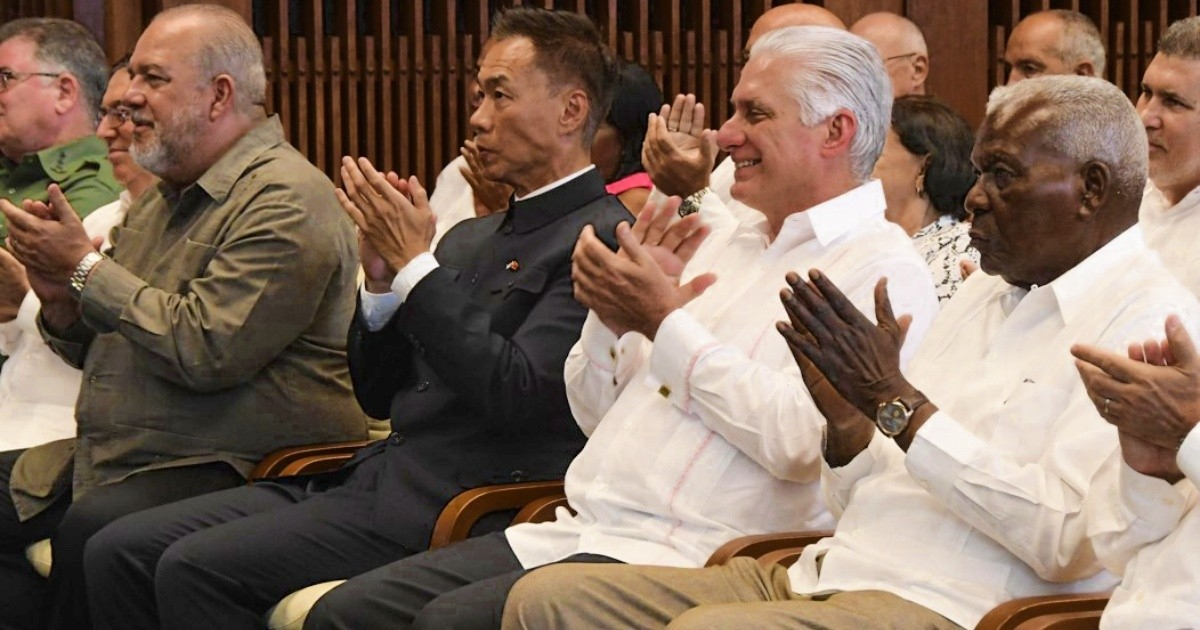
Hua Xin, the Chinese ambassador to Cuba, has dismissed Washington's allegations about supposed Chinese intelligence facilities on the island as "baseless." He accused the U.S. government of fabricating excuses for potential military intervention.
"A lie repeated a thousand times remains a lie," the diplomat wrote on X on Monday.
The ambassador argued that Washington's claims are a means to "justify their own subversive attempts and military intervention against Cuba."
Hua Xin's response came shortly after U.S. Secretary of State Marco Rubio released a comprehensive 100-page report from the Department of State titled "Cuba: The Capital of 21st Century Communism." The document outlines nearly seven decades of Cuban espionage and includes a specific chapter on the presence of Chinese and Russian intelligence in Cuba.
The report asserts that Cuba hosts 18 known signals intelligence facilities, with three actively operated by China and two by Russia. It also notes that intelligence personnel from both countries on the island have tripled since 2023.
Additionally, the Wall Street Journal reported that China and Cuba signed a secret agreement to construct a new facility capable of intercepting communications in the southeastern United States, in exchange for billions of dollars.
China's Defense and Diplomatic Tensions
On Tuesday, Lin Jian, spokesperson for China's Ministry of Foreign Affairs, reinforced Beijing's stance. He described the China-Cuba relationship as "legitimate and transparent," dismissing the accusations as "rumors and defamations."
"Inventing excuses and spreading rumors to defame cannot justify the brutal blockade and illegal sanctions by the United States against Cuba," Lin Jian declared.
The Cuban regime also responded fiercely. On Monday, Cuban Foreign Minister Bruno Rodríguez accused Rubio of crafting a "fraudulent pretext" for military aggression, while President Miguel Díaz-Canel labeled Rubio a "corrupt" figure tied to drug traffickers in a post on X on Tuesday.
U.S.-Cuba Diplomatic Strain
The diplomatic tension is part of the Trump administration's maximum pressure strategy toward Havana. Since January 2025, Cuba has been re-listed as a state sponsor of terrorism and subjected to over 240 sanctions.
In January 2026, President Trump declared a national emergency, citing Cuba as a national security threat. On July 12, U.S. Ambassador to the UN Mike Waltz warned that Washington "will no longer tolerate" the presence of Chinese and Russian intelligence facilities on the island.
Hua Xin has been a vocal advocate for the Cuban regime for months. On July 9, he shared a video of support following a UN vote on the embargo, expressing China's confidence in Cuba achieving "development and prosperity."
Rubio's report concludes with a stark warning summarizing Washington's position: "Mistaking Cuba's poverty for harmlessness is to misunderstand the threat entirely. Its power has always been ideological, subversive, and parasitic."
Key Questions on U.S.-Cuba Relations and Alleged Espionage
What are the main allegations against Cuba regarding espionage?
The U.S. accuses Cuba of hosting 18 signals intelligence facilities, with some operated by China and Russia, and claims that the intelligence presence from these countries has tripled since 2023.
How has China responded to these allegations?
China has dismissed the allegations as baseless and part of a campaign to justify U.S. intervention in Cuba. They emphasize that their relationship with Cuba is legitimate and transparent.
What has been the response from the Cuban government?
Cuban officials have condemned the U.S. report, with Foreign Minister Bruno Rodríguez and President Miguel Díaz-Canel criticizing Marco Rubio and accusing the U.S. of seeking a pretext for military aggression.