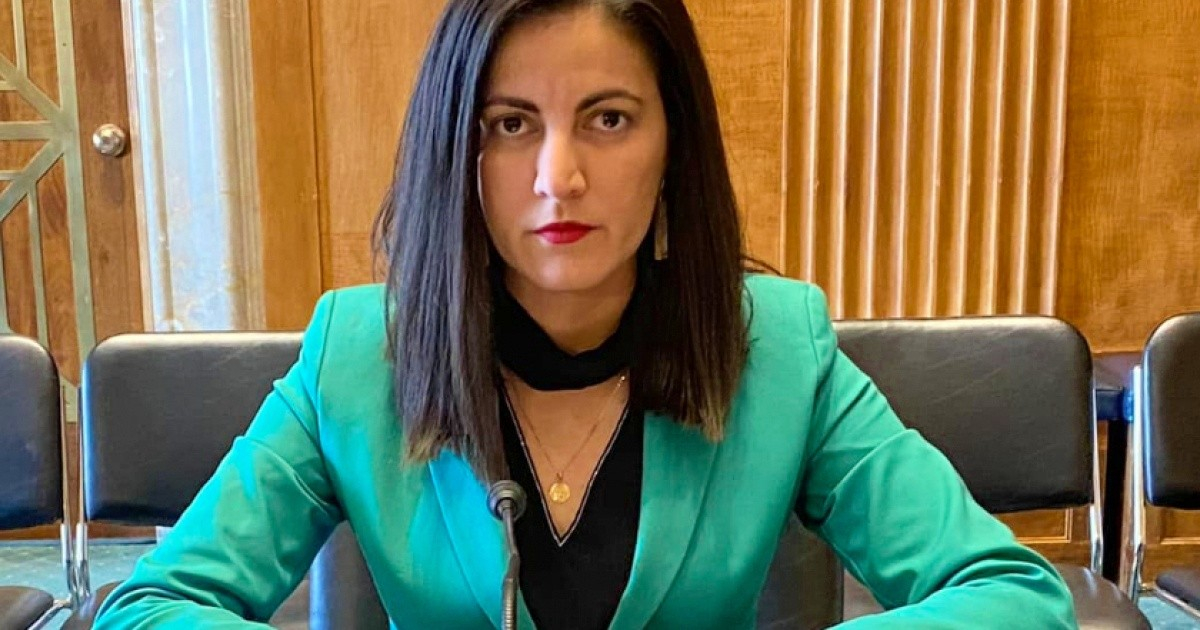
Rosa María Payá, a Cuban activist and commissioner of the Inter-American Commission on Human Rights (IACHR), expressed her support on Monday for a 100-page report released by the U.S. State Department titled "Cuba: The Capital of 21st Century Communism." This document outlines nearly seven decades of espionage, ideological subversion, and the Cuban regime's backing of terrorism.
Payá took to her X account to respond to the report, delivering a powerful statement: "The State Department has just published what the Cuban people have known for 67 years: the regime is more than just a local tyranny. It is clearly an organized operation to systematically subvert democracy both within and outside of Cuba. Thanks to Secretary Rubio for bringing this truth to the forefront of global consciousness."
The Personal Impact of State Terrorism
The weight behind Payá's words is significant, as she is directly affected by the Cuban state's acts of terrorism. Her father, Oswaldo Payá Sardiñas, who founded the Christian Liberation Movement and was a prominent opposition leader in Cuba's recent history, died on July 22, 2012, alongside activist Harold Cepero in a suspicious car accident near Bayamo.
The Cuban regime's official account blamed the fatalities on the recklessness of the driver, Spaniard Ángel Carromero, who was sentenced to four years in prison by Cuban courts. However, after his release in Spain, Carromero claimed he was coerced into a confession.
International Recognition of State Violence
In June 2023, the IACHR — an organization Payá has been involved with since January 2026 — concluded that there are "serious and sufficient indications" that Cuban state agents were directly involved in the deaths of Payá and Cepero.
Two years later, on July 22, 2025, the State Department was even more direct: "The Cuban regime assassinated pro-democracy leaders Oswaldo Payá and Harold Cepero."
The report released this Monday, under the leadership of Marco Rubio as part of the Trump administration's maximum pressure policy, claims that the confrontation with Cuba was not fundamentally a dispute over economic policy, sovereignty, or even territorial claims. Instead, it was a "revolution against Western civilization itself."
Connections to Radical Movements
The document associates the Cuban regime with radical movements like the Black Panthers, Weather Underground, Antifa, Black Lives Matter, and the Puerto Rican FALN, as well as groups such as Code Pink and the People's Forum.
Its publication aligns with a broader diplomatic offensive: on July 15, Rubio convened a ministerial meeting with 66 nations against the threat of extreme left-wing transnational terrorism. Since January 2026, the U.S. has enforced over 240 sanctions against the Cuban regime as part of this strategy. On Tuesday, Miguel Díaz-Canel dismissed the report, labeling Rubio as "corrupt" and denying all allegations.
Payá's Continued Fight for Justice
Rosa María Payá, who was elected as an IACHR commissioner on June 27, 2025, with 20 votes during the 55th General Assembly of the OAS — making her the first Cuban to hold this position — has been tirelessly advocating internationally against the state crime that claimed her father's life.
Her endorsement of the State Department's report reflects her firsthand understanding of the regime's oppressive nature, which not only stifles its own citizens but also spreads its methods of repression beyond Cuba's borders.
Understanding the U.S. Report on Cuba
What is the focus of the U.S. State Department's report on Cuba?
The report, titled "Cuba: The Capital of 21st Century Communism," details nearly seven decades of espionage, ideological subversion, and the Cuban regime's support for terrorism.
How is Rosa María Payá connected to the report's findings?
Rosa María Payá, whose father was a victim of state terrorism by the Cuban regime, supports the report as it aligns with her personal experiences and advocacy against the regime's oppressive actions.