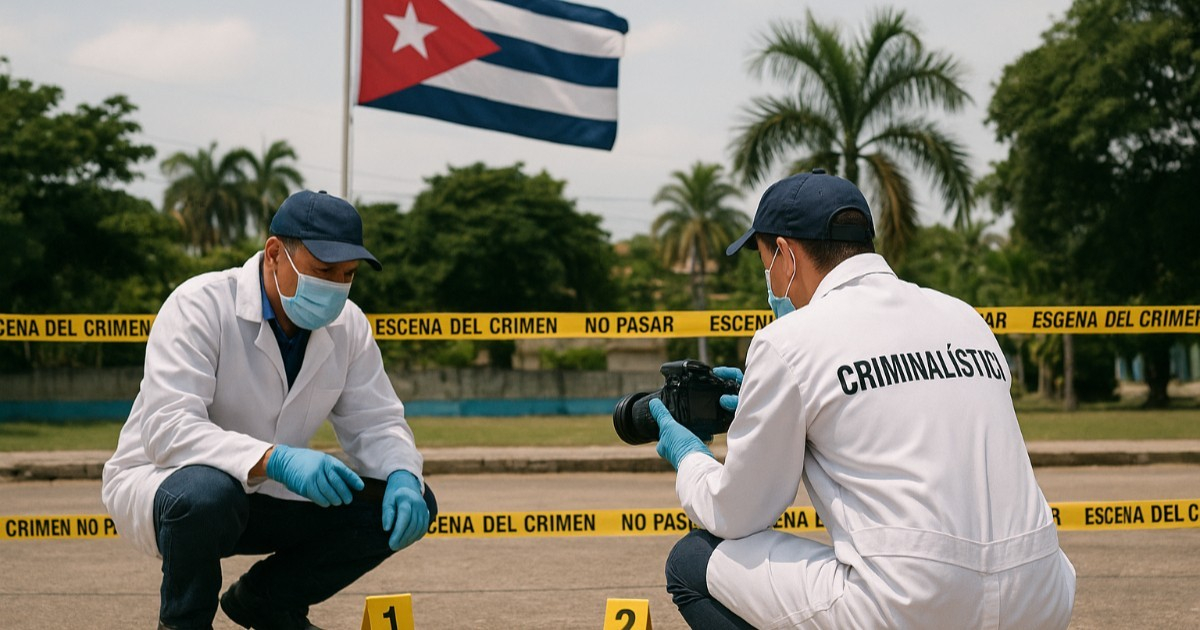
The Alas Tensas Gender Observatory (OGAT) announced on Monday the confirmation of two additional femicides in Cuba, as shared through their social media channels. This grim update increases the total number of cases this year to 44, with seven of these tragedies occurring in July alone.
The first victim, Kirenia López Mendoza, aged 43, was discovered lifeless on July 18 in her home located in the Pueblo Nuevo neighborhood of Nueva Gerona, Isla de la Juventud. Her death bore signs of extreme brutality.
The second case involved 17-year-old Merlin Noay, who succumbed after being hospitalized for several days following an attack earlier this month in Yerba de Guinea, Songo La Maya, Santiago de Cuba.
The System’s Failure to Protect
Kirenia's case underscores a significant lapse in the protective measures: despite reporting domestic abuse by her partner to the police, no effective protection was provided before her murder. Sources informed Alas Tensas that multiple individuals, potentially including her partner, might be involved, and further clarification is awaited to ascertain the exact nature of the femicide. Kirenia is survived by a teenage son, her mother, and a sister.
Regarding Merlin Noay, her attacker was a 64-year-old man who had been her stepfather for years. At the beginning of July, he assaulted her with a knife. The OGAT notes that Merlin and her aggressor had developed another type of relationship recently, which requires more detailed information. The group classifies this killing as both a familial and child femicide.
Societal Challenges and Judicial Response
The platform also raised concerns about a growing trend on social media to harshly judge victims and their families, which undermines reporting efforts and essential discussions about preventing violence against women and girls. Both alleged perpetrators are currently in custody, facing justice.
The tally of 44 femicides within just seven months marks a concerning 112% increase compared to the 18 cases reported during the same timeframe in 2025. In 2024, 56 femicides were recorded, and 2023 saw a historic peak of 90.
Lack of Official Recognition and Legal Framework
Between 2019 and June 2026, independent institutions have documented 350 femicides in Cuba, numbers they believe are underreported due to the Cuban state's opacity. Despite these figures, the Cuban government does not release official statistics on femicides, fails to acknowledge the crisis's severity, and has not defined femicide as a distinct crime in the 2022 Penal Code, where it merely serves as an aggravating factor for homicide.
The National Assembly dismissed a proposal to recognize femicide as an independent crime, and specific legislation is not scheduled until 2028. Cuba also lacks a comprehensive law against gender-based violence, institutional shelters, and effective protection protocols for at-risk women.
In April, the Cuban Foreign Ministry declared that there would be "no impunity for gender-based violence," yet this statement starkly contrasts with the absence of preventive policies and the escalating violence reported monthly by OGAT.
The organization is currently investigating 12 potential femicides and four attempted cases in 2026 that have yet to be confirmed, urging access to the investigation report on Anais Tamayo Puente's case, which remains unresolved. Their message is stark and urgent: "They are killing us."
Understanding the Femicide Crisis in Cuba
What is the current femicide situation in Cuba?
As of now, 44 femicides have been confirmed in Cuba in 2026, with a significant increase of 112% compared to the same period in 2025. This alarming situation indicates a growing crisis that is not being adequately addressed by the government.
What legal measures exist in Cuba to combat femicide?
Cuba lacks a specific legal framework for femicide, as it is not recognized as an independent crime in the 2022 Penal Code. It is only considered an aggravating factor for homicide, and there are no comprehensive gender violence laws or protection protocols in place.
How is the Cuban government responding to the femicide crisis?
The Cuban government has not published official statistics on femicides and has not acknowledged the severity of the crisis. Although there have been statements against gender-based violence, there has been a lack of preventive policies and effective legal measures to address the issue.