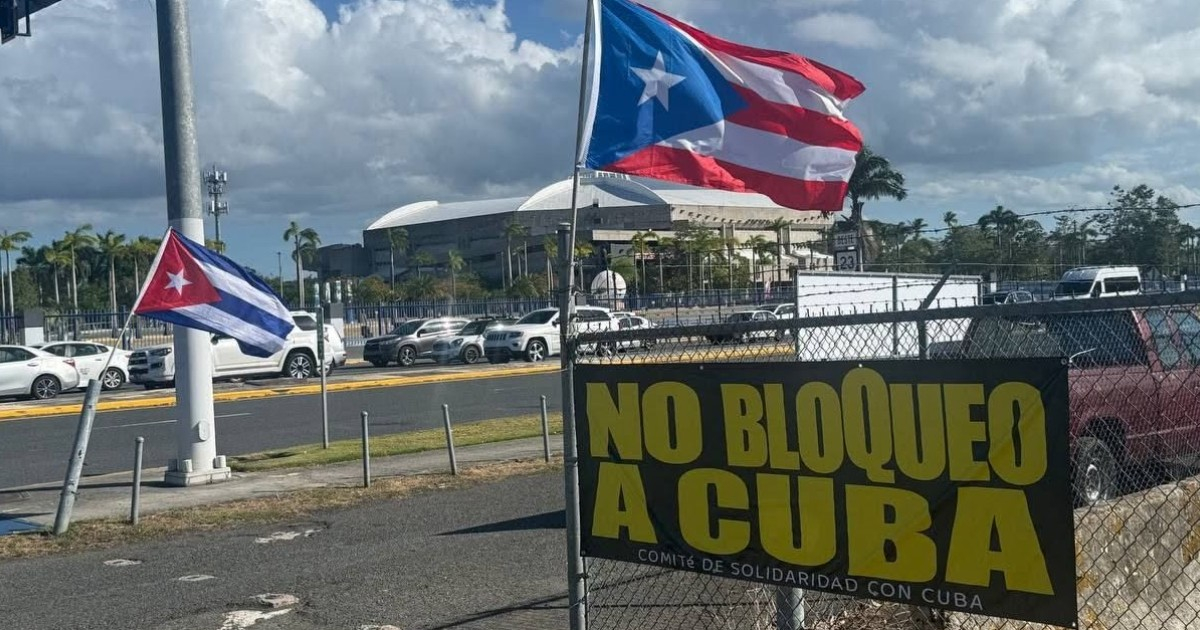
A report released by the Department of State on Monday discloses that a coalition of U.S. organizations tied to the Cuban regime crafted a detailed strategy for orchestrating nationwide protests within a day against military bases, Immigration and Customs Enforcement (ICE) facilities, and federal buildings in response to any U.S. military action against Cuba.
Titled "Cuba: The Capital of 21st Century Communism," the 100-page document, introduced by Secretary of State Marco Rubio, outlines nearly seventy years of the Cuban regime's espionage, ideological subversion, and revolutionary export against the United States.
Coordination and Timing of Protests
The plan, shared in June by the National Network on Cuba (NNOC), a coalition of over 60 U.S. organizations including the Democratic Socialists of America (DSA), the National Lawyers Guild, CodePink, and the Communist Party USA, is detailed in the State Department report. The so-called "National Rapid Response Plan" specifies an exact schedule: if military action occurs before 3:00 p.m. Eastern Time, demonstrations should begin by 6:00 p.m. the same day; if after, protests are to start the next day.
Targeted Locations and Strategic Goals
The report identifies three primary targets: federal buildings, military bases and recruitment centers, and ICE facilities and detention centers. A fourth optional target is sports stadiums during high-profile events.
The document explicitly aims to link mobilization to the anti-ICE agenda, instructing activists to focus on these facilities to "connect solidarity with Cuba to the nationwide anti-ICE/immigrant advocacy work."
Mapping and Strategic Coordination
For identifying specific targets, the plan refers to a map created by the Black Alliance for Peace—a frequent NNOC collaborator—detailing the exact locations and sizes of 1,335 U.S. military commands, bases, and training centers in the Americas, along with so-called "Cop Cities" (police training centers).
This plan is portrayed as the latest manifestation of the Cuban regime's decades-long strategy to cultivate U.S. activist networks that can be mobilized against American foreign policy. The Cuban Institute of Friendship with the Peoples (ICAP), which was sanctioned in June under Executive Order 14404 for "supporting Cuban intelligence and counterintelligence activities," operates as the central hub of this network, with about 90% of its staff linked to Cuban espionage services.
Key Figures and Organizational Roles
ICAP is led by Fernando González Llort, a former member of the Wasp Network, who was released in 2014 and celebrated as a hero in Cuba. In July 2026, federal agents detained and deported a Cuban national and his family after revoking their legal status due to their association with ICAP.
The report also highlights the role of the People's Forum in Manhattan, which since 2024 has served as the fiscal sponsor of the Venceremos Brigade and was instrumental in orchestrating the nationwide anti-ICE shutdown on January 30.
In January, the organization partnered with the New York chapter of the DSA to recruit up to 4,000 "rapid response" activists aimed at countering ICE operations in the city.
Historical Context and Current Implications
Presenting the report, Rubio stated, "For over six decades, the Cuban regime has been the main sponsor of radical leftism and third-worldism in the United States. The American people deserve to know this."
This publication aligns with the Trump administration's maximum pressure policy towards Cuba. Since January, when Trump declared a national emergency labeling the Cuban regime as an "unusual and extraordinary threat," the administration has imposed more than 240 new sanctions against Cuban officials and institutions, including ICAP itself.
The report concludes by emphasizing that underestimating Cuba's poverty as harmless is a grave misunderstanding of the threat, warning that the regime's power "has always been ideological, subversive, and parasitic," and currently serves as a connective tissue of a broader anti-American coalition where the interests of Moscow, Beijing, and Tehran converge with radical movements operating within the U.S.
Key Insights into the Cuban Influence on U.S. Protests
What is the "National Rapid Response Plan"?
The "National Rapid Response Plan" is a coordinated strategy designed by a coalition of U.S. organizations linked to the Cuban regime to organize protests against U.S. military actions targeting Cuba, focusing on federal buildings, military bases, and ICE facilities.
Who is behind the creation of this plan?
The plan was disseminated by the National Network on Cuba (NNOC), a coalition including organizations like the Democratic Socialists of America, the National Lawyers Guild, and the Communist Party USA, all with connections to the Cuban regime.