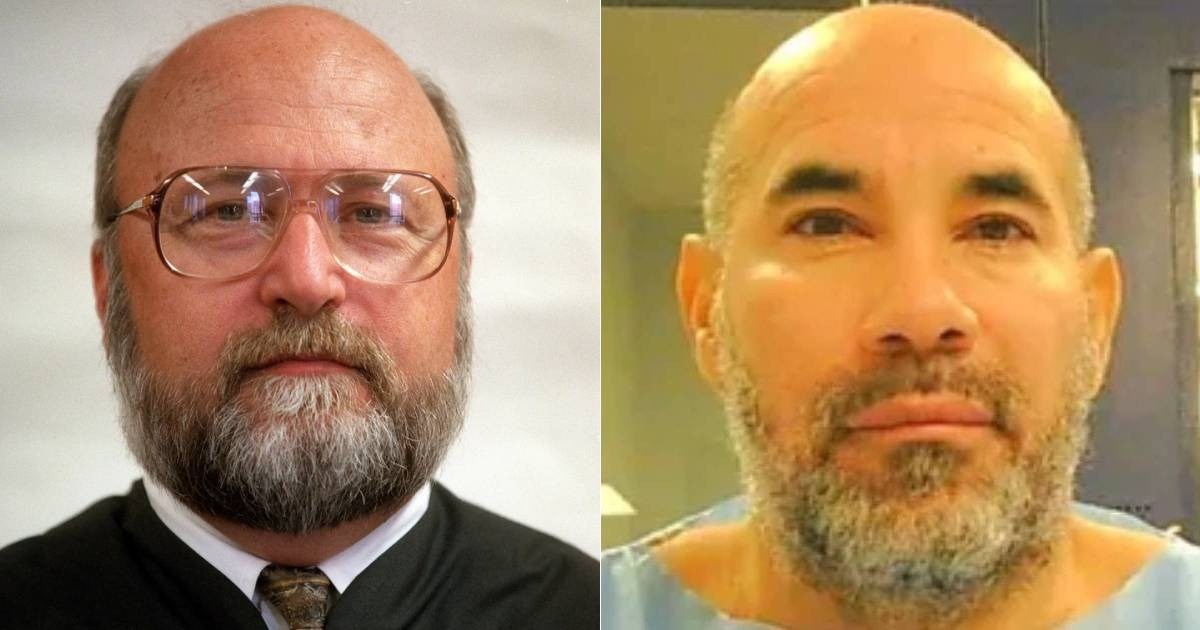
John E. Steele, a federal judge for the Middle District of Florida, passed away unexpectedly on July 16 at the age of 77. His death came just eight days after he ordered the release of Cuban national Maikel Guerra Morales, who had been detained for hijacking a plane in 2003 and was in the custody of the U.S. Immigration and Customs Enforcement (ICE) pending deportation.
A legal source in Miami and a legal assistant to Chief Judge Marcia Morales Howard confirmed Steele's passing. As of Monday, judicial authorities had not disclosed the cause of his death, nor did there appear to be any connection to his controversial immigration ruling or the impeachment proceedings initiated against him.
Appointed by former President Bill Clinton in 2000, Steele ordered on July 8 that ICE release Guerra Morales within 24 hours, arguing that his prolonged detention violated the Supreme Court precedent set in Zadvydas v. Davis (2001), which prohibits indefinite detention of immigrants whose deportation cannot be completed within a reasonable time frame.
In a decisive ruling, Steele declared, "The law is unambiguous on this matter. The Government cannot keep individuals in a cell indefinitely as a substitute for a stalled deportation process."
Political Backlash and Impeachment Efforts
Steele further emphasized that ICE had detained Guerra Morales since December 2025 without a concrete plan for his removal or proof that Mexico was willing to accept him. "ICE has had over three years since Guerra Morales' removal order—and more than six months since his current detention—to deport him from the United States and [still] cannot articulate a specific plan for his removal to Cuba, Mexico, or another country," the judge stated in his decision.
The ruling sparked immediate political backlash. On July 14, the Department of Homeland Security labeled Steele as an "activist judge," while acting deputy secretary Lauren Bis claimed the decision contradicted the Trump administration's immigration policy.
The following day, Florida Republican Congressman Greg Steube introduced articles of impeachment against Steele, accusing him of "high crimes and misdemeanors." "Judge Steele had all the legal justification to keep a convicted plane hijacker off our streets, yet he chose to set him free," Steube told Fox News.
The judge's sudden passing, occurring just a day after the impeachment initiative was introduced, effectively nullified the proceedings.
The Story of Maikel Guerra Morales
Guerra Morales' history dates back to March 19, 2003, when he and at least eleven other Cubans hijacked a DC-3 Aerotaxi plane from Isla de la Juventud to Key West, Florida. He was sentenced to 22 years in federal prison for air piracy and served his entire sentence.
In May 2022, an immigration judge granted him protection under the Convention Against Torture, recognizing the risk of inhumane treatment if he were returned to Cuba, which prevented his deportation to the island. However, ICE detained him again in December 2025, aiming to deport him to Mexico.
Following Steele's death, Guerra Morales spoke to WINK News from his residence in Lubbock, Texas, where he remains under federal immigration supervision.
"Regardless of the differing opinions surrounding my case, I will always remember Judge Steele as a man who honored the oath he took upon assuming his role: to apply the law with independence, integrity, and justice," the Cuban stated.
Understanding the Legal Implications of the Judge's Ruling
What precedent did Judge Steele rely on for his ruling?
Judge Steele based his decision on the Supreme Court case Zadvydas v. Davis (2001), which prohibits the indefinite detention of immigrants when deportation cannot be completed within a reasonable time frame.
What was the political reaction to Steele's decision?
The decision prompted a political backlash, with the Department of Homeland Security labeling Steele as an "activist judge" and Congressman Greg Steube introducing impeachment articles against him.