Miguel Díaz-Canel's message celebrating Children's Day in Cuba, observed on the third Sunday of July, quickly turned into a litmus test for public discontent. His comments on social media were met with a wave of critical responses.
The Cuban leader referred to the nation's children as "little giants, guardians of the country's future," and assured that the regime would "always look after our children, even in the toughest times."
He also invoked Fidel Castro, calling him the "giant pioneer" who promoted the celebration, recalling moments when Castro donned the iconic scarf while interacting with young Cuban pioneers.
The message was accompanied by historical black and white photos of Castro with children, and an official poster featuring the logos of the José Martí Pioneer Organization and the Union of Young Communists.
Public Reaction: A Cry for Reality
The post attracted numerous sharply critical comments: "There's nowhere I can take my child today for fun, what happiness are you talking about?" one user expressed.
Another comment highlighted the disparity between the official narrative and the harsh realities: "Cuban children don't drink milk, eat meat, or even sleep. In a country without power, where a kilo of milk costs 5,000 pesos, equivalent to a professional's salary. Cuban children have no vacations, no life."
A recurring sentiment was: "What future is he talking about?"
One user wrote: "Happy Children's Day to all Cuban children. I hope one day they can truly celebrate with what they deserve: food on the table, electricity, medicine, toys, and a future full of opportunities. No child should grow up with so many deprivations."
Highlighting Hypocrisy
Others directly addressed the leader's hypocrisy: "Many congratulations to those children sleeping during blackouts, who don't have breakfast, who can't go on vacation because their parents' salaries aren't enough even for food. That's not the case with your family’s children, right? Yours and the elite's."
Some pointed out the irony in the promise to "look after" the children: "You've 'looked after' them so much that you stopped giving them milk at age seven, and now they have none."
A bitter summary of the island's harsh reality was encapsulated in a comment: "Congratulations in a blackout."
Stark Reality vs. Festive Message
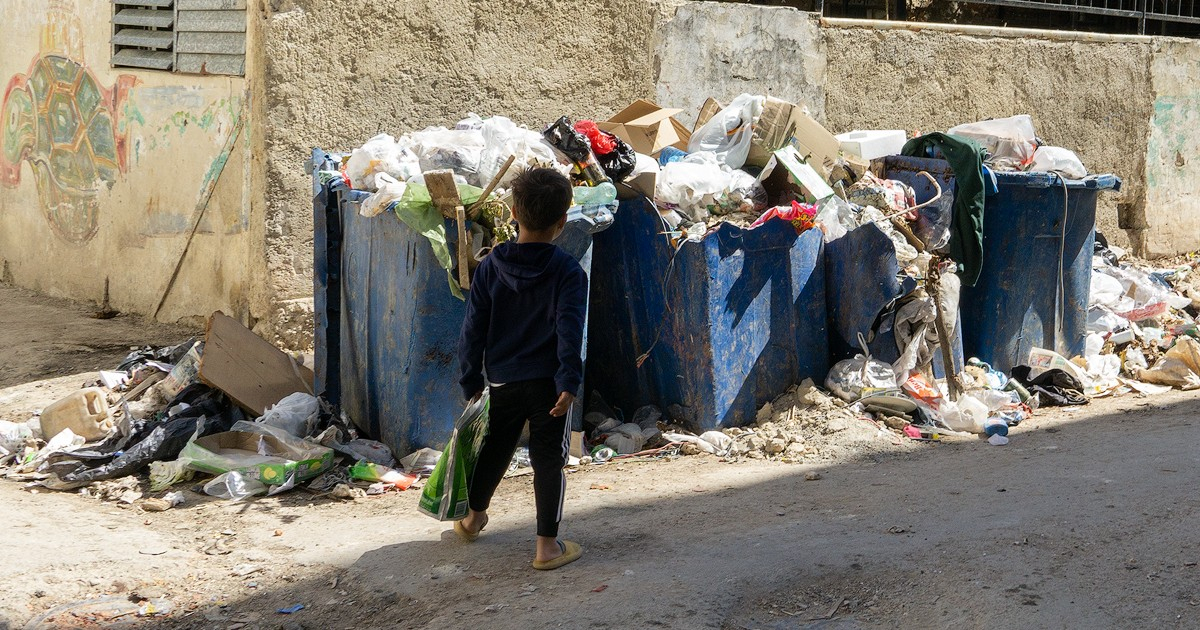
The stark contrast between the festive message and the grim reality is undeniable. Over 100,000 Cuban children do not receive their daily milk ration, and the Ministry of Food Industry itself admitted that the child supply plan is "impossible to fulfill."
The infant mortality rate reached 9.9 per 1,000 live births in 2025, the highest in over two decades, marking a 148% increase since 2018.
In July 2026, Cuba endured four total blackouts of the national electrical system, with outages lasting up to 87 consecutive hours in some provinces and between 20 and 35 hours daily in Havana, as reported during the energy crisis.
Just days before Díaz-Canel's message, children were sleeping on the floor of a portal in Havana to escape the heat during blackouts of up to 30 hours, and mothers were posting photos of their babies exposed to mosquitoes without water or electricity.
One comment summed it up poignantly: "Mr. President, those 'guardians' will leave the country as soon as they grow up a bit. It's a very sad childhood they endure, and an even sadder old age awaits them."
FAQs about the Current Situation in Cuba
What are the main challenges faced by Cuban children today?
Cuban children face numerous challenges including lack of access to basic necessities like milk, food, and electricity. Many also endure harsh living conditions due to frequent power outages and economic hardships.
How has the infant mortality rate in Cuba changed in recent years?
The infant mortality rate in Cuba has increased significantly, reaching 9.9 per 1,000 live births in 2025, which is the highest in over two decades and represents a 148% increase since 2018.
What impact have the electrical blackouts had on Cuban families?
The frequent electrical blackouts have severely impacted Cuban families, with children and adults suffering from lack of air conditioning, refrigeration, and basic lighting. These conditions have exacerbated the daily struggles of living in Cuba.