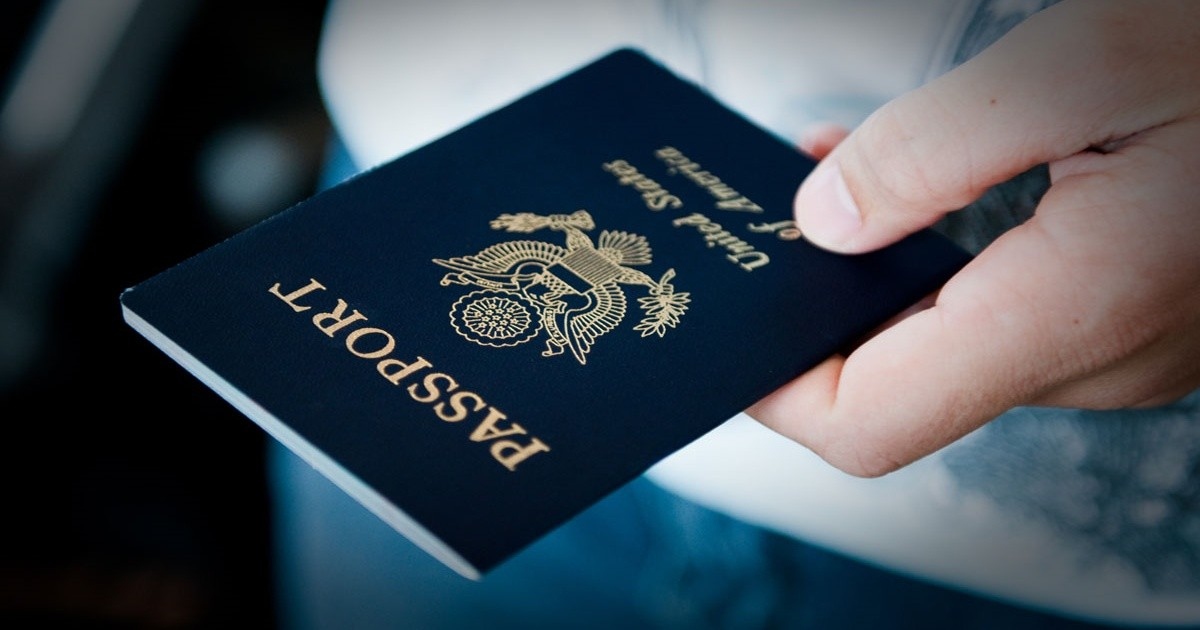
The U.S. Department of State has issued a reminder to American citizens holding dual citizenship that they must use a valid U.S. passport when entering and exiting the country. This rule is applicable to all, including minors.
"U.S. citizens are required to enter and exit the United States with a U.S. passport. This mandate includes U.S. citizens with dual citizenship, such as children," stated the official TravelGov account.
This advisory, released amidst the summer travel season, aims to prevent dual nationals from attempting to travel to the United States using only the passport issued by their other country of citizenship.
The State Department also cautioned that U.S. citizens with dual nationality should not apply for an Electronic System for Travel Authorization (ESTA) using their foreign passport.
The ESTA is designed for foreign travelers eligible for the Visa Waiver Program, not for U.S. citizens.
According to the advisory, the Department of Homeland Security routinely denies or cancels ESTA applications when it identifies applicants as dual-national U.S. citizens.
"If you are a U.S. citizen or national living abroad and plan to travel to the United States, ensure you do so with a valid U.S. passport," TravelGov added.
Authorities recommended renewing the passport before travel if it is expired or nearing expiration. They also advised checking the destination country's entry requirements, as some require passports to remain valid for up to six months beyond the intended date of entry or departure.
The Cuban-American Context
For the Cuban-American community, it's essential to understand the distinct legal scenarios. Cuban-Americans must present their U.S. passport for re-entry into the United States and cannot use ESTA, even if they hold a Cuban, Spanish, or any other passport.
Conversely, Cuban nationals with a Spanish or other passport from countries in the Visa Waiver Program, but who are not U.S. citizens, are regarded as foreign nationals by U.S. immigration. These individuals may apply for ESTA if they meet all requirements.
However, except for certain limited cases, those who have traveled to or remained in Cuba since January 12, 2021, are not eligible for the Visa Waiver Program and must apply for a U.S. visa. This restriction has led to ESTA cancellations for Cuban travelers with European passports.
Thus, it is not merely Cuban dual nationality that precludes obtaining ESTA; factors like residing in Cuba from that date and responses given during the application process also play a role.
Immigration attorneys have advised affected travelers to confirm their eligibility before submitting applications.
Legislative Developments and Dual Citizenship
The warning comes in the context of the debate sparked by the Exclusive Citizenship Act of 2025, introduced on December 1, 2025, by Republican Senator Bernie Moreno from Ohio. This proposal seeks to ban dual citizenship in the United States, compelling individuals with dual nationalities to choose one. However, it remains in the Senate Judiciary Committee, has not been passed, and holds no legal power.
Dual citizenship continues to be legal in the United States. The State Department maintains, based on Supreme Court precedents, that a person cannot lose U.S. citizenship without voluntarily committing an act with the intention to relinquish it.
Additionally, immigration advisory firm Henley & Partners reported a 183% year-over-year increase in inquiries from Americans interested in obtaining another residence or citizenship during the first quarter of 2025. This figure reflects inquiries to the company and is not an official statistic for the entire U.S. population.
FAQs on Dual Citizenship and Travel Regulations
What are the requirements for U.S. citizens with dual nationality when entering the United States?
U.S. citizens with dual nationality are required to enter and exit the United States using a valid U.S. passport, regardless of their age.
Can U.S. citizens with dual nationality use ESTA to travel to the United States?
No, U.S. citizens with dual nationality should not use ESTA as it is intended for foreign travelers eligible under the Visa Waiver Program, not for U.S. citizens.
How does the Exclusive Citizenship Act of 2025 affect dual citizenship in the United States?
The Exclusive Citizenship Act of 2025 proposes to prohibit dual citizenship in the U.S., but it is still under consideration in the Senate Judiciary Committee and has not been enacted into law.