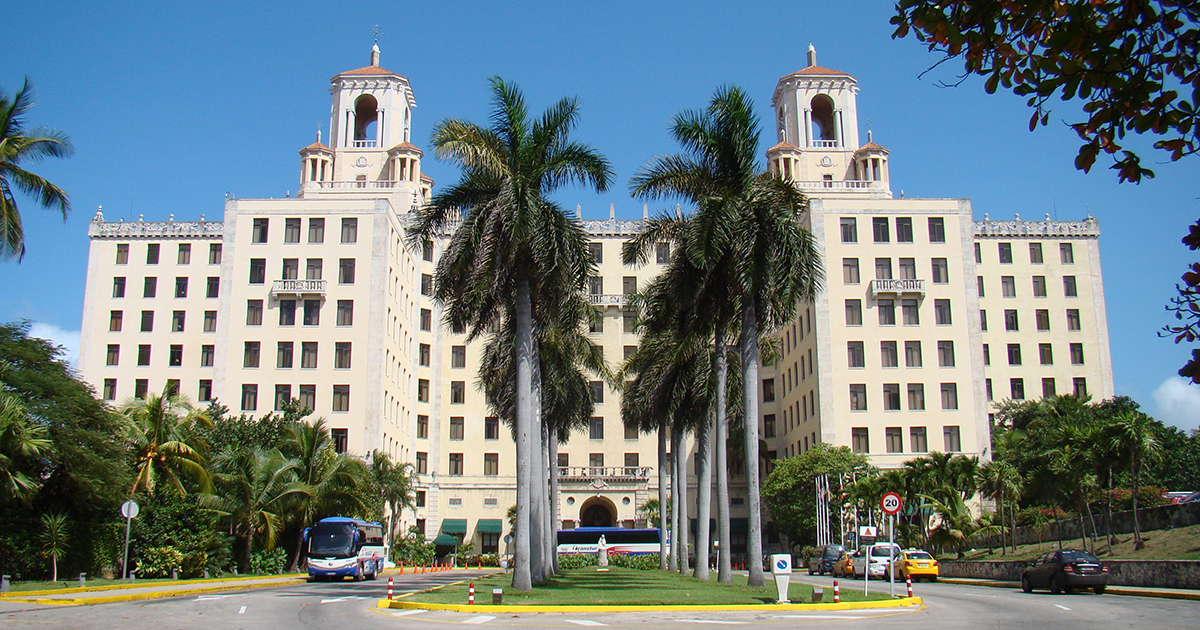
This past Sunday, the Hotel Nacional de Cuba announced a special poolside event to watch the 2026 World Cup final between Argentina and Spain, with tickets priced at an eye-popping 19,000 Cuban pesos per person.
Teaming up with entertainment company PMM (Por Más Música), the event promises live coverage of the match on a giant screen set up by the hotel's iconic pool, just steps from the Malecón. The festivities are scheduled to run from 10 a.m. until 8 p.m.
According to the announcement, each ticket costs 19,000 pesos, with an additional consumption charge of 6,000 pesos. These figures starkly contrast the average purchasing power of most Cubans, without delving into complex financial analyses.
“Enjoy the match with refreshing drinks, delicious food, and the best atmosphere. A unique setting with the Malecón breeze and the energy of grand events,” the hotel’s statement reads, extending the invitation to families, friends, and couples while cautioning that space is limited.
The ticket price is particularly striking given Cuba's ongoing severe economic crisis.
Official statistics from the National Office of Statistics and Information (ONEI), cited by economist Elías Amor, reveal that the average monthly salary in Cuba for 2025 was 6,930 pesos. This means the ticket price alone, excluding additional consumption costs, is nearly equivalent to three average monthly salaries.
Furthermore, with the minimum wage set at just 3,210 pesos since July 2026, the 19,000 pesos entrance fee is almost six times the monthly minimum income.
The Hotel Nacional isn't the only venue to stir controversy with its pricing strategy. Back in April 2026, a day pass at the Iberostar Parque Central pool went viral for its 10,000-peso price tag, igniting public outrage on social media. Likewise, June saw the Hotel Habana Libre promoting an equally pricey day pass, and a VIP table at a Varadero concert reached an astonishing 600 dollars.
Understanding the Economic Context of Cuba's High Event Prices
Why is the pool party ticket price considered high in Cuba?
The ticket price of 19,000 Cuban pesos is considered high due to the country's economic difficulties, where the average monthly salary is 6,930 pesos, making the ticket cost nearly three times that amount.
What are the implications of such high pricing for the Cuban population?
High pricing limits accessibility for the average Cuban, whose income is significantly lower, meaning such events are out of reach for the majority, highlighting the disparity between event costs and average wages.
Have other events in Cuba faced similar criticism over pricing?
Yes, other events, such as a day pass at Iberostar Parque Central and a VIP concert table in Varadero, have also faced backlash due to their exorbitant prices, sparking debates on social media.