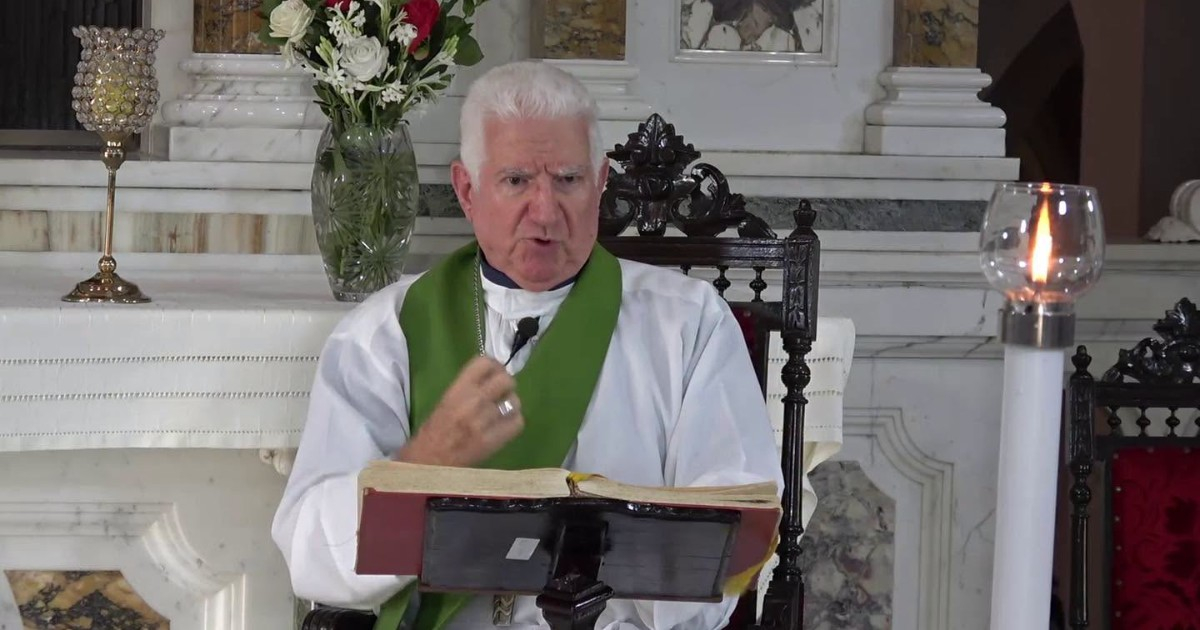
On Sunday, Archbishop Dionisio García Ibáñez of Santiago de Cuba delivered a sermon at the Basilica Shrine of Our Lady of Charity in El Cobre, where he posed a rhetorically charged question with significant political overtones: "When someone does what they shouldn't or abuses power, who can hold them accountable? Who? Who?"
The archbishop drew on biblical teachings to highlight that God's power is evident through His mercy and ability to forgive. He urged the congregation to embrace humanity and extend forgiveness to others.
The inquiry into power abuse emerged from contrasting God's ultimate authority with the earthly challenge of confronting those who misuse their power: "If sometimes we can't even hold accountable those living among us," the prelate remarked.
Leading the archdiocese since 2007, García Ibáñez, now in his 80s, concluded his Sunday homily by advocating for compassion and mutual forgiveness: "Let us be humane, let us forgive as we wish God to forgive us."
Increasingly Vocal Stance Against Misuse of Power
This sermon marks the latest in a series of increasingly critical statements by the archbishop throughout 2026 from the same pulpit.
In May, García Ibáñez declared that "Cuba must change" and called for "measures to improve the country's situation." That month, he admonished leaders not to see themselves as "masters of the world."
A month later, he cautioned that "there are people who trust in power, and they cause great harm when they believe power gives them the right to do anything."
He recently acknowledged the Cuban people's struggles: "So many are asking for help. And the help is not enough."
Tensions Between Church and State
The archdiocese's statements come amidst ongoing tensions between the Catholic Church and the Cuban regime.
In January, State Security summoned and threatened outspoken priests like Alberto Reyes Pías and Castor José Álvarez Devesa for their public remarks.
That same month, the Conference of Catholic Bishops of Cuba issued its most forthright collective statement, cautioning that "Cuba needs change, and it is becoming increasingly urgent" to prevent social chaos.
Frequently Asked Questions on Church-State Relations in Cuba
What did Archbishop García Ibáñez criticize in his homily?
Archbishop García Ibáñez criticized the abuse of power and questioned who can hold such behavior accountable.
How has the Cuban government responded to critical church figures?
The Cuban government has summoned and threatened priests who have openly criticized the regime, such as Alberto Reyes Pías and Castor José Álvarez Devesa.
What stance has the Catholic Church in Cuba taken regarding political change?
The Catholic Church in Cuba, through the Conference of Catholic Bishops, has called for urgent political change to prevent social chaos.