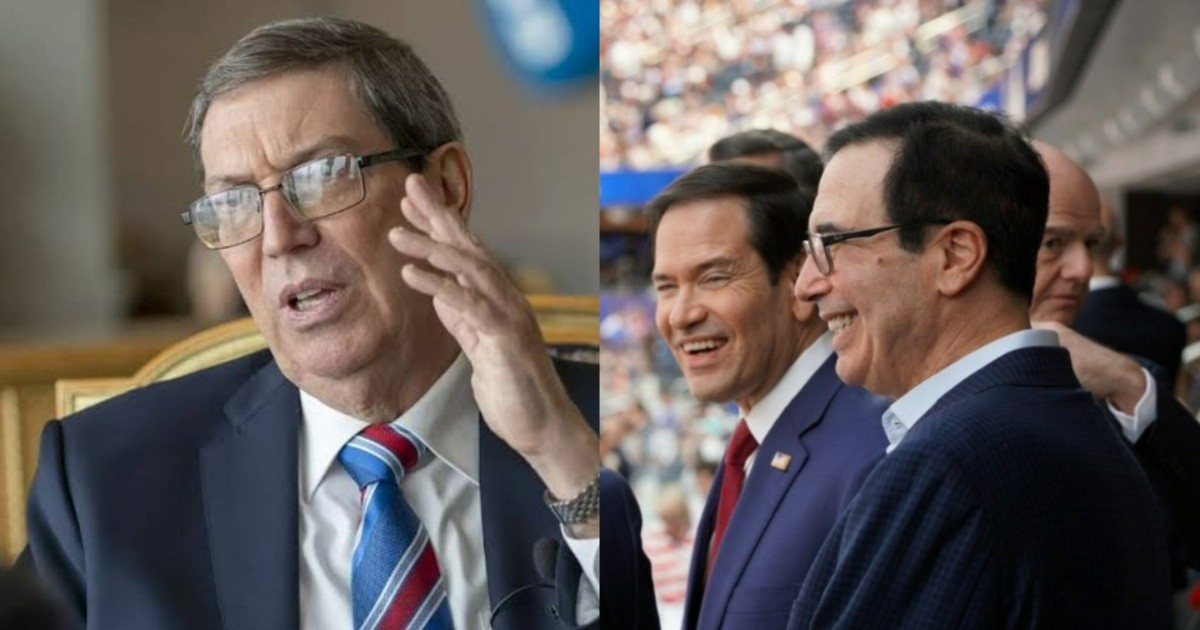
This past Sunday, as Argentina and Spain faced off in the World Cup 2026 final, Cuban Foreign Minister Bruno Rodríguez Parrilla took to Facebook to issue a lengthy statement. He claimed that the U.S. embargo was to blame for the obstacles Cubans encountered in following the tournament, while also acknowledging the existence of "unbearable blackouts" on the island.
"The U.S. energy blockade against Cuba couldn't stop the World Cup, but it did make it difficult for us to watch and follow," wrote the Foreign Minister on Facebook, placing the full burden on Washington while sidestepping the inherent crisis within Cuba's electrical infrastructure.
During the tournament month, Cubans faced a stark reality: power outages lasting between 20 to 24 hours daily in Havana and up to 87 consecutive hours in provinces like Matanzas, with a record electricity deficit of 2,341 megawatts noted on July 8.
Cuba's National Electric System experienced at least five total collapses in 2026, three of which occurred during the World Cup itself—on July 6, 10, and 14, according to documented technical data.
The Struggle to Watch the World Cup
While Rodríguez extolled "extraordinary sporting achievements" that Cubans "celebrated and enjoyed," state television channel Tele Rebelde broadcasted a mere 10 minutes of the tournament's opening ceremony before switching to cycling and volleyball. Those who managed to watch matches often gathered at Havana's Cine Yara, unable to do so in their homes.
The state-run platform Picta, proposed as a broadcasting alternative, was largely inaccessible to the population due to power shortages and poor connectivity.
Infrastructure Failures and Political Blame
Experts highlight that the primary cause of the blackouts is the outdated state of the electrical infrastructure: for instance, the Antonio Guiteras thermoelectric plant experienced 17 disconnections in 2026 without having received major maintenance since 2010, long before the latest sanctions.
In his post, Rodríguez also criticized various controversies surrounding the tournament. He condemned the denial of visas and "humiliating searches" of players, referees, and fans, referencing incidents like the detention of Somali referee Omar Abdulkadir Artan, who was held for 11 hours in Miami and deported despite having a valid visa and diplomatic passport.
Rodríguez further accused the White House of exerting pressure on FIFA to overturn the expulsion of U.S. forward Folarin Balogun, calling it "brutal interference." The European Parliament launched an investigation to determine if FIFA President Gianni Infantino was politically pressured by the White House in this case.
He also criticized ticket prices, which soared to $30,000 in resale for the final, denouncing this as an "obscene increase" benefiting elites.
Rodríguez concluded his post with a quote from the late Argentine football legend: "As Maradona said, the ball doesn’t stain!"
This isn't the first instance of Rodríguez using this argument on international platforms: in July 2026, he presented a photo gallery of blackouts in Havana —including darkened operating rooms— to the UN, blaming the U.S. embargo for the energy crisis, in what has become a systematic strategy by the regime to deflect from its own accountability.
Understanding Cuba's Energy Crisis and World Cup Access
What did Bruno Rodríguez blame for the difficulty in watching the World Cup in Cuba?
Bruno Rodríguez attributed the difficulty to the U.S. embargo, which he claimed hindered energy access and, as a result, the ability to watch the World Cup.
What were the power outage conditions in Cuba during the World Cup?
During the World Cup, Cubans experienced severe power outages, with some areas facing blackouts lasting between 20 to 24 hours daily, and provinces like Matanzas enduring up to 87 consecutive hours without power.
How did Cuba's infrastructure contribute to the blackouts?
The outdated infrastructure, particularly the Antonio Guiteras thermoelectric plant, which had not received significant maintenance since 2010, was a primary cause of the frequent blackouts.