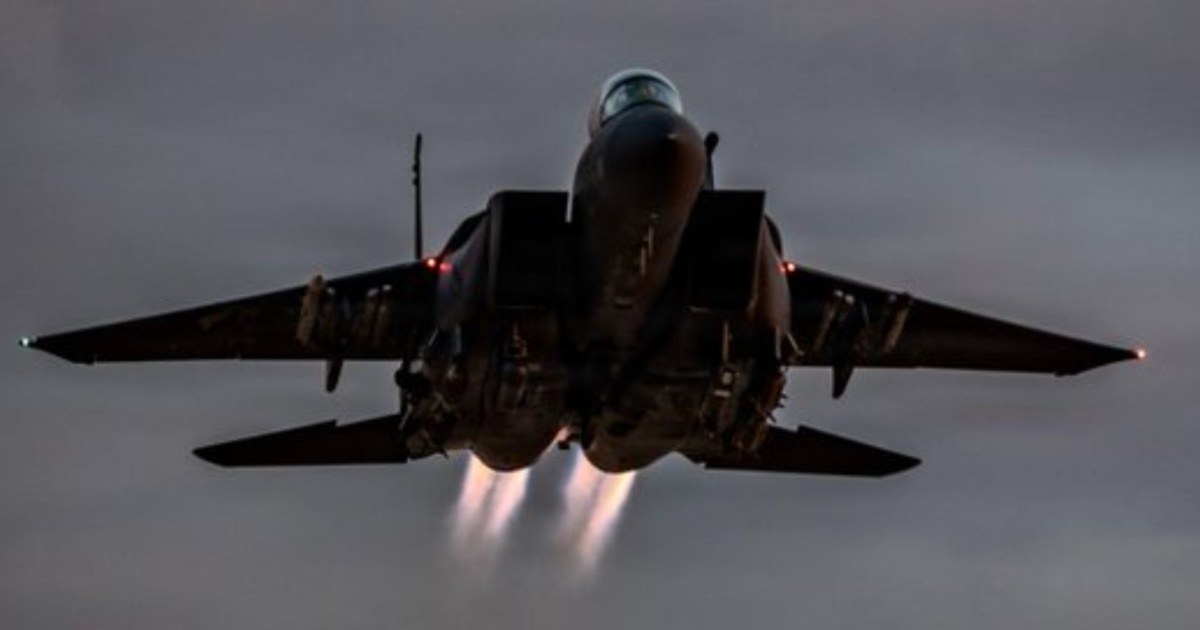
In a strategic move that may signal a new offensive against Iran, the Trump administration dispatched F-16 fighter jets from Germany's Spangdahlem Air Base and stealth F-35 aircraft from the RAF Lakenheath Base in the UK to the Middle East this past Sunday. This development, reported by The New York Times through the EFE agency, indicates a potential escalation in regional tensions.
Anonymous U.S. officials have confirmed the deployment, which also includes additional aerial refueling aircraft, suggesting plans for sustained long-range operations. Notably, the decision to send these reinforcements was made before Iran's attack on Friday in Jordan, indicating the White House had anticipated an escalation regardless of that incident.
On July 17, the Iranian Islamic Revolutionary Guard Corps launched ballistic missiles and drones targeting the Muwaffaq Salti airbase in central-northern Jordan. This attack resulted in the deaths of two American soldiers and the disappearance of another. U.S. Central Command (CENTCOM) confirmed these casualties on Saturday, with four additional soldiers being treated and released from Jordanian hospitals.
In retaliation, the U.S. conducted its eighth round of airstrikes early Sunday morning against Revolutionary Guard installations in Iran, targeting coastal surveillance, air defense, maritime capabilities, and missile and drone storage sites. The conflict has claimed the lives of 16 American soldiers to date.
This latest deployment marks the most significant U.S. air force reinforcement in the region since the Gulf Wars, with up to 300 combat aircraft mobilized.
A Historical Context of the Conflict
The roots of this ongoing conflict trace back to February 28, 2026, when Trump announced "Operation Epic Fury," a joint military action with Israel that struck over 500 Iranian targets, including nuclear facilities, within the first few hours. This initial assault led to the death of Supreme Leader Ali Khamenei.
After months of hostilities, a 60-day ceasefire known as the Islamabad Memorandum was brokered between June 17 and 19, 2026, with mediation by Pakistan, Qatar, Saudi Arabia, and Turkey. However, the truce was short-lived; Iran attacked three merchant ships in the Strait of Hormuz on July 6 and 7, prompting Trump to declare the ceasefire over at a NATO summit in Ankara, vowing to "hit them very hard."
Since then, the U.S. has launched consecutive nightly strikes on over 300 Iranian military targets, while Iran has retaliated with attacks on American bases in Bahrain, Kuwait, and Jordan.
On July 15, Trump, during a Fox News interview, issued an ultimatum to Iranian leaders, stating, "They better make a deal. There won't be anyone left." However, he also mentioned that Iran is "now negotiating" and there is a "good chance" of reaching an agreement.
Understanding U.S.-Iran Tensions: Key Questions Answered
What prompted the latest U.S. military deployment to the Middle East?
The U.S. sent additional aircraft to the Middle East as part of a strategic move potentially aimed at launching a new offensive against Iran, following increased tensions and attacks in the region.
How has Iran responded to U.S. military actions?
Iran has retaliated to U.S. strikes by targeting American bases in Bahrain, Kuwait, and Jordan, escalating the conflict further.
What is the Islamabad Memorandum?
The Islamabad Memorandum was a 60-day ceasefire agreement mediated by Pakistan, Qatar, Saudi Arabia, and Turkey in June 2026, which ultimately failed after Iran attacked merchant ships.