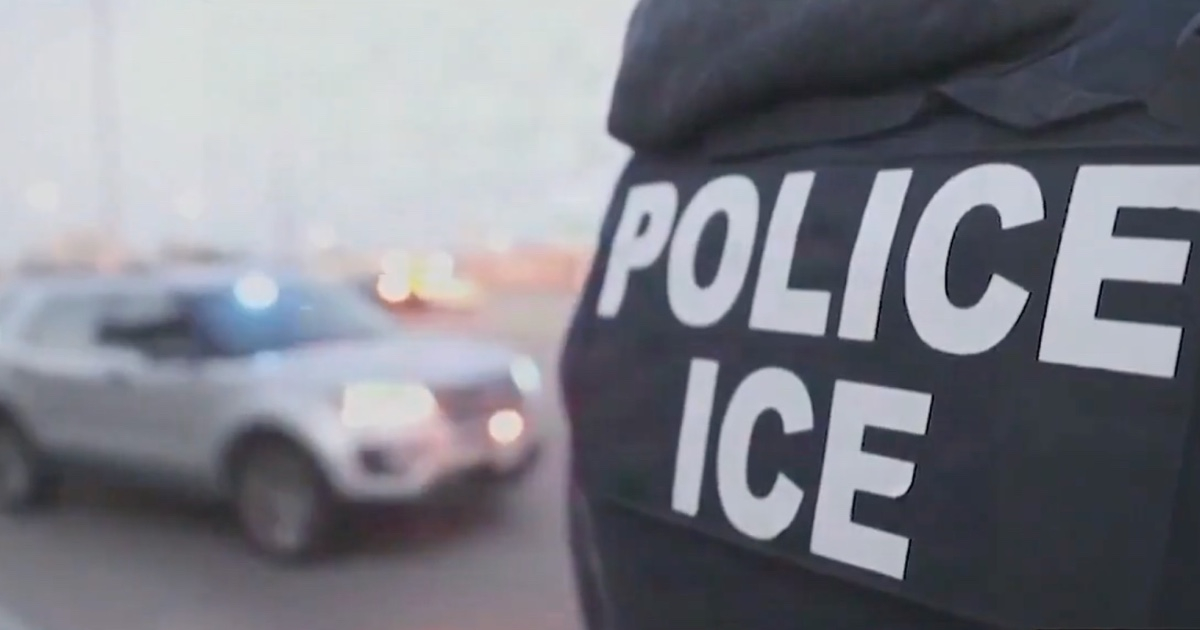
On Sunday, Tom Homan, the Trump administration's "border czar," revealed that U.S. Immigration and Customs Enforcement (ICE) will require its agents to wear body cameras during all traffic stops, as he confirmed on Fox & Friends Weekend.
This announcement follows two fatal shootings involving ICE agents within less than a week. In both incidents, the officers were not equipped with body cameras, despite an existing internal directive mandating their use since February 2025.
Controversial Shootings and Lack of Accountability
The first incident occurred on July 7 in Houston, Texas. An ICE agent fatally shot Lorenzo Salgado Araujo, a 52-year-old Mexican who had lived in the United States for over 35 years. Salgado Araujo, a father of three U.S. citizen children, was driving a truck with construction workers and was not the operation's target.
On July 13 in Biddeford, Maine, agent David Brouillette shot and killed Joan Sebastián Durán Guerrero, a 26-year-old Colombian with a valid work permit and father of a three-year-old daughter. He also was not the intended target of the operation.
The absence of body cameras in both cases has fueled the debate over ICE's use of force, as there is no visual record of what transpired during these incidents.
Push for Enhanced Transparency and Training
Homan expressed a desire for greater transparency, stating, "Law enforcement agents are exonerated more than they are condemned, and I want them to wear body cameras so the American public can see what the agents saw when they acted."
He confirmed that the cameras have already been purchased and that instructors are being trained for nationwide deployment. However, the process faced delays due to federal government shutdowns that hindered timely contract awards.
ICE's Effort to Address Equipment Shortfalls
The scale of the existing shortfall is significant. In March 2026, then-acting ICE chief Todd Lyons informed Congress that only about 3,000 of the agency's 13,000 agents—less than a quarter—were equipped with body cameras, even though directive 19010.3, issued on February 19, 2025, mandated their use during enforcement activities.
Recent institutional responses have been swift and contradictory. On July 14, Homeland Security Secretary Markwayne Mullin suspended nearly all ICE traffic stops to review protocols. However, President Trump reversed this pause within 24 hours, expressing his disapproval of the measure.
On the same day, the Department of Homeland Security announced that each ICE arrest team would have at least one agent wearing an active camera, and more than half of the regional offices had already received the equipment.
Implementation of New Guidelines and Future Outlook
ICE's updated guidelines mandate the use of cameras during street arrests, investigative detentions, warrant executions, raids, deportations, protection of federal facilities, riot responses, and public interactions in the field.
Homan described the suspension of traffic stops as "temporary" and assured that ICE would resume the practice once the new protocols are fully implemented.
The Department of Homeland Security reported that the remaining regional offices would receive equipment within 60 days. Meanwhile, Republican Senator Susan Collins of Maine has called for an independent investigation and the distribution of cameras within 45 days, aiming for completion by late August 2026.
Understanding ICE's New Body Camera Policy
Why is ICE implementing body cameras for its agents?
ICE is implementing body cameras for its agents to enhance transparency and accountability, especially following recent controversial shootings where the lack of visual records fueled debates over the use of force.
What challenges has ICE faced in deploying body cameras?
ICE has faced challenges such as equipment shortfalls and delays caused by federal government shutdowns that prevented timely contract awards for the procurement and deployment of body cameras.
What incidents prompted the push for body cameras in ICE?
The push for body cameras in ICE was prompted by two fatal shootings involving ICE agents in Texas and Maine, where the absence of body cameras prevented visual documentation of the events.