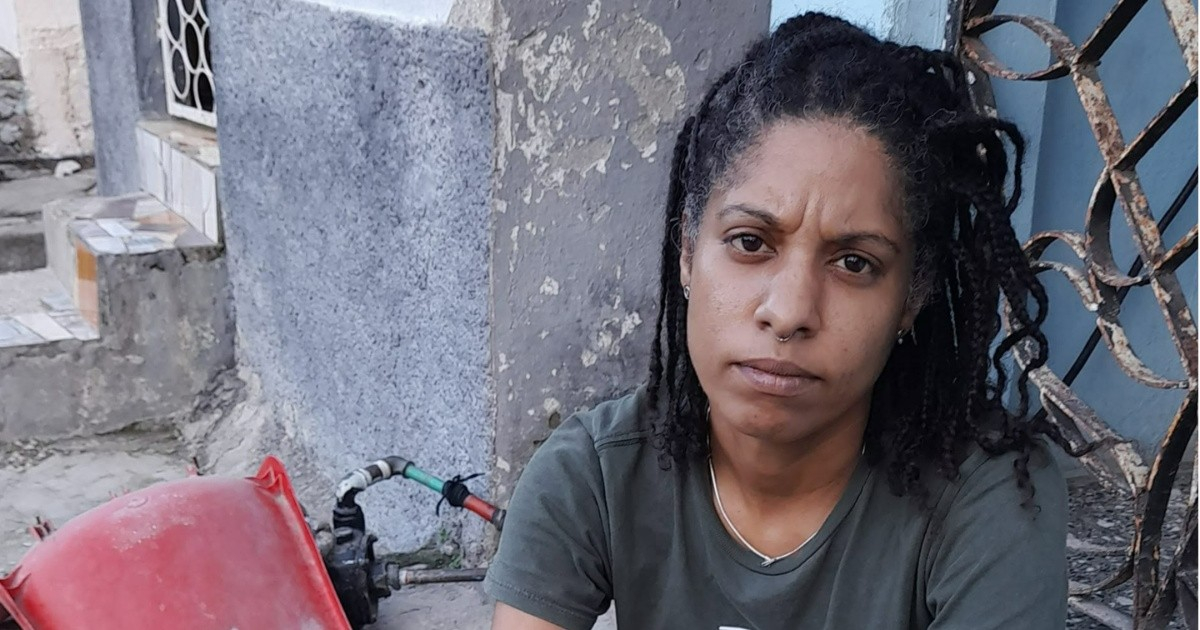
Gisselle Ordóñez Milián, who goes by Zea Gisselle on social media, has brought to light her experience of enduring two hours of institutional pressure and what she terms "psychological torture" during an interrogation at the Sixth Unit of the Revolutionary National Police in Marianao. She was summoned due to her Facebook activity highlighting local protests against power outages.
The Ministry of the Interior (MININT) issued the summons with less than a day's notice, labeling the session an "interview," a term Gisselle criticized as a mere euphemism for an actual interrogation.
Living in the Zamora neighborhood, the 40-year-old attended the interrogation with her young son, as she had no one to leave him with. However, authorities denied entry to the child, marking the first point of tension during the session.
Allegations of Social Leadership and External Connections
The interrogation was conducted by two officers from the Directorate of Counterintelligence (DSE), identified as "Antonio" and "Luisito," along with penal instructor "Andy." During the session, Gisselle was accused of exerting "social leadership," posting "enemy" content on social media, orchestrating neighborhood protests, and being linked to a poster found at a nearby medical clinic.
Further questioning involved alleged foreign funding and photos deemed disrespectful to national symbols. Gisselle firmly denied all accusations and refused a handwriting test, fearing her script could be manipulated to falsely incriminate her in other incidents.
Emotional Blackmail and Custody Threats
The officials also employed emotional blackmail concerning her son's custody, a tactic Gisselle noted is commonly used against dissenting mothers. This was not her first encounter with retaliation. On June 1st, she was detained, handcuffed, and threatened with losing custody of her child during a previous protest in Zamora.
As the interrogation concluded, they demanded she sign a warning document. Gisselle used this opportunity to write a personal declaration vowing not to change her beliefs or breach the Penal Code, which visibly upset the officers.
The organization Cubalex publicly condemned the process, describing it as a procedure filled with "threats, intimidation, and the use of a minor as a pressure mechanism."
The Ongoing Struggles in Zamora
The Zamora neighborhood has become a focal point for protests in Havana throughout 2026, driven by the energy crisis. Since July 9th, the area has suffered a continuous blackout, lacking water, fuel, and mobile communications.
Upon leaving the interrogation, Gisselle was warned of a future summons to Villa Marista, the central headquarters for State Security, with the caution that "the procedure there would be different."
Understanding the Impact of Cuban Government Interrogations
What led to Gisselle Ordóñez Milián's interrogation?
Gisselle was interrogated due to her social media activity, where she highlighted local protests against power outages in her neighborhood.
Why did the authorities prevent Gisselle's son from entering the interrogation?
The authorities did not allow her son to enter, which created initial tension, likely as a tactic to exert additional pressure on Gisselle.
How did Gisselle respond to the accusations during her interrogation?
Gisselle denied all accusations, refused a handwriting test, and maintained her stance by writing a declaration not to change her beliefs.