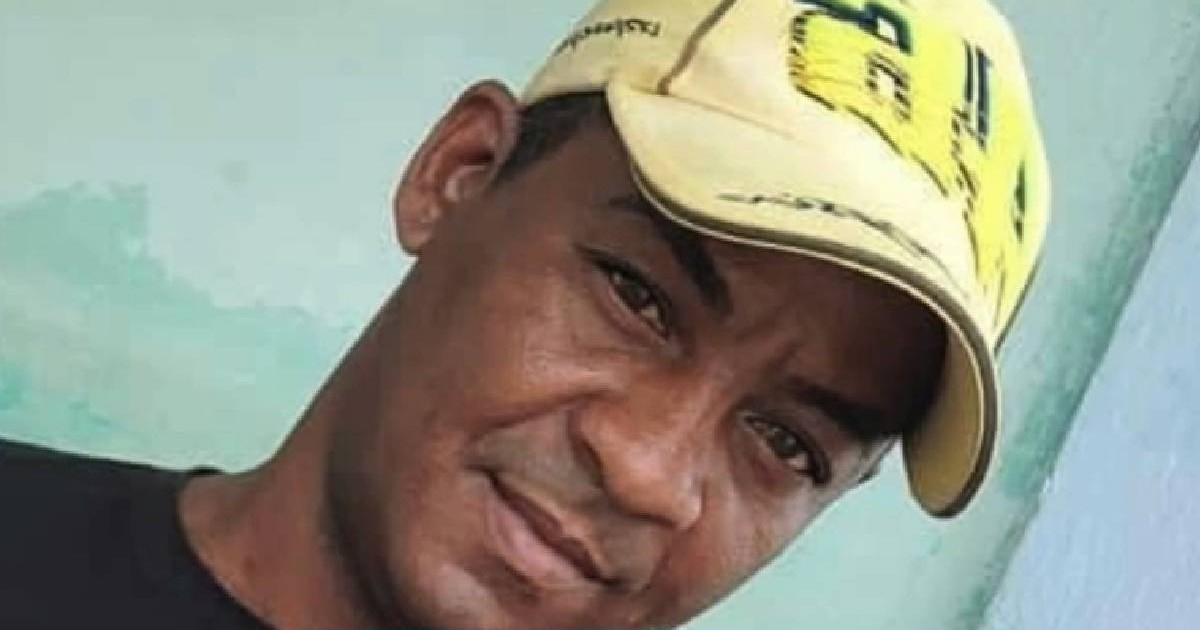
Roilán Álvarez Rensoler, a 41-year-old political prisoner, suffered a severe beating at the hands of guards at Holguín Provincial Prison, leaving him with broken arms and injuries to his head. This incident was reported by his sister to Radio Martí on Friday.
The attack is believed to have been a punitive measure for his refusal to wear the required prison uniform, a form of protest he has consistently maintained since his arrest.
Family Denied Access Amidst Concerns Over Injuries
On Thursday, Ariana Álvarez, the sister of the political prisoner, visited the prison seeking information. She learned about the assault from another inmate in the same unit, who said, "They broke his arms, he has wounds on his body, most of the blows were to his head, but they don't allow us to see him, nothing, nothing, nothing."
The prison authorities have consistently barred the family from seeing Roilán, which his sister interprets as evidence of the severity of his injuries: "I know the reason they don't let us see him is because of the condition my brother is in."
Resistance and Consequences
According to Ariana, guards attempted to forcibly dress him in the uniform, handcuffing him before the assault. Roilán verbally resisted, labeling his attackers "murderers," but did not physically retaliate: "He didn't try to fight them, just defended himself verbally because he couldn't do anything else against what they were doing."
Álvarez Rensoler, a member of the Patriotic Union of Cuba (UNPACU) and advocate for the Cuba Decide initiative, was arrested on January 30, 2026, in Mella, Santiago de Cuba.
The regime accuses him of promoting propaganda against the constitutional order due to his anti-government graffiti in Holguín and damaging a billboard featuring Fidel Castro in Birán.
Since his detention, he has maintained a stance of defiance beyond rejecting the uniform; he also refuses prison food. "He actually eats every 15 days when we visit and bring him food," his sister confirmed.
Previous Acts of Defiance and Ongoing Risk
This protest stance has previously come at a significant cost. After a nearly 49-day hunger strike, he suffered a cardiac arrest on March 19, 2026, requiring defibrillation at the "Lucía Íñiguez Landín" Hospital in Holguín.
That same day, the Inter-American Commission on Human Rights (IACHR) issued precautionary measures through Resolution 19/26, demanding that the Cuban state ensure his life and physical integrity, a mandate ignored by the regime.
This week's beating is not an isolated incident of abuse this year. In May, guards at the same prison threatened to execute him if the United States undertook military action in Cuba.
Álvarez Rensoler's case is part of a broader pattern of systematic violence against Cuban political prisoners: throughout 2026, other UNPACU activists have suffered similar assaults in various prisons across the country, while Prisoners Defenders recorded 1,281 political prisoners in Cuba by the end of May, a record number.
Understanding Political Repression in Cuba
What is the current situation for political prisoners in Cuba?
As of mid-2026, political repression in Cuba remains severe, with numerous activists subjected to violence and abuse in prisons. The situation is marked by a record number of 1,281 political prisoners.
What actions have been taken by international organizations regarding Cuban political prisoners?
The Inter-American Commission on Human Rights has issued precautionary measures demanding that the Cuban government protect the lives and well-being of political prisoners, but these calls have largely been ignored by the regime.