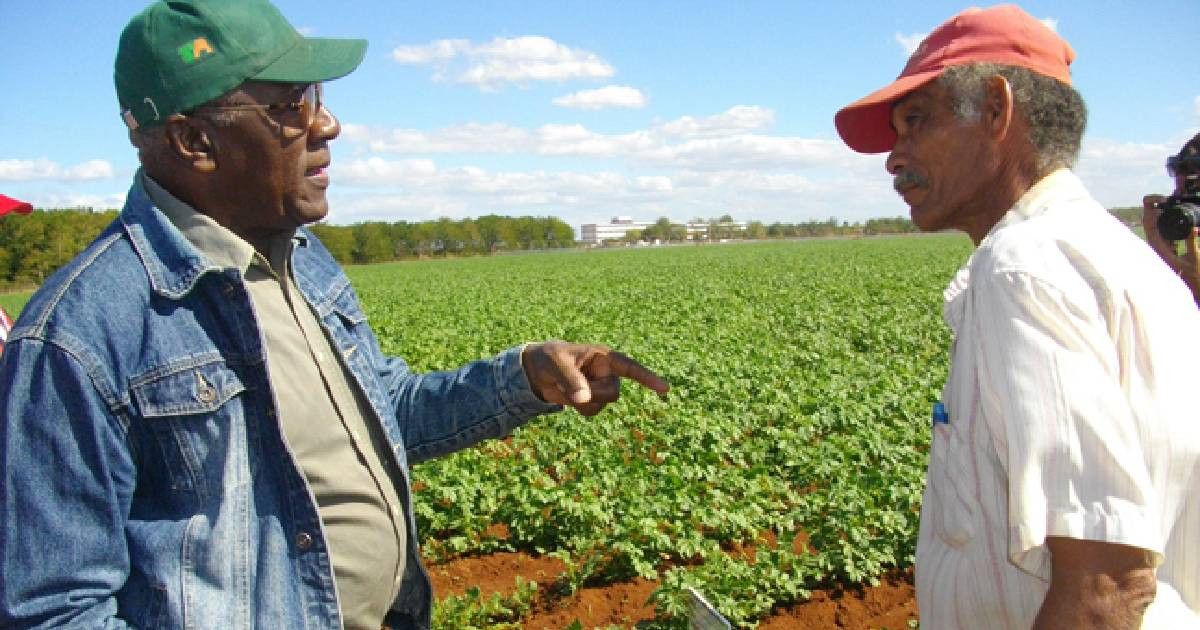
On Friday, Cuban Vice President Salvador Valdés Mesa toured agricultural sites in Mayabeque Province to assess the impact of the severe fuel shortage on farming operations. He urged farmers to turn to biomass, firewood, and solar energy as immediate alternatives to address the crisis.
Accompanied by Edelso Antonio Ramos Linares, the province's First Secretary of the Party, and Governor Manuel Aguiar Lamas, Valdés Mesa visited the state-owned SemBiot in San José de las Lajas, a micro-enterprise involved in in vitro plant production and agricultural genetic improvement. He also stopped by the Guadalupe farm and the Miguel Soneira company in Güines, according to reports from the official Canal Caribe television channel.
Energy Transformation as a Structural Solution
In Melena del Sur, Valdés Mesa made a clear call for the agricultural sector to move away from its reliance on fossil fuels, promoting an energy transformation narrative touted by the regime as a foundational solution. "Enterprises must procure their own fuel. We are embarking on an energy transformation. We have biomass, we know how much firewood we will use. Water is essential, both for the population and crops. We must explore how to make machinery independent and utilize solar energy, which we have heavily invested in," he stated.
Challenges Exacerbated by Sanctions and Structural Issues
The official discourse blamed the intensifying crisis on the "tightening of the American blockade," referring to U.S. sanctions. However, Cuba's energy collapse has deep-seated structural origins and was worsened by the cessation of Venezuelan oil shipments in late 2025.
The situation in the agricultural sector is dire: 96.4% of Cuba's agricultural micro-enterprises have ceased operations due to lack of fuel, and diesel prices on the black market have soared to between 1,500 and 3,000 pesos per liter.
Return to Traditional Farming Methods
Faced with this breakdown, Cuban agriculture has reverted to using oxen and windmills, while the FAO declared a humanitarian emergency in the agricultural sector in March 2026. By May, the government admitted that all its fuel reserves were fully depleted.
This latest visit by Valdés Mesa follows a familiar pattern of inspections without tangible outcomes. In November 2025, he pledged that Pinar del Río would achieve rice self-sufficiency by 2026, a promise that went unfulfilled. In August of the same year, he demanded that municipalities become self-sufficient in tubers and vegetables.
In March, the vice president acknowledged the scale of the failure, highlighting the challenge with a stark admission: "If inflation is tackled by supplying the market, we must produce enough to meet demand, but this cannot be achieved in the short term."
Understanding Cuba's Agricultural and Energy Crisis
Why is Cuba considering biomass and firewood as alternatives?
Due to a severe fuel shortage, Cuban farmers are being urged to use biomass and firewood to reduce dependency on fossil fuels and maintain agricultural productivity.
What led to the fuel crisis in Cuba?
The crisis stems from structural issues within Cuba's energy sector, exacerbated by the cessation of Venezuelan oil shipments and U.S. sanctions.
How has the fuel shortage affected Cuba's agriculture?
The shortage has halted operations in over 96% of agricultural micro-enterprises, leading to a return to traditional farming methods like the use of oxen and windmills.