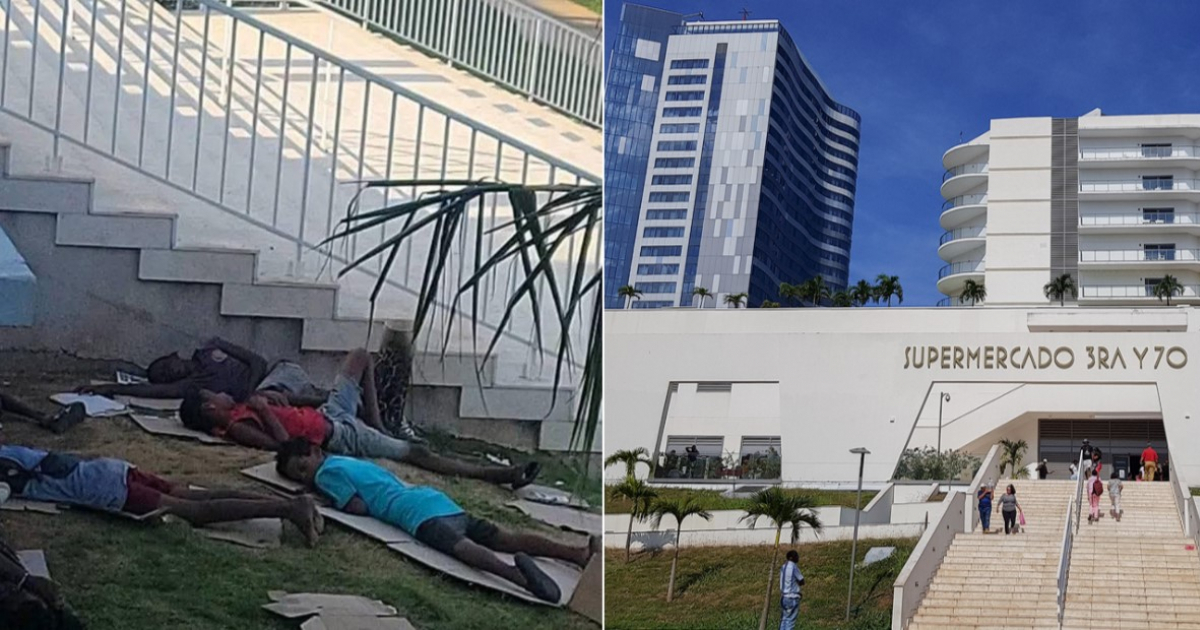
Yuni Rodríguez, a Cuban resident, shared a heartfelt video on Friday where she tearfully recounts a poignant encounter with a young boy from a special needs school in Bahía, located in Havana's Eastern district. The child approached her on the street, asking for money to buy food.
In the video posted on her Facebook profile, Rodríguez describes the boy's sorrowful expression as he asked, "Do you have money to give me for food?"
Having two children who previously attended the same special needs school, Rodríguez admits that the experience left her overwhelmed. "Is this really Cuba? There's no word for this, truly," she expresses in the recording, visibly shaken.
She chose not to record the act of giving the boy money, explaining, "Good deeds come from the heart and don't need to be publicized, because there's a God above."
However, Rodríguez felt compelled to share her emotional distress: "This was literally the saddest scene I've ever witnessed in Cuba," she declared, wishing she could extend her help to all the children enrolled in that special school.
Reactions to the video suggest that this is far from an isolated incident. "Here in Matanzas, you find a child begging at every corner," commented one user.
Another person reported witnessing similar situations "many times here in Havana and at traffic lights," while a third noted that many of these children are "sent by their parents," highlighting a disturbing aspect of familial exploitation.
The Widespread Issue of Child Poverty in Cuba
This case adds to a growing list of similar occurrences documented in recent weeks. An 11-year-old from Camagüey was found collecting cans in the early morning hours, two kilometers from home, to support his mother.
An eight-year-old girl in Bayamo endures extreme poverty, having gone over 50 days without potable water and an empty refrigerator. A community-led campaign quickly raised 401,000 pesos for her in just two days.
In April, another Cuban woman tracked down a child who had asked her for food, only to learn that the child's greatest fear was his mother being imprisoned.
The Cuban Conflict Observatory reported 71 instances of child labor and begging in 2025 alone, with the regime itself acknowledging by the end of that year that nearly 200,000 children and adolescents were in vulnerable situations.
Cuba's special needs schools, accommodating about 57,600 students, are also suffering from systemic collapse. The academic year ended prematurely in May, three months earlier than planned, due to fuel shortages.
The monthly allowance for children boarding in these institutions is a mere 120 Cuban pesos, less than one dollar, making it impossible to meet basic nutritional needs.
The Food Monitor Program warned in June that 90% of the primary schools surveyed had no reliable access to potable water or safe proteins, and 78% of households had to supplement children's meals because school lunches were inadequate.
According to the program, "in this context, hidden hunger and forms of child labor, often justified as 'family help,' are on the rise, shifting adult responsibilities onto children."
The stark contrast with the official narrative is glaring. On June 12, World Day Against Child Labor, the Union of Young Communists claimed that "thanks to the Revolution, child labor is not a reality in our country," a statement that sparked a wave of outrage and contradictory testimonies on social media.
Understanding Child Poverty and Labor in Cuba
Is child begging common in Cuba?
Yes, reports and personal accounts indicate that child begging is a widespread issue in various regions of Cuba, including major cities like Havana and Matanzas.
What challenges do special needs schools in Cuba face?
Special needs schools in Cuba struggle with systemic issues, such as fuel shortages leading to early school closures, and insufficient monthly stipends that fail to meet the children's basic needs.
How does the Cuban government address child poverty?
While the government has officially recognized the vulnerability of almost 200,000 children and adolescents, critics argue that the government's efforts are inadequate and often contradict the reality faced by many families.