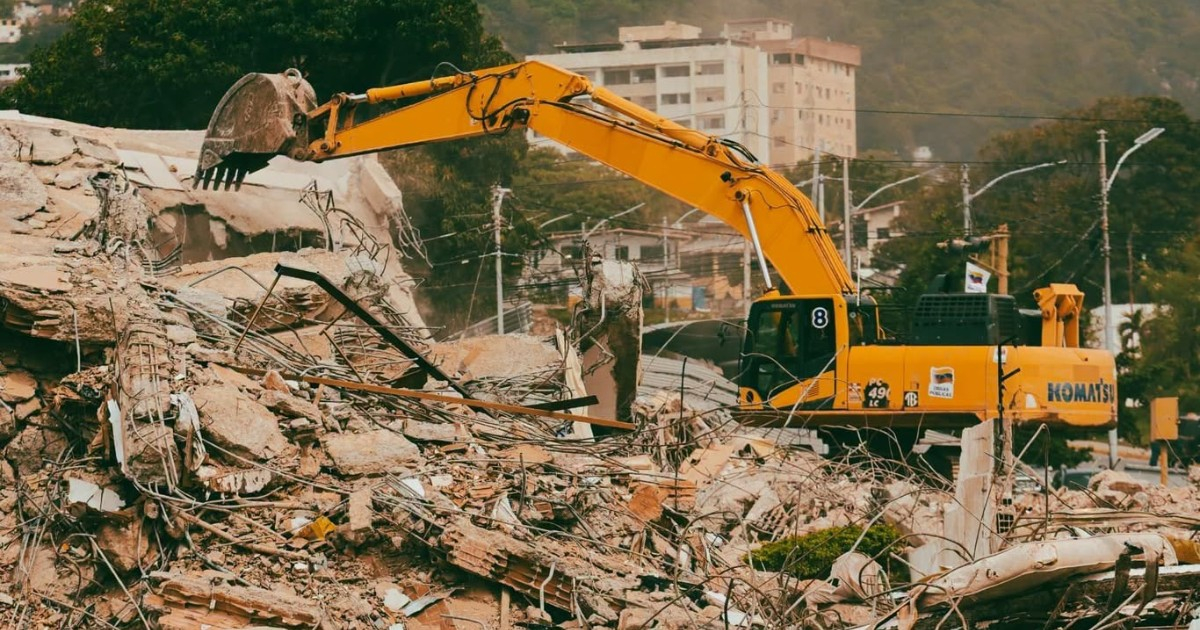
The death toll from the twin earthquakes that rocked Venezuela on June 24 has surpassed 5,000, reaching 5,069 fatalities as 139 new deaths were reported in the last 24 hours.
This information was released by Jorge Rodríguez, the President of Venezuela's National Assembly, via his Telegram account. The report also noted that the number of injured individuals remains at 16,740, and 17,907 people are still homeless.
Over 21,000 displaced individuals are being housed in 107 temporary camps, while authorities have provided assistance to 128,324 families affected by the two quakes, which measured 7.2 and 7.5 on the Richter scale and occurred just 39 seconds apart.
Since the disaster, there have been 1,331 aftershocks. The most significant aftershock occurred on July 10, when a 3.9 magnitude quake struck northeast of Naiguatá in the La Guaira state, causing panic and preventive evacuations in local buildings.
La Guaira suffered the most severe damage: more than 250 buildings collapsed, including the José María Vargas Hospital, and 158 of the 189 buildings in Catia La Mar were destroyed. In total, 190 structures were completely demolished, and another 856 were damaged, while 38 hospitals and 433 schools sustained damage.
The United Nations Development Program estimates the material damage at $6.7 billion, equivalent to 6% of Venezuela's GDP. The earthquakes also generated over two million tons of debris, which has become the primary obstacle to reconstruction efforts.
International response has been significant: 24 countries have contributed over $780 million in aid, with the United States being the largest donor, providing $386 million. The UN has mobilized more than 2,200 rescue workers from 25 countries, 521 tons of supplies, and three field hospitals in La Guaira.
However, the internal management by Nicolás Maduro's regime has faced harsh criticism. According to a report by Infobae, the government's response has been described as "delayed, opaque, and insufficient" by organizations like the NGO Provea. The UN also estimates that up to 50,000 people could be missing, a figure not officially acknowledged by the government.
On the legislative front, the Venezuelan Parliament approved a reform to the Anti-Real Estate Fraud Law in its first reading last Tuesday, aiming to expedite the construction of new housing.
Pedro Infante, the First Vice President of the National Assembly, explained that the amendment seeks to ensure legal security and financing capacity for the private sector to launch an "aggressive" construction process.
The government estimates that around 25,000 housing units are needed.
The evolution of the official death toll highlights the escalating scale of the tragedy: from 235 confirmed deaths two days after the earthquake, the count rose to 3,342 by July 6 and reached 4,930 just last Thursday, before surpassing the 5,000 mark this Friday. The dual earthquakes of June 24 have become the deadliest natural disaster in Venezuela in over a century.
Impact of Venezuela's Earthquakes on Society and Economy
How many people were injured in the Venezuela earthquakes?
A total of 16,740 individuals were reported injured following the dual earthquakes in Venezuela.
Which area was the most affected by the earthquakes in Venezuela?
La Guaira was the region most severely impacted, with significant building collapses and widespread damage.
What is the estimated financial damage caused by the earthquakes?
The financial impact of the earthquakes is estimated at $6.7 billion, representing about 6% of Venezuela's GDP.