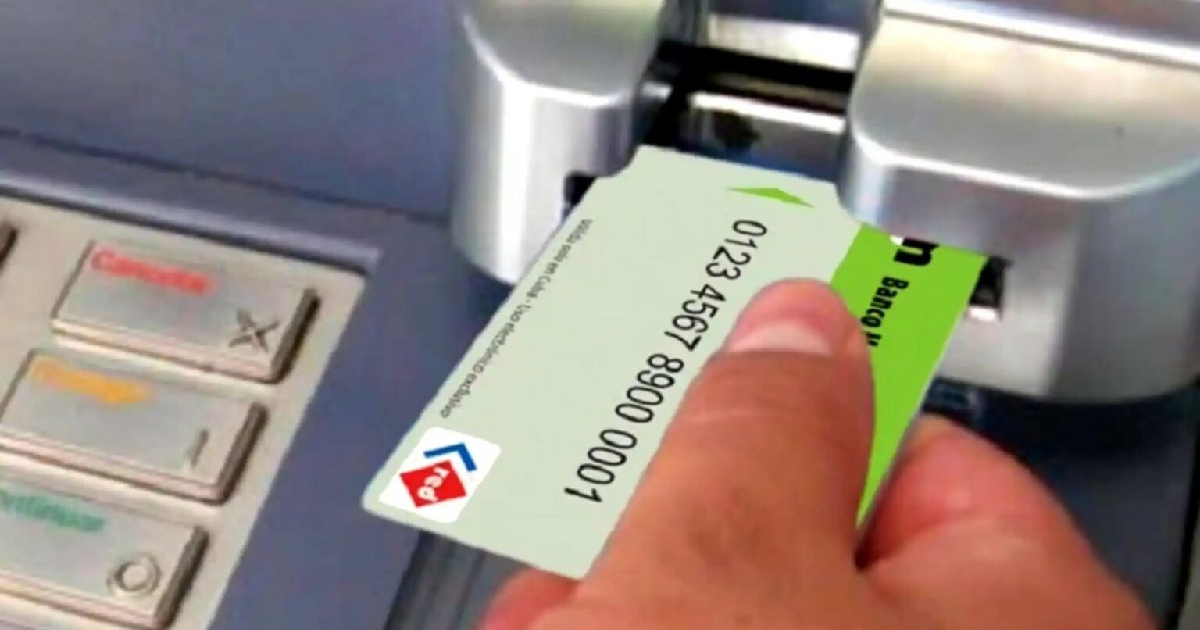
This past Friday, the Central Bank of Cuba announced through Extraordinary Official Gazette No. 81 the indefinite suspension of the 5,000 Cuban peso limit for cash transactions among economic entities, as outlined in Resolution 74/2026.
Signed by Juana Lilia Delgado Portal, the head of the Central Bank, on July 10, the new regulation effectively nullifies articles 4 and 5 of Resolution 111/2023, which had mandated that any transaction exceeding that amount be conducted electronically.
The official document cites "approved economic and social transformations" and the need to "use available cash more efficiently" as reasons for this change. The suspension will remain in effect "until the country's conditions allow."
Instead of a fixed cap, the new framework allows commercial banks to negotiate individually with each economic actor on the petty cash fund set aside for smaller payments.
Determining Factors for Negotiations
The criteria guiding these negotiations include the income received in current accounts, cash deposits made, the volume of operations through Online Payment, the use of additional cash services, the nature of the economic activity, the conditions of the territory, and the cash availability at each bank.
This measure applies to a broad range of entities: state-owned enterprises, agricultural and non-agricultural cooperatives, micro, small, and medium-sized enterprises (MSMEs), self-employed workers, artists, agricultural producers, commercial fishermen, local development projects, foreign investment modalities, and individuals or legal entities with legally authorized commercial activities.
Response to Failed Banking Policies
The resolution becomes effective three days after its publication in the Official Gazette, meaning as of Monday, July 20.
This change follows the acknowledged failure of the mandatory banking policy imposed in August 2023. Three years later, only 3.77% of transactions in Cuba are digital, and fewer than 10% of private businesses regularly accept electronic transfers.
Even the state-run media outlet Cubadebate admitted on July 14 to the collapse of the system, noting that "the street has already built its own parallel financial system."
This parallel system operates with commissions that skyrocketed from 15% in September 2025 to 40% in Santiago de Cuba just a day before this resolution was published, where transferring 1,000 pesos means receiving only 600 in cash.
Author and physician Ericka Castellanos Abad highlighted this issue on Facebook on July 16, describing the business operating alongside BANDEC ATMs on Victoriano Garzón Avenue, just blocks from the Communist Party's Provincial Committee headquarters.
"Transferring 1,000 Cuban pesos to receive 600 in cash is the worst kind of exploitation, and for this to happen just a few blocks from the Provincial Party is both shameless and a stark indicator of how little the people matter to the top echelon of national power," Castellanos Abad wrote.
Despite the regime imposing 15,240 fines and ordering 269 business closures for not accepting electronic payments, the policy failed to achieve its goal. The official newspaper Venceremos acknowledged on July 3 that the banking crisis "has ceased to be a banking difficulty and has become a social problem."
An anonymous Cuban woman, who became a viral sensation on July 13, summed up the daily reality: "Your salary is on a card, and what you need to buy is like this, so you can solve it. It's not easy."
FAQs on Cuba's Cash Transaction Policy Change
Why did the Central Bank of Cuba remove the cash transaction limit?
The Central Bank of Cuba lifted the cash transaction limit to adapt to "economic and social transformations" and to utilize available cash more efficiently.
Who is affected by this policy change?
The policy affects a wide array of entities including state-owned enterprises, cooperatives, MSMEs, self-employed individuals, artists, agricultural producers, and more.
When does the new resolution take effect?
The resolution takes effect three days after its publication in the Official Gazette, starting on July 20.