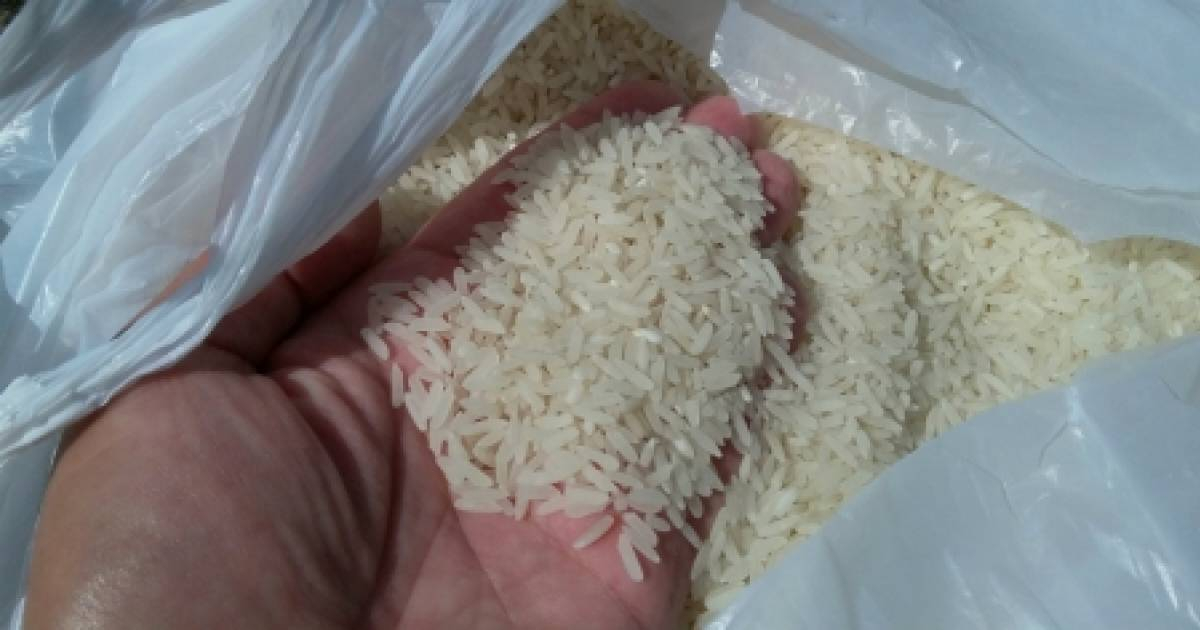
The Cuban Council of Ministers has removed the retail price cap on rice that had been in place since March 2025, as per Decree 156, published in the Official Gazette on Thursday, July 16, 2026.
This decision, authorized by Prime Minister Manuel Marrero Cruz on June 29, abolishes the 155 Cuban pesos per pound limit set by Agreement 10093 on March 5, 2025.
Rather than eliminating price control altogether, the decree transfers the authority to set these prices. From now on, the Minister of Finance and Prices—or their delegate—will determine rice prices through resolution, bypassing the need for the Council of Ministers' approval.
The decree justifies this change by stating that "it is necessary to define that the prices and tariffs of the products and services listed in the referenced Decree 24 of 2020, once approved by the Council of Ministers, are established by resolution of the Minister of Finance and Prices."
This reform pattern was previously applied to gas in the same Gazette No. 59: the regime annulled the 2020 agreements that set gas prices and immediately published ministerial resolutions with significantly higher rates.
The price of liquefied gas increased by 55%, from 225 to 350 Cuban pesos, according to Resolution 155/2026 signed on July 1.
As for rice, the new ministerial resolution with official prices has yet to be released.
The 155 CUP per pound cap was, in practice, a fallacy: in the informal market, a 25-kilogram sack reached 31,800 Cuban pesos around July 9, which translates to approximately 1,272 pesos per pound, more than eight times the now-abolished official price.
In unregulated fairs and markets, rice was priced between 250 and 400 pesos per pound in June and July 2026, according to research dossier data.
With an average state salary of 7,000 pesos per month, a single pound of rice in the informal market can account for between 3.5% and 5.7% of a worker's monthly income.
The Broader Economic Context
The economic backdrop exacerbates the impact of this measure. The Cuban peso has rapidly devalued, falling from 435 per dollar in December 2025 to between 655 and 670 per dollar by July 2026.
The energy crisis has forced many Cubans to cook with wood or charcoal, which in Sancti Spíritus was sold for 4,000 pesos in June.
The regime has repeatedly attempted to curb inflation with price caps. Agreement 10093 in March 2025 was the last major attempt, setting rice at 155 CUP per pound and beans between 196 and 285 CUP.
In September 2025, the government again tried to cap prices of other basic goods, in a recurring cycle of regulation and non-compliance that Decree 156 seems to acknowledge as failed.
The new legal framework allows the Ministry of Finance and Prices to adjust prices more swiftly, without the need for a Council of Ministers meeting.
The lingering question for Cubans is at what level Minister Vladimir Regueiro Ale will set the new official rice price, and whether it will bear any relation to what people actually pay in the island's markets.
Understanding Cuba's Economic Challenges
Why did Cuba remove the rice price cap?
The Cuban government removed the rice price cap to transfer pricing authority to the Minister of Finance and Prices, allowing for more flexible and rapid adjustments without requiring Council of Ministers approval.
What impact has the devaluation of the Cuban peso had?
The rapid devaluation of the Cuban peso has significantly increased the cost of living, making essentials like rice unaffordable for many, as informal market prices soar.
How have Cubans adapted to the energy crisis?
Due to the energy crisis, many Cubans have resorted to cooking with wood or charcoal, which has itself become quite expensive in markets like Sancti Spíritus.