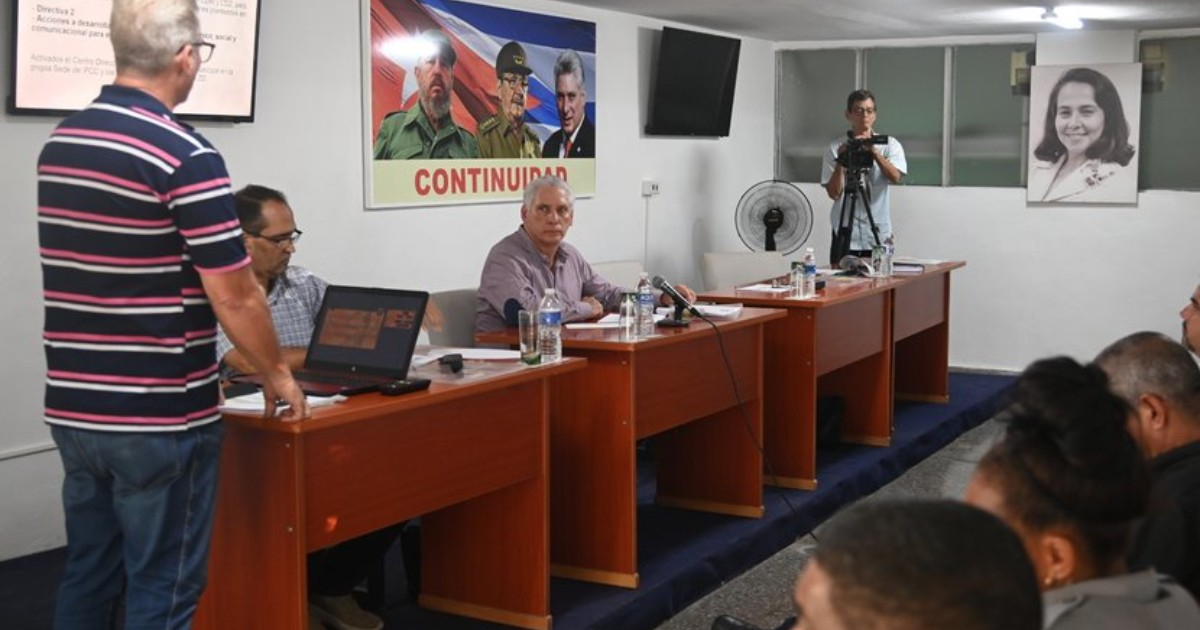
Amid escalating tensions with the Trump administration, Miguel Díaz-Canel visited the municipal Defense Councils in Old Havana, Arroyo Naranjo, and La Lisa.
The Cuban government framed these visits within the context of a "complex situation" caused by the intensifying blockade and a petroleum stranglehold that has lasted over six months, using their usual propaganda to deflect blame from the regime's own role in the crisis.
These interactions with Havana's Defense Councils started on June 30, and as of now, only nine out of the capital’s fifteen municipalities have been covered.
Challenges in Essential Services
Discussions during the meetings included water supply, energy generation, waste collection, and care for retirees and vulnerable populations. While the regime attributes these issues to the U.S. embargo, they are a direct result of 67 years of failed economic management.
Military Preparations Underway
Since January, the government has been conducting military exercises every Saturday under the "War of the Entire People" doctrine, which involves training civilians with AK-47 rifles, drones, and anti-tank mines, as part of the "Year of Defense Preparation" declared in January 2026.
On July 12, Díaz-Canel personally reviewed these "War of the Entire People" plans in the Cerro municipality, having already warned in June that any attack from Washington would meet with "determined and firm combat."
Official Narrative vs. Reality
The official narrative aims to project a façade of administrative normality while the regime mobilizes its defense structures in response to what it acknowledges as the most severe external pressure in decades.
As the visits concluded on Thursday, Díaz-Canel urged continued optimism in facing the country's challenging situation, assuring victory, even as millions of Cubans endure power outages lasting over twenty hours and struggle with empty plates.
Cuba's Defense Strategy and Current Crisis
What are the main challenges discussed in the Defense Council meetings?
The meetings addressed issues such as water supply, energy generation, waste management, and support for retirees and vulnerable groups.
What is the "War of the Entire People" doctrine?
It is a military strategy involving the training of civilians using weapons, drones, and mines, as part of a broader defensive posture declared for 2026.
How does the Cuban regime explain the current crisis?
The regime attributes the crisis to the U.S. embargo and a petroleum stranglehold, while critics argue it stems from decades of economic mismanagement.