The U.S. Department of State has unveiled a new policy aimed at preventing entry into the United States for foreign nationals who provide financial support, recruit for, or assist left-wing extremist terrorist groups.
Announced by Secretary of State Marco Rubio through an official statement on the Department's website and echoed on social media platform X, the policy aims to tighten security measures.
"Foreign nationals who finance or support left-wing extremist terrorists are adversaries of our civilization and will not be welcomed in the U.S.," Rubio stated.
Scope and Impact of the New Policy
According to the newly outlined measures, which fall under Section 212(a)(3)(C) of the Immigration and Nationality Act, individuals whose presence in the U.S. might negatively affect foreign policy interests will be deemed inadmissible. This provision, as confirmed by the State Department, offers no exemptions.
The restrictions target those involved with left-wing extremist organizations, including activities like funding, logistical support, recruitment, inciting violence, or facilitating terrorist acts.
Historical Context and Recent Developments
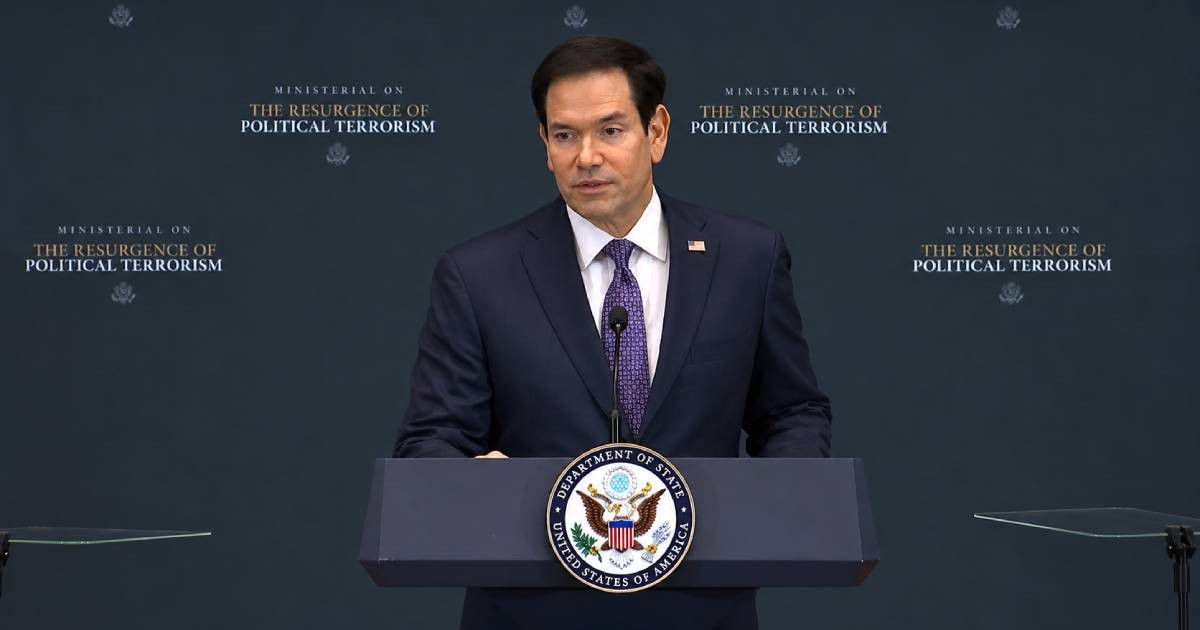
The announcement coincided with the Ministerial Conference on the Resurgence of Political Terrorism held in Washington, attended by representatives from over 60 nations.
In his address, Rubio emphasized that while global focus has largely been on jihadist terrorism, other forms of political terrorism have not been adequately addressed in existing security strategies.
This policy is an extension of the National Security Presidential Memorandum-7 (NSPM-7), signed by former President Donald Trump in September 2025, which laid out a framework for combating left-wing extremist groups.
Cuba's Role in the Discourse
Cuba was notably highlighted in Rubio's discourse. On June 4, Rubio pointed to Cuba as the historic "global capital of radical left-wing terrorism," citing the Castro regime's support for Latin American guerrilla groups like the FARC and the ELN.
This stance was further reinforced on July 13, when the U.S. imposed sanctions on Cuba's Rapid Response Brigades and Territorial Troops Militias as part of the Trump administration's pressure on the Cuban regime.
Reactions and Opposition
The policy has sparked debate and criticism within the United States. Eleven Democratic lawmakers have sent a letter to Rubio requesting evidence supporting the strategy and expressing concerns over the administration's approach.
From Cuba, Foreign Minister Bruno Rodríguez denounced the ministerial conference, labeling it as "McCarthyist" and founded on "lies," as reported by state-controlled media.
Nonetheless, Rubio has maintained that entry into the United States is not an inherent right. "No one has an automatic right to a visa," he asserted in February, defending a national security-focused immigration policy.
Understanding Visa Restrictions on Left-Wing Extremists
What is the primary goal of the new U.S. visa policy?
The primary goal of the new policy is to prevent foreign nationals who support left-wing extremist terrorist groups from entering the United States, thereby protecting U.S. foreign policy interests and national security.
Who will be affected by these visa restrictions?
Individuals who engage in activities such as financing, recruiting, or providing logistical support to left-wing extremist organizations will be impacted by these restrictions.
How has Cuba been implicated in this policy?
Cuba has been highlighted as a historic supporter of left-wing terrorism, with past associations with guerrilla movements such as the FARC and the ELN, leading to increased U.S. sanctions.