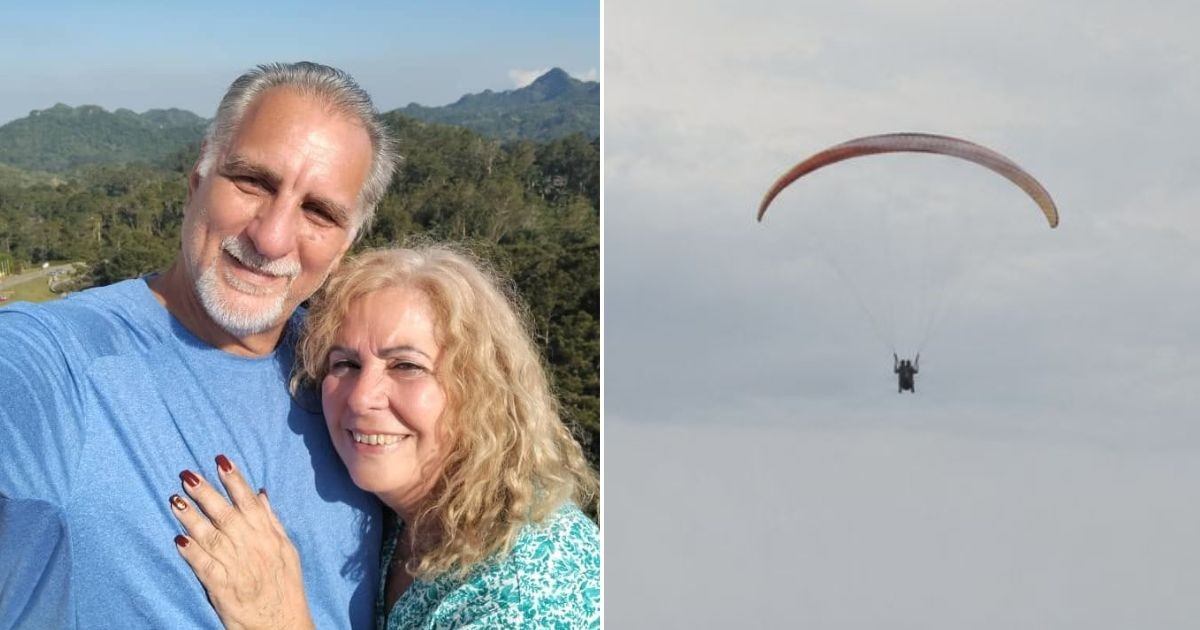
The Cuban Aviation Club (CAC), led by former spy René González Sehwerert, has issued a statement acknowledging that the lack of a life jacket was a crucial factor in the tragic death of 12-year-old Joel Alejandro Suárez Sánchez during a tandem paragliding flight on July 4 in the Isla de la Juventud.
González stated, "We all know that using a life jacket, the most basic safety measure required for this operation, could have turned what happened from a fatal accident into a mere incident. It's not fair to place the blame on the mother for not realizing this necessity."
The statement explicitly defends the child's mother against accusations from within the aeronautical sports community that she was responsible for the incident.
González explained that the mother signed the consent form after initially hesitating due to reassurances from observing successful prior flights, verbal guarantees from the operators, and her child's insistence.
"This mother was hesitant about signing the consent, and her doubts were alleviated by witnessing several successful flights, the verbal assurances she received from the operators, and her child's insistence," González noted.
The statement also highlighted that "the absence of a waiver form explaining the risks diminished her ability to give informed consent."
Operational and Safety Lapses Revealed
A joint investigation by the CAC and the Cuban Civil Aviation Institute (IACC) uncovered significant irregularities: the flight was part of an unauthorized commercial operation charging 3,000 Cuban pesos per person without the Ministry of Tourism's approval, and the pilot lacked certification for tandem flights and commercial operation.
The investigating commission emphasized the absence of life jackets, which are mandated by Cuban Aeronautical Regulations for operations near the coastline.
The Sequence of Events
The incident occurred when a storm cloud created currents that pushed the paraglider into the sea from approximately 50 meters above, landing about 500 meters from the shore. The pilot lost control of the child while attempting to free himself from the harnesses in the water, and the child's body was recovered on Monday, July 6.
This recent statement contrasts with González's initial remarks on July 6, when he claimed this was "the first fatality for the CAC in 15 years," a statement refuted by the aeronautical sports community, which recorded at least four deaths related to air sports between 2022 and 2023.
On July 14, the CAC announced a temporary suspension of all tandem paragliding flights in the country, except for individual sports flights.
The statement from former spy René González, president of the Cuban Aviation Club, concluded, "Let us all work to ensure that no child, entrusted to our care by their parents, ever again experiences such a horrific end to what should have been a beautiful adventure, as happened with Alejandro."
Understanding the Paragliding Tragedy in Cuba
What safety measures were lacking in the Isla de la Juventud incident?
The incident highlighted the absence of life jackets, a basic safety requirement for operations near the coast, and the lack of a waiver form that would have explained the risks involved.
How did the weather contribute to the paragliding accident?
A storm cloud generated currents that forced the paraglider into the sea from a height of about 50 meters, which led to the tragic accident.