On July 10, the United States Department of Defense revealed the release of nearly $3 million in compensation to personnel impacted by the so-called Havana Syndrome. This marks the inaugural payments made under the HAVANA Act since its adoption in 2021, during any presidential administration.
"We prioritize the care of affected personnel and have disbursed close to three million dollars in what constitutes the first payment under the Havana Act," the Department of Defense stated in an official press release.
The HAVANA Act: A Long-Awaited Relief
The HAVANA Act, which stands for Helping American Victims Afflicted by Neurological Attacks Act, was passed with unanimous bipartisan support in Congress, receiving 427 votes in favor and none against, and was signed into law by then-President Joe Biden on October 8, 2021.
Despite its enactment, it took five years for payments to be made.
The act specifies two compensation levels based on the severity of injuries: the Base level, which equates to 75% of the annual pay for Executive Schedule Level III, and the Base Plus level, which matches 100% of that salary. Reports from 2022 suggested individual payouts would range between $100,000 and $200,000 per person, contingent on the degree of impact.
Unraveling a Medical Mystery That Began in Cuba
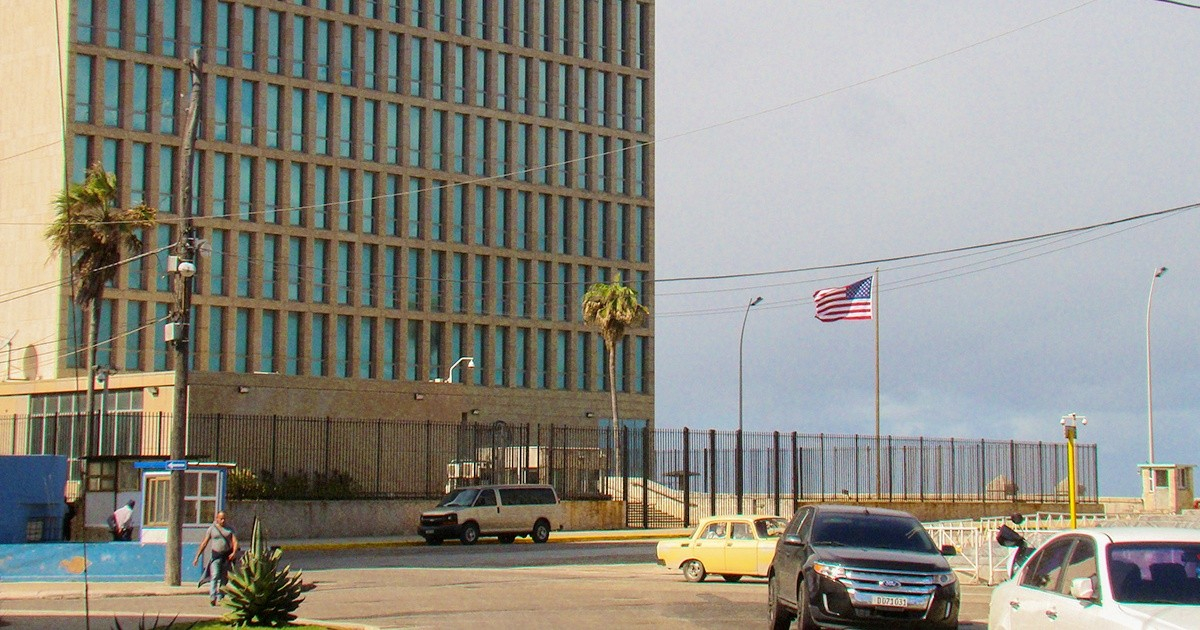
The syndrome first came to light publicly in 2016 when U.S. diplomats stationed in Cuba reported bizarre symptoms such as intense headaches, nosebleeds, high-pitched sounds, dizziness, and cognitive impairment.
The phenomenon soon spread to locations including Bogotá, Vienna, Berlin, Moscow, Beijing, and even Washington D.C.
It is estimated that over 200 diplomats in 70 countries have reported similar symptoms, with more than 300 individuals, including children, receiving medical treatment.
In 2017, the Trump administration withdrew over half of the non-essential staff from the Havana embassy and expelled two Cuban diplomats from Washington.
Ongoing Investigation with Unresolved Origins
Intelligence assessments regarding the syndrome's origins have provided mixed conclusions. An early 2025 assessment found it "highly unlikely" that a foreign adversary was responsible, offering no alternative explanation.
However, a December 2024 congressional report contradicted this, suggesting an external actor might be involved in some cases and criticizing the CIA for hindering the investigation.
By March 2026, new intelligence reports implicated Russia, specifically the GRU's Unit 29155, suggesting the attacks could be linked to a miniaturized microwave weapon that Homeland Security agents allegedly procured in 2024 from a Russian criminal network.
Changes in Nomenclature and Commitment to Transparency
Alongside the announcement of payments, the Department of Defense officially renamed its internal team. Formerly known as the Anomalous Health Incidents Cross-Functional Team, it is now called the Directed Energy Biological Effects Cross-Functional Team, under the oversight of the Office of the Under Secretary of Defense for Research and Engineering.
This renaming is significant; the Department confirmed it possesses directed energy weapons and is expanding their use. "Indeed, the Department of Defense possesses directed energy weapons. Yes, we are scaling them up," the Under Secretary’s office stated on the social network X on January 23, 2026.
The Department also reaffirmed its commitment to the victims, as reported by France 24: "The Department will continue to emphasize transparency and scientific integrity to achieve validated results, improve care for affected individuals, and adapt to a dynamic operational environment."
Secretary of State Marco Rubio had cautioned in February 2025 that regarding Havana Syndrome, "there's still a lot of ongoing work," a statement that gains new significance following the first tangible payments to victims after nearly a decade of anticipation.
Understanding the Havana Syndrome and Its Implications
What is the HAVANA Act?
The HAVANA Act, or Helping American Victims Afflicted by Neurological Attacks Act, was designed to provide compensation to U.S. personnel affected by Havana Syndrome. It outlines two compensation levels based on injury severity.
When did Havana Syndrome first become public?
Havana Syndrome first gained public attention in 2016 when U.S. diplomats in Cuba reported experiencing unexplained symptoms such as severe headaches and cognitive difficulties.
Which countries have reported Havana Syndrome cases?
Reported cases of Havana Syndrome have occurred in countries including Cuba, Colombia, Austria, Germany, Russia, China, and the United States.