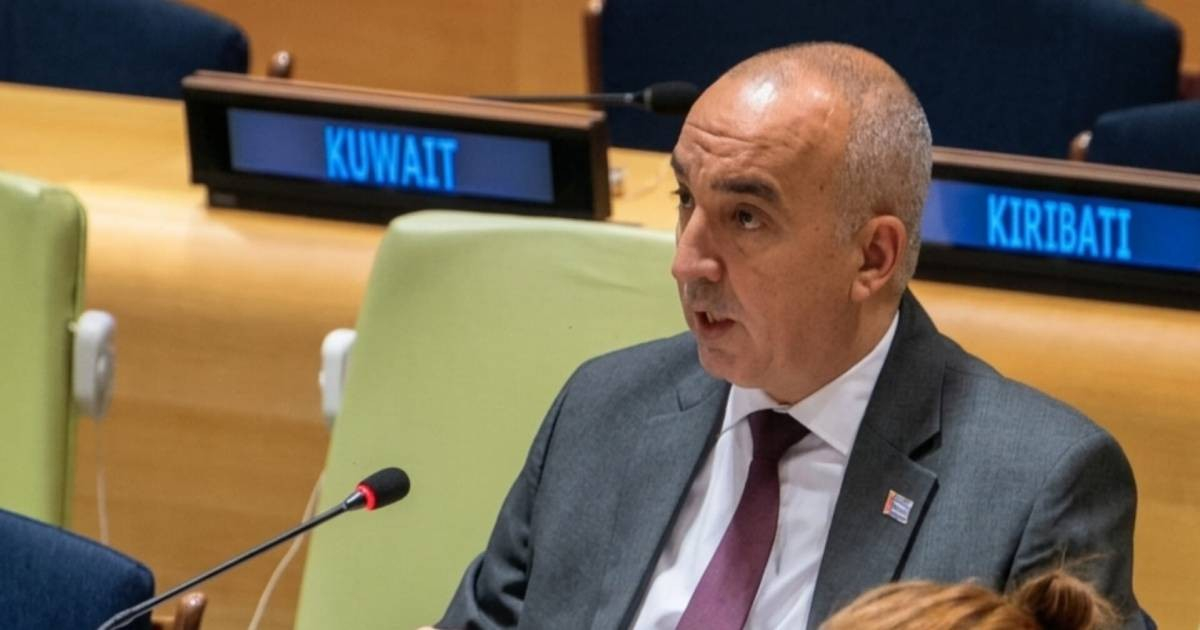
As Cuba endures yet another nationwide blackout, its representative at the United Nations, Ernesto Soberón Guzmán, spoke in New York to highlight the U.S. embargo as a significant hurdle to the country's energy transition. He asserted Cuba's right to manage its natural resources independently, according to reports from the Cuban News Agency.
The timing was noteworthy since, while the diplomat participated in the High-Level Event on Critical Minerals for the Energy Transition, millions of Cubans were left without power following the collapse of the National Electric System (SEN).
This total outage of the grid occurred at 11:05 AM on Tuesday, July 14, when an unexpected shutdown of Unit 1 at the Felton Thermoelectric Plant in Holguín triggered the system's collapse.
This incident marked the fifth nationwide blackout in 2026, the third in just ten days, and the tenth SEN failure in about two years, based on data from the Electric Union (UNE).
The restoration of power began gradually, achieving full synchronization by 7:00 AM on Wednesday, after nearly 20 hours of nationwide disruption.
Continuing Power Struggles
Despite the reactivation of the SEN, numerous areas continued experiencing prolonged outages. Residents in parts of Matanzas reported over 87 hours without electricity in July, while in several Havana municipalities, daily blackouts lasted around 15 hours.
During his UN address, Soberón argued that developing nations should have equal access to resources necessary for advancing towards clean energy.
"A fair energy transition cannot perpetuate historical inequalities or deepen technological dependency in developing countries," he stated.
The ambassador attributed many of the island's energy challenges to the American embargo. "The blockade intentionally restricts access to fuel, technology, investment, financing, and even renewable energy projects, directly impacting hospitals, schools, and water supply systems," he claimed.
He also emphasized that unilateral coercive measures hinder the development of countries like Cuba. "A genuinely fair energy transition is impossible while unilateral coercive measures deny countries the resources they need to progress," he concluded.
Complex Crisis Factors
Cuba's power crisis has intensified over the past year due to a combination of factors. These include the aging thermoelectric plants, mostly comprised of decades-old facilities, fuel shortages for generation, frequent breakdowns, and decreased oil supplies from allied nations.
In May, Vicente de la O Levy, Minister of Energy and Mines, publicly admitted that the country lacked sufficient reserves of fuel oil and diesel to maintain electric generation.
Days before the July 14 collapse, the generation deficit peaked at 2,341 megawatts, with only 935 MW available against a demand close to 3,100 MW. At that point, 11 of the 16 thermoelectric units were offline due to breakdowns or maintenance.
As part of its strategy to reduce reliance on fossil fuels, the Cuban government is promoting a solar park program with Chinese support. Authorities aim to increase renewable energy's share to 24% of electric generation by 2030 and 40% by 2035.
Cuba's Strategic Mineral Resources
Cuba's involvement in the UN forum also underscores its interest in the international market for critical minerals. The island boasts significant reserves of nickel and cobalt, vital raw materials for manufacturing electric vehicle batteries and other technologies tied to the energy transition.
This potential was one of the key points advocated by the Cuban delegation during the conference, which coincided with one of the most severe episodes of electrical instability Cuba has experienced in recent years.
Understanding Cuba's Energy Crisis
What caused the nationwide blackout in Cuba on July 14?
The blackout was triggered by an unexpected shutdown of Unit 1 at the Felton Thermoelectric Plant in Holguín, leading to the collapse of the National Electric System.
How is the U.S. embargo affecting Cuba's energy sector?
The embargo restricts access to essential resources like fuel, technology, and investment, hindering Cuba's ability to develop its energy infrastructure and transition to renewable sources.
What steps is Cuba taking to address its energy dependency?
Cuba is working on increasing its renewable energy capacity by implementing a solar park program with support from China, aiming to boost renewable energy's share to 24% by 2030.