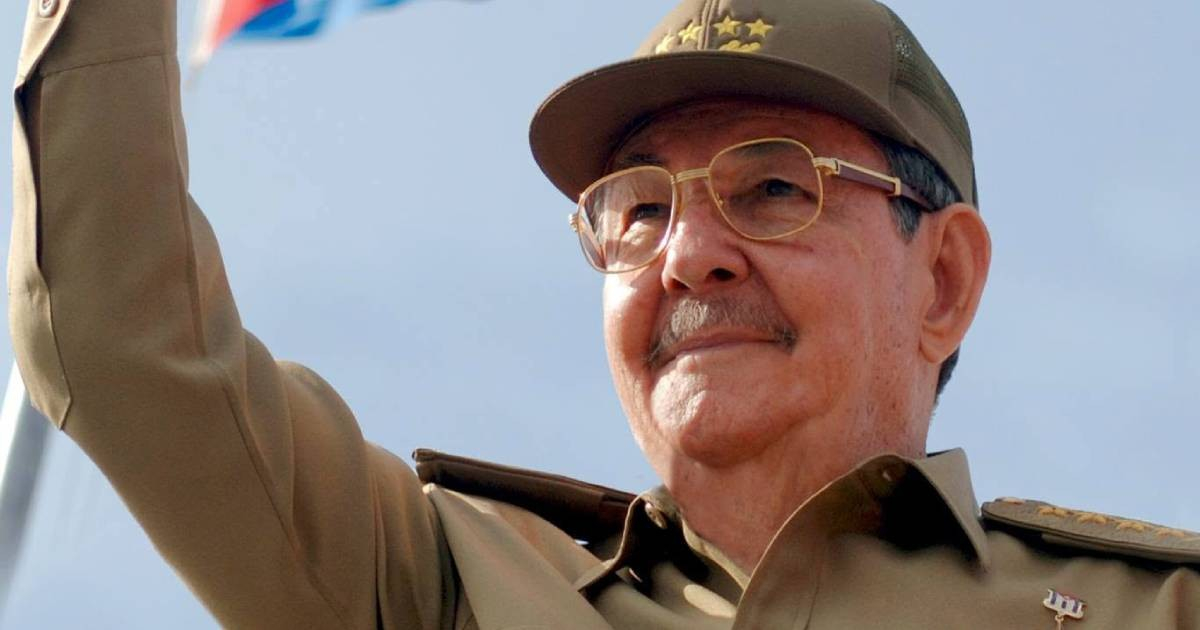
The 1981 assault on the Ecuadorian embassy in Havana, one of Cuba's regime's most controversial repressive actions, might become the basis for a new criminal case against Raúl Castro in the United States. This possibility has come to light through an exclusive report by NTN24.
Cuban lawyer Domingo Delgado submitted a request on June 6 to Jason Reding Quiñones, the prosecutor for the Southern District of Florida, urging a federal investigation into the entry of Cuban special forces into the Ecuadorian diplomatic headquarters on February 21, 1981. This action breached the embassy's immunity and resulted in the capture of 14 political refugees.
"We have requested a review in the federal court against Raúl Castro, Ramiro Valdés, and Patricio de la Guardia," Delgado stated. He argues that the then Minister of the Armed Forces, Raúl Castro; Interior Minister, Ramiro Valdés Menéndez, and General Patricio de la Guardia were responsible for ordering and executing the operation.
Tragic Death of a Teenager
Among the most tragic outcomes of the assault was the death of Juan Owen Delgado Temprana, a 15-year-old who died on March 3, 1981, at Villa Marista, the State Security headquarters, after being severely beaten following his arrest.
A family member who saw him before his death described his condition. "His ear was detached. His eyes were bruised. He couldn't fend for himself. Two days later, I was arrested, and I never saw him again. I learned about my nephew's death much later."
Rolando Félix Camejo, one of the operation's survivors, also recounted the brutality of the special forces' actions. "They broke in, smashed the door, and hit you with their rifle butts, tossing you down the stairs from the first floor."
At the time, Camejo was 25 and was sentenced to 43 years in prison. He was released eight years later on the condition that he leave Cuba and is now willing to testify before the U.S. justice system. "If I need to testify, I will. I've never been afraid. I will testify against them. They must pay for all of that."
Judicial Pressure Mounting
The 14 captured refugees were initially sentenced to death, although international pressure led to their sentences being commuted to lengthy prison terms.
Delgado, who was sentenced to eight years in prison for attempting to defend the refugees, was released after seven and a half years, also under the condition of exile. Now based in Miami, he is spearheading the investigation and has sought support from Secretary of State Marco Rubio and Congresswoman María Elvira Salazar to urge the prosecutor’s office to proceed with the case.
"Their influence is crucial for the prosecutor's office to hear us," he stated. The lawyer maintains that there is substantial evidence to file charges of torture, human rights violations, and the murder of a minor. "They killed a child. Torture, human rights violations—it's all there. And there is U.S. criminal law that penalizes this, with precedent," he asserted.
This petition comes amid increasing judicial pressure on the former Cuban leader. On May 20, the U.S. Department of Justice filed seven criminal charges against Raúl Castro for the 1996 downing of Brothers to the Rescue planes, also investigated by prosecutor Jason Reding Quiñones.
If this new request proceeds, the assault on the Ecuadorian embassy could become the second ongoing criminal case against Castro in the United States. The case also holds additional diplomatic significance. In March 2026, Ecuador severed relations with Cuba after expelling 22 Cuban officials accused of meddling in internal affairs, rekindling interest in one of the most contentious episodes in the countries' shared history.
The petition is currently under consideration by the Southern District of Florida's prosecutor's office, which must decide whether to launch a formal investigation to broaden the judicial front against the former Cuban leader.
Key Questions About Raúl Castro's Legal Challenges
What are the potential charges against Raúl Castro in the U.S.?
The potential charges against Raúl Castro include violations of human rights, torture, and the murder of a minor, related to the 1981 embassy assault and the 1996 airplane incident.
Why is the 1981 embassy assault significant?
The 1981 embassy assault is significant because it involved a breach of diplomatic immunity, the capture of political refugees, and resulted in tragic outcomes, including the death of a teenager.
How has international pressure influenced the case?
International pressure played a key role in commuting the initial death sentences of the captured refugees to lengthy prison terms, highlighting global concern over human rights violations.