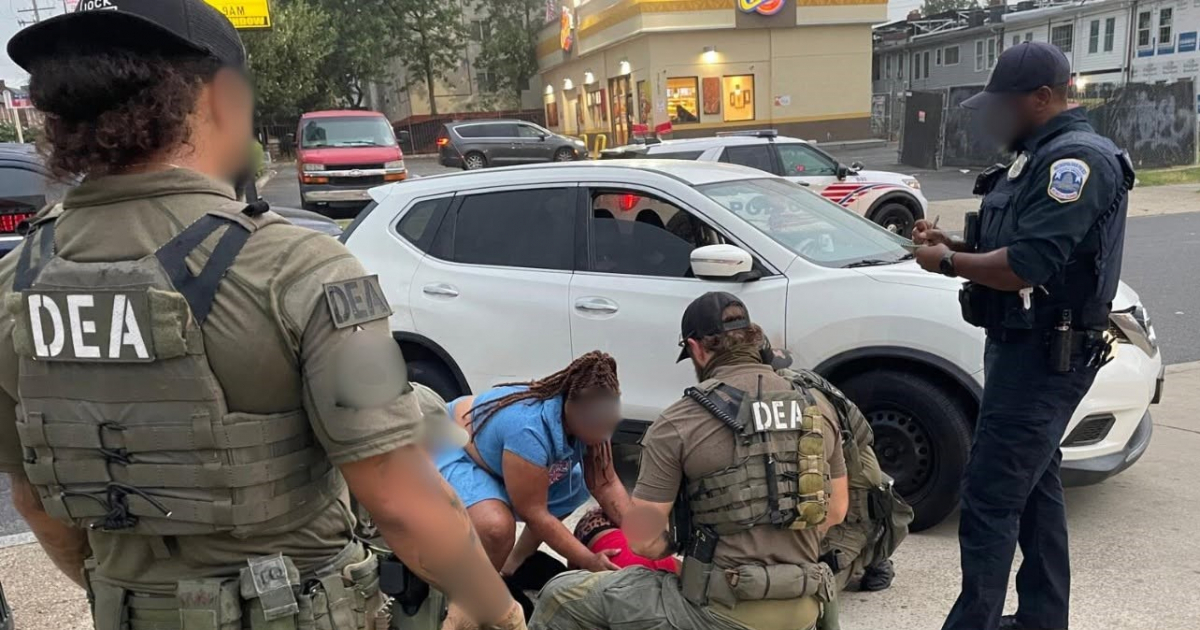
The Drug Enforcement Administration (DEA) recently dismantled a crystal meth trafficking network in Palm Beach County, located in southern Florida. Over the course of just two days, nearly 120 pounds of methamphetamine were seized, as reported by Telemundo 51.
This significant discovery, which also led to the shutdown of a clandestine lab operating within the county, highlights a shift in drug production. A portion of the meth is now being manufactured locally rather than exclusively imported from other states or countries.
"This, in South Florida, genuinely surprised me," confessed Kevin Bobbitt, a DEA special agent, while presenting the seizure at the federal offices in West Palm Beach.
One of the confiscated batches contained a mixture of methamphetamine and fentanyl, a combination that greatly increases the likelihood of a fatal overdose for users.
The Economic Drivers Behind Meth's Rise
Authorities link the surge of meth in the area to basic economics: while an ounce of cocaine can range from $600 to $1,000 in South Florida, an ounce of methamphetamine sells for about half that price.
"From an economic standpoint, acquiring methamphetamine is far more cost-effective," Bobbitt explained, noting how the rising price of cocaine has pushed both traffickers and consumers towards this cheaper alternative.
Growing Concerns in South Florida
A problem once confined to the western United States is now a growing concern in South Florida, a region historically associated with cocaine trafficking from South America and the Caribbean. Authorities fear this issue could spread beyond Palm Beach County.
Rubén Romero, Major of the Martin County Sheriff's Office, was candid: "This case in Palm Beach County is definitely going to impact us."
Romero emphasized that Florida's geographic position, with both maritime and land access, poses a continuous challenge for drug enforcement in the area.
"The only action we can take is to disrupt their operations, make it difficult for traffickers to operate, seize their products, educate our community about the dangers of meth and cocaine, and, naturally, deploy more knowledgeable officers to arrest those selling this poison," stated the official.
Operation Hurricane's Impact
The seizure comes just days after Operation Hurricane resulted in 46 indictments and the confiscation of 94 firearms in Palm Beach County, thanks to a coordinated effort by the DEA, Immigration and Customs Enforcement (ICE), and the Bureau of Alcohol, Tobacco, Firearms and Explosives (ATF).
During the operation conducted on July 10, authorities also seized over seven kilograms of cocaine, 1.5 kilograms of crack, more than 400 grams of fentanyl, thousands of meth pills, and quantities of heroin.
According to DEA data from 2025, one in eight meth deliveries in the United States contains fentanyl, turning each dose into a potentially deadly gamble for users.
The DEA, along with local agencies, stresses that public reporting is a crucial tool for identifying clandestine labs and dismantling distribution networks before they establish themselves in new areas.
Understanding Methamphetamine Trafficking in Florida
Why is methamphetamine trafficking increasing in Palm Beach?
Meth trafficking is on the rise in Palm Beach due to its lower cost compared to other drugs like cocaine, making it economically attractive for both dealers and users.
How are authorities addressing the meth problem in South Florida?
Authorities are focusing on disrupting trafficking operations, seizing drugs, educating the public about the dangers, and increasing law enforcement presence to combat the meth problem.
What was discovered during Operation Hurricane?
Operation Hurricane led to 46 indictments and the seizure of 94 firearms, as well as substantial quantities of cocaine, crack, fentanyl, meth pills, and heroin in Palm Beach County.