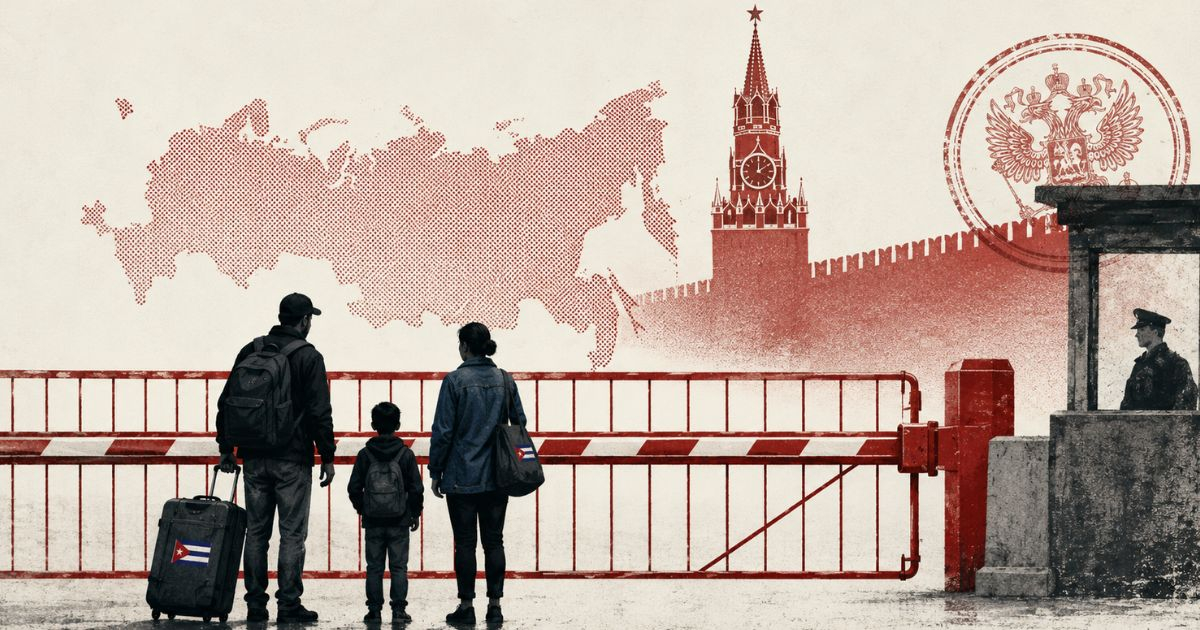
On July 8, the Russian State Duma approved comprehensive immigration legislation that ties the legal status of foreign workers and their families to their economic earnings. This move could worsen the situation for thousands of Cubans working in Russia under precarious conditions.
Under the new regulations, migrant workers must prove they earn enough to support themselves and their dependents, according to the living costs set by the Russian government and each region where they reside.
Those who fail to meet this income threshold or become unemployed will have their work permit—essentially a temporary visa for low-skilled jobs—canceled or not renewed. They will then have just 15 days to leave Russian territory before facing deportation.
Tax authorities will report each migrant's earnings to the Interior Ministry every three, six, nine, and twelve months to ensure compliance. Additionally, workers will need to pay an advance income tax for themselves and each dependent.
Migrant children can stay in Russia as long as their parents' permits are valid. However, upon turning 18, they will have only 30 days to secure their own work permit or face deportation.
Legislative Process and Potential Impact
The proposed laws still require approval from the Federation Council—the upper house of the Russian parliament—and the signature of President Vladimir Putin to become effective.
Duma Speaker Vyacheslav Volodin defended the measures, stating they are meant to "bring order to immigration matters." He noted that the chamber has passed 30 immigration laws since 2024, following the Crocus City Hall attack in March of that year, which resulted in at least 144 deaths.
Challenges for Cuban Workers
For Cubans in Russia, the impact could be significant. A report by El Toque indicates that most work without legal contracts in sectors like construction and cleaning, earning between 50,000 and 60,000 rubles per month—approximately $500. They are often exploited by intermediaries who withhold part of their payments.
This informal work leaves them particularly vulnerable to the new income verification requirements, as they will struggle to prove the minimum earnings required by Russian authorities.
Deportations of Cubans from Russia have been steadily increasing: at least 15 Cuban migrants were expelled in just one week in July 2025. In 2026, there have been reports of Cubans detained indefinitely at the Sakharovo deportation center, 70 kilometers from Moscow, without contact with their families or the Cuban consulate.
Military Recruitment and Deportation Threats
Adding to the migration pressure is the recruitment of Cubans to fight in the war against Ukraine. According to Cuban opposition claims, between 20,000 and 25,000 Cubans have been recruited, many under the threat of deportation if they refused to sign military contracts.
A Cuban captured on the battlefield summarized it: "They gave me a choice: deportation or war."
Those deported from Russia face reentry bans ranging from five to ten years, effectively closing this migration route for thousands of Cubans who came to the country seeking economic relief from the island's crisis.
Frequently Asked Questions on Russia's Immigration Policy Impact
How do the new Russian immigration laws affect Cuban migrants?
The new laws require migrants to prove sufficient income to support themselves and their dependents or face deportation. This poses a challenge for many Cubans working informally without the ability to verify their earnings.
What happens to Cuban migrants who fail to meet the income requirement?
If Cuban migrants cannot demonstrate the required income, they risk having their work permits canceled or not renewed, leading to potential deportation if they do not leave Russia within 15 days.
Are children of Cuban migrants affected by these changes?
Yes, migrant children can stay in Russia as long as their parents' permits are valid. However, once they turn 18, they must obtain their own work permit within 30 days or face deportation.