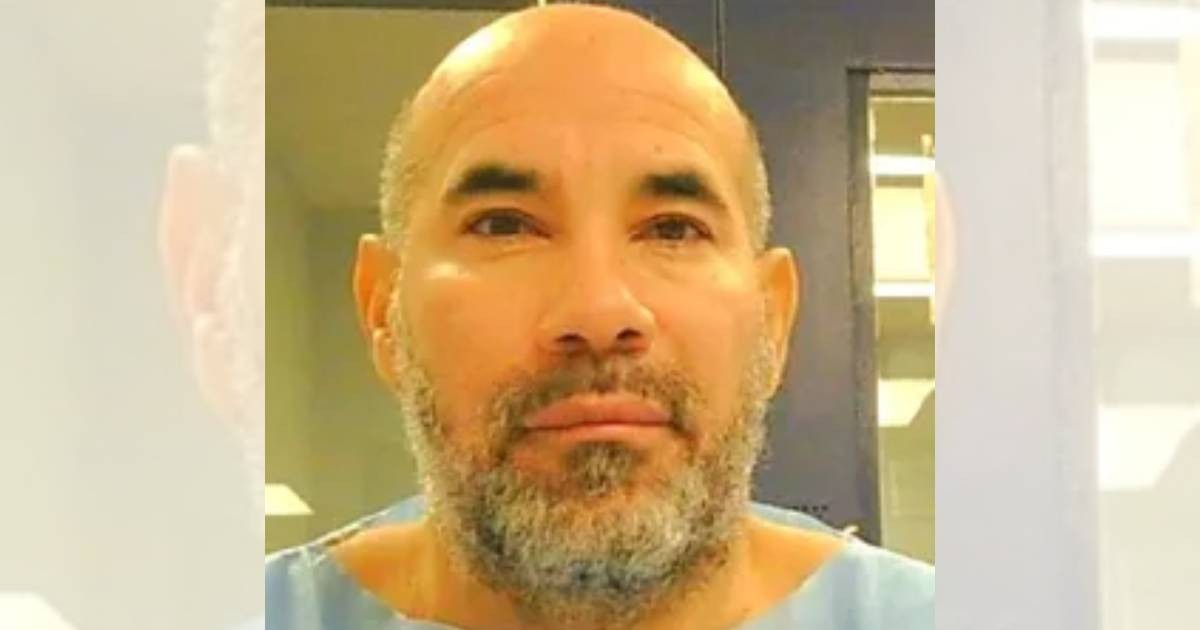
The United States Department of Homeland Security (DHS) has expressed strong disapproval of a federal judge's decision in Florida to release Maikel Guerra Morales, a Cuban national who served 22 years in prison for his involvement in a 2003 plane hijacking. Despite his release, Guerra Morales' deportation remains stalled.
In an official statement, DHS condemned Judge John E. Steele of the Middle District of Florida, labeling him an "activist judge" for a ruling that allegedly contradicts the immigration policies championed by former President Donald Trump.
Judge Steele, appointed by former President Bill Clinton, issued an order on July 8 instructing Immigration and Customs Enforcement (ICE) to release Guerra Morales within 24 hours under immigration supervision and an electronic monitor. Following this, Guerra Morales was freed on July 10, welcomed by his mother and older brother.
DHS's Response to the Ruling
Lauren Bis, the acting Deputy Secretary of DHS, vehemently criticized the court decision.
“This activist judge forced ICE to release an illegal immigrant with a criminal record, who was sentenced to 22 years for hijacking an aircraft, back into American communities,” she stated.
Bis further argued that this ruling was yet another instance of a judge attempting to undermine the mandate given to President Trump by the American people, which aimed to remove illegal immigrants with criminal backgrounds from the country.
The 2003 Plane Hijacking
The incident dates back to March 19, 2003, when Guerra Morales was part of a group of at least twelve Cubans, led by his brother Alexis Norniella Morales, that hijacked a DC-3 Aerotaxi plane shortly after it departed from Nueva Gerona, on the Isle of Youth, bound for Havana.
The aircraft carried 37 passengers. According to prosecutors, the hijackers assaulted crew members and coerced the pilot into diverting the plane to Key West, Florida, where National Guard fighter jets escorted it until it landed safely. None of the passengers were harmed during the ordeal.
Guerra Morales was subsequently sentenced to 264 months of federal imprisonment for air piracy and interfering with a flight crew. His brother, identified as the ringleader of the hijacking, received a 24-year prison sentence.
Judge Steele's Justification
In his ruling, Judge Steele cited the Supreme Court precedent Zadvydas v. Davis (2001), which prohibits indefinite detention of immigrants when their deportation cannot be reasonably executed.
“The law is unequivocal on this matter. The government cannot indefinitely imprison individuals as a substitute for a stalled deportation process,” Steele wrote.
The judge noted that more than three years had passed since the deportation order was issued on March 1, 2023, and over six months since ICE re-detained Guerra Morales in December 2025, without presenting a concrete plan for his deportation or demonstrating that Mexico would accept him.
Additionally, Steele highlighted that in May 2022, an immigration judge granted Guerra Morales protection under the Convention Against Torture, citing potential inhumane treatment if returned to Cuba, which prevents direct deportation to the island.
After his release, Guerra Morales told Telemundo 51 that he does not regret the hijacking as it was his path to freedom from Cuba.
“I don't regret the way I came, because I came seeking freedom, which was my dream. But I do regret that my youth was spent this way: over 20 years in prison,” he expressed.
Despite the judicial order, DHS affirmed its commitment to advocating for the detention and removal of undocumented immigrants with criminal records still residing illegally in the U.S. Meanwhile, Guerra Morales remains under ICE supervision and could be detained again if the government finds a willing country for his deportation.
Key Questions About the Release of Maikel Guerra Morales
Why did Judge John E. Steele order the release of Maikel Guerra Morales?
Judge Steele based his decision on the Supreme Court precedent Zadvydas v. Davis, which prohibits indefinite detention of immigrants when their deportation cannot be executed in a reasonable timeframe.
What was the response of the DHS to the judge's decision?
The DHS criticized the decision, labeling the judge as "activist" and claiming the ruling undermines efforts to deport illegal immigrants with criminal records, which was part of the Trump administration's immigration policy.
What happened during the 2003 plane hijacking?
On March 19, 2003, Maikel Guerra Morales and a group of Cubans hijacked a DC-3 Aerotaxi plane, diverting it to Key West, Florida. The hijackers assaulted the crew but no passengers were harmed.