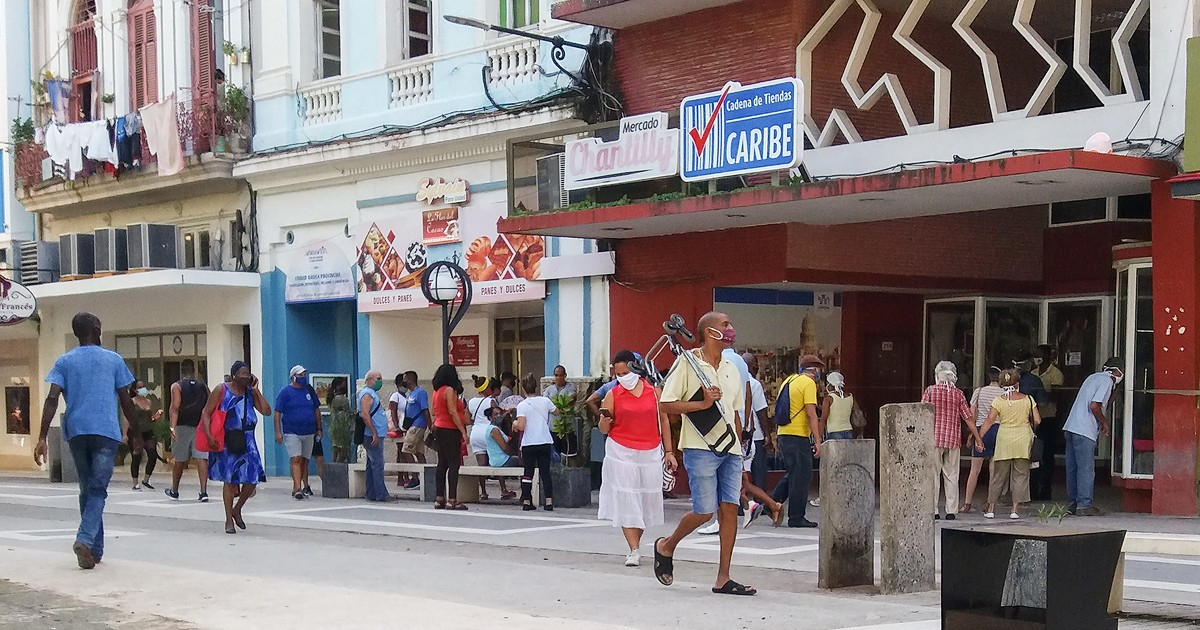
A satirical piece shared on Facebook by Angelo Del Castillo has become a striking depiction of the breakdown in public services within Cuba. The post humorously critiques official announcements from the island's key state-owned companies, which routinely declare the absence of the very services they were established to provide.
Del Castillo's viral post directly targets entities like Aguas de La Habana, ETECSA, the Unión Eléctrica, and the ministries of Transportation, Agriculture, Housing, and Health. Each follows a similar pattern: they communicate the unavailability of what they are supposed to deliver.
He writes, "Aguas de La Habana: 'We report disruptions in the water supply.' Excuse me? But you are AGUAS DE LA HABANA! That's your sole purpose. You do nothing else."
The satire continues with the telecommunications company: "ETECSA: 'We are experiencing communication outages.' Well, you are the communications company. If you don't communicate, what are you? A sign language school?"
Regarding the Unión Eléctrica, Del Castillo compares its announcements to an absurd situation: "It's like a pilot saying, 'We inform you that we have no planes, but we have the desire to fly.'"
Del Castillo concludes by pointing out the one state entity that, according to him, functions flawlessly: "In the end, the only state agency that operates with admirable efficiency is the one that collects money. That one never breaks down."
Current Crisis Unveiled
The satire is not an exaggeration. Each sector mentioned is experiencing a documented and deep-rooted crisis. Aguas de La Habana operates at just 50% of its pumping capacity, with over 5,000 leaks causing 40% to 70% of the water to be lost before reaching homes. Only 48% of Cubans have regular access to potable water.
In October 2025, the water crisis in Havana affected over 156,000 people, prompting the government to send seven water trucks to Regla following a protest by local women.
By April 2026, an NGO reported the emergence of a black market for private water trucks, selling loads for between 18,000 and 26,000 Cuban pesos.
Power and Transportation Challenges
In the electrical sector, the Unión Eléctrica recorded an energy deficit exceeding 1,500 MW in May 2025, with power outages lasting up to 38 hours a day in some areas.
From December 2025 to April 2026, Cuba did not receive imported crude from Venezuela and Mexico, exacerbating the cascading collapse: without electricity, ETECSA's network fails, and water pumps cease to function.
Public transportation, meanwhile, plummeted 93% between January and September 2025, with only 219 out of 558 national buses operational by December of that year.
Reform and Public Sentiment
This public frustration comes at a time when the Díaz-Canel regime announced in June 2026 the largest economic reform package in decades: 176 transformations across 23 areas approved by the Communist Party on June 17 and ratified by the National Assembly two days later. These reforms aim to grant state enterprises some autonomy for exporting, importing, and setting their own wages.
However, public reaction to these reforms swings between hope and deep skepticism. As Del Castillo's text illustrates, satirical humor on social media remains the most accurate gauge of a population's exhaustion, waiting for anything, something to actually work.
Understanding Cuba's Public Services Crisis
What are the main issues faced by Aguas de La Habana?
Aguas de La Habana deals with a reduced pumping capacity, operating at only 50%, and has over 5,000 leaks, causing significant water loss before reaching homes.
How is the energy crisis affecting Cuba?
Cuba's energy crisis includes a deficit of over 1,500 MW, leading to power outages that can last up to 38 hours a day, heavily impacting daily life and other services.
What caused the transportation decline in Cuba?
The transportation sector saw a decline of 93% from January to September 2025, with a significant reduction in operational buses, which further complicates mobility for citizens.