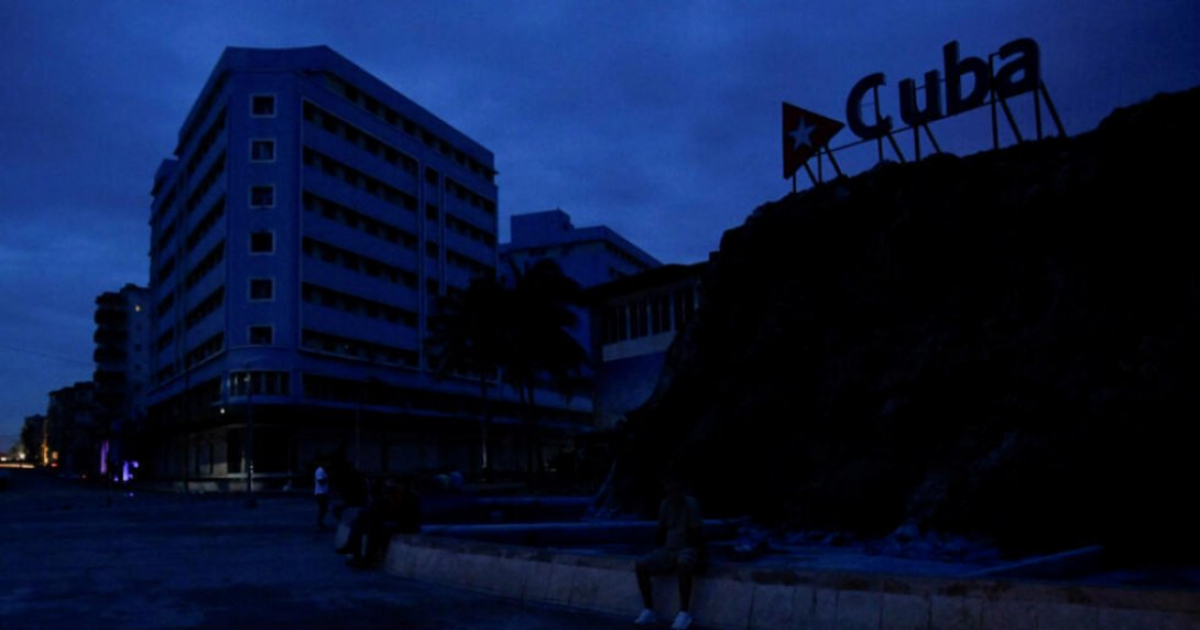
The Electric Union (UNE) took to social media on Tuesday to declare that "Cuba will not surrender" following another complete failure of the National Electric System (SEN).
The state-run entity indicated it is devising plans to establish micro-systems, aiming to restore power to vital facilities once conditions permit.
The hashtag #CubaWillNotSurrender quickly caught the attention of many Cubans. It surfaces at a time when the populace is increasingly frustrated with the relentless power outages.
This latest widespread blackout occurred at 11:05 AM, marking the fifth total blackout of 2026 and the tenth in the past two years, underscoring an unprecedented energy crisis.
The previous system collapse happened on July 10 due to a failure in the 220 kV line between Santa Clara and Sancti Spíritus, just four days after the third collapse on July 6. Three disconnections within eight days highlight the system's severe deterioration.
Prior to the collapse, the UNE was projecting a deficit ranging from 1,990 to 2,020 MW, with only 1,155 MW available against a peak demand of 3,150 MW. On Monday, the shortfall reached 1,775 MW at 9:50 PM.
Currently, units six and eight of the Máximo Gómez thermoelectric plant in Mariel, unit two of Lidio Ramón Pérez in Felton, and unit three of Antonio Maceo in Renté remain out of service.
Additionally, 106 distributed generation plants are shut down due to fuel shortages, rendering 890 MW unavailable, alongside the floating power stations at Regla, Melones, Mariel, and Moa.
The main issues stem from aging thermoelectric plants, fuel shortages, and a lack of investment. Recovery requires setting up regional micro-systems before reconnecting the larger power plants.
Meanwhile, Miguel Díaz-Canel urged for better organization of the blackouts, yet failed to propose any structural solutions. As of July 2026, power outages average between 20 and 24 hours daily, with some areas enduring over 72 consecutive hours without electricity.
Understanding Cuba's Power Outages
What is causing the frequent power outages in Cuba?
The frequent power outages are attributed to aging thermoelectric plants, fuel shortages, and insufficient investment in infrastructure.
How is the Cuban government responding to the energy crisis?
The Cuban government, led by Miguel Díaz-Canel, has urged for better organization of the power outages but has not provided concrete structural solutions to address the crisis.
What measures is the UNE taking to address the power shortages?
The UNE is working on creating micro-systems to re-energize vital centers when possible and is addressing the power shortages despite the challenges.