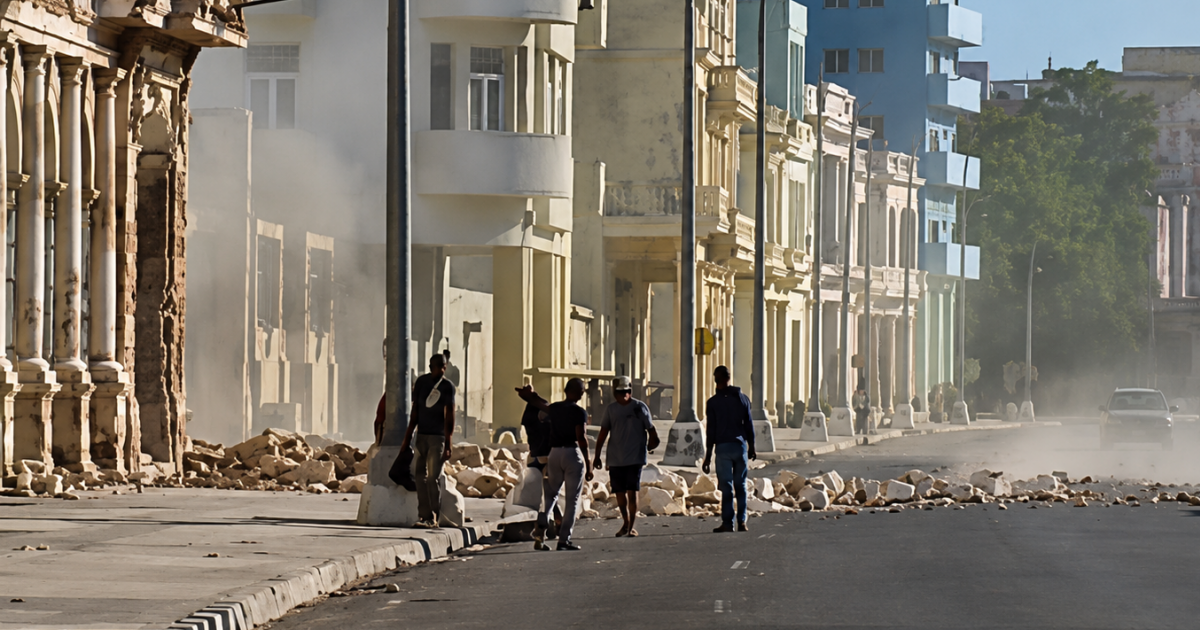
A group of four Democratic Party legislators has labeled Cuba a "silent Gaza" following an investigative visit to the island, during which they met with the ruler Miguel Díaz-Canel and other regime officials.
The Democrats attributed this situation to the Trump administration's energy embargo and its policy of maximum pressure, while avoiding any mention of the Cuban regime's role in the country's humanitarian crisis.
Delia Catalina Ramírez from Illinois, Mark Pocan from Wisconsin, Teresa Leger Fernández from New Mexico, and Maxine Dexter from Oregon held a press conference on July 13, at the end of their stay. They warned that U.S. pressure is devastating the daily lives of Cubans, with no active diplomatic channels to change this situation.
"I don't believe any negotiations are taking place," Pocan stated when asked about the possibility of dialogue between Washington and Havana.
The Wisconsin lawmaker directly criticized the Secretary of State: "I think Marco Rubio is making this a personal issue rather than a professional one."
Defending the comparison to Gaza, Pocan explained that "there might not be bombings, but there are certainly conditions preventing people from living their daily lives."
"They can't go to work, preserve their food, access medical supplies, or live as they did before," he elaborated on the situation they observed on the island.
The visit coincides with an unprecedented escalation of U.S. sanctions against the Cuban regime. On Monday, the Treasury Department sanctioned Cuba's Ministry of Tourism—the first time an entire Cuban ministry has been blacklisted—along with state-run enterprises Coreydan, Enetec, and the Foreign Trade Business Group (Gecomex), among others.
Since January 2026, the Trump administration has implemented over 240 sanctions against the regime, including Executive Order 14380.
The Trump administration has been clear about its objectives: to bring about a government change in Havana. Trump even threatened to send an aircraft carrier to Cuban shores, declaring that "Cuba will fall quite soon."
This marks the second Democratic delegation to visit Cuba this year. In April, Congress members Pramila Jayapal and Jonathan Jackson made a similar five-day trip, also criticizing the oil embargo, which sparked controversy in the United States for not publicly addressing the regime's political prisoners.
Congresswoman Ramírez announced that she is working on a legislative amendment to prevent Washington from blocking the entry of medicines and medical equipment into Cuba. If successful, this measure would signal a significant shift in the maximum pressure policy advocated by Trump and Rubio.
Understanding U.S. Sanctions and Their Impact on Cuba
What are the main reasons for U.S. sanctions against Cuba?
The U.S. sanctions against Cuba are primarily aimed at pressuring the Cuban government to change its policies and improve human rights conditions. The Trump administration specifically targeted the regime's economic lifelines to push for political change.
How have the sanctions affected everyday life in Cuba?
Sanctions have severely impacted the Cuban economy, leading to shortages in essential goods such as food, medicine, and fuel. This has disrupted daily life, making it challenging for Cubans to work, access healthcare, and meet basic needs.
What potential changes could occur if U.S. policy towards Cuba shifts?
If U.S. policy shifts towards easing sanctions or opening diplomatic channels, it could lead to improved economic conditions in Cuba. This could enhance access to goods, services, and potentially lead to political reforms within the Cuban government.