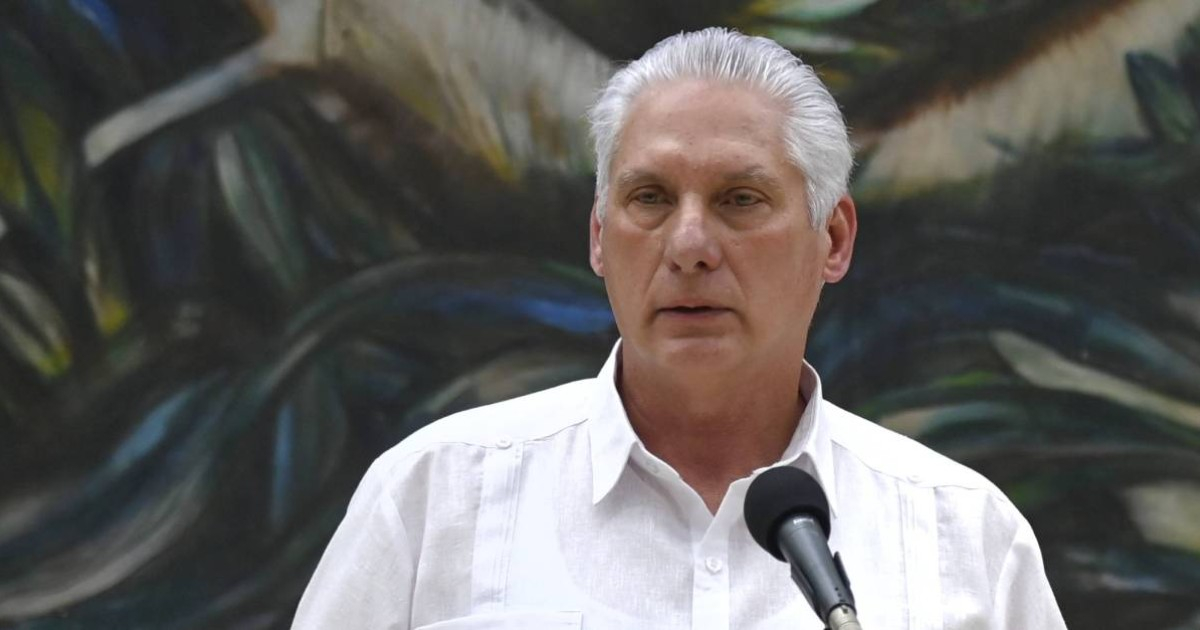
On Tuesday, Miguel Díaz-Canel took to his X account to laud the university graduations taking place in Cuba under the banner of "Fidel's Centenary," describing them as a "major milestone." This comes at a time when Cuba's educational system is enduring one of its most severe crises in recent memory.
"A major milestone floods the networks: Despite energy blockades, punishments, and threats, our universities celebrate Fidel's Centenary graduations with the usual beauty and emotions. Congratulations to the graduates; the nation counts on you to break the siege," the leader proclaimed.
His post was accompanied by pictures from various university ceremonies across the country, showcasing students proudly holding their graduation certificates.
Challenges Facing Cuba's Education System
What the tweet fails to mention is the harsh reality of the 2025-2026 academic year, marked by power outages lasting up to 50 consecutive hours, widespread class cancellations, and emergency measures revealing the sector's collapse.
The government was forced to cancel the entrance exams for the 2026-2027 university term, announced on May 20, replacing them with the cumulative academic average from high school due to the inability to ensure minimum conditions for testing.
Soon after, authorities moved up the end of the school year to June 15-30, also due to the energy crisis and fuel shortages.
Impact of the Crisis on Cuban Universities
The University of Holguín halted all classes from February 6 to March 2026. The University of Oriente held its provincial graduation on June 15 and 16, but was unable to transport students from Granma, Holguín, and Guantánamo to the main campus due to fuel shortages, distributing diplomas in their own areas instead.
On March 5, classes at all levels in Havana, including childcare facilities, were suspended following a massive blackout caused by a failure at the Antonio Guiteras power plant.
Adding to the grim picture is a deficit of 24,000 teachers—12.5% of the vacant positions—with salaries ranging from eight to twenty dollars a month at the informal exchange rate.
Public Reaction to Díaz-Canel's Remarks
Cubans largely responded critically to Díaz-Canel's tweet. "Do you know how many graduates are just getting by on the streets, doing anything that pays more than their profession? Our professionals are frustrated unless they're in key positions," one user commented.
Other reactions echoed similar sentiments: "And then they have no job, what irony."
Another comment highlighted the brain drain plaguing the country for decades: "More than half of these graduates will leave Cuba."
The stark reality behind Díaz-Canel's words is underscored by concrete figures: Cuba lost over 30,000 doctors between 2021 and 2024, and it's estimated that 545,000 Cubans emigrated in 2025 alone, primarily aged 20 to 40, a demographic that includes many of today's graduates.
Understanding Cuba's Educational Crisis
What were the challenges faced by Cuban universities in 2025-2026?
Cuban universities dealt with power outages lasting up to 50 hours, massive class suspensions, and emergency measures reflecting the collapse of the education sector.
How did the Cuban government address the university entrance exams for 2026-2027?
Due to the inability to ensure proper conditions, the Cuban government canceled the entrance exams and instead used students' cumulative high school grades for university admissions.
How did the Cuban public respond to Díaz-Canel's announcement about the graduations?
The public reaction was mainly critical, with many questioning the practicality of the degrees and highlighting issues like unemployment and brain drain.