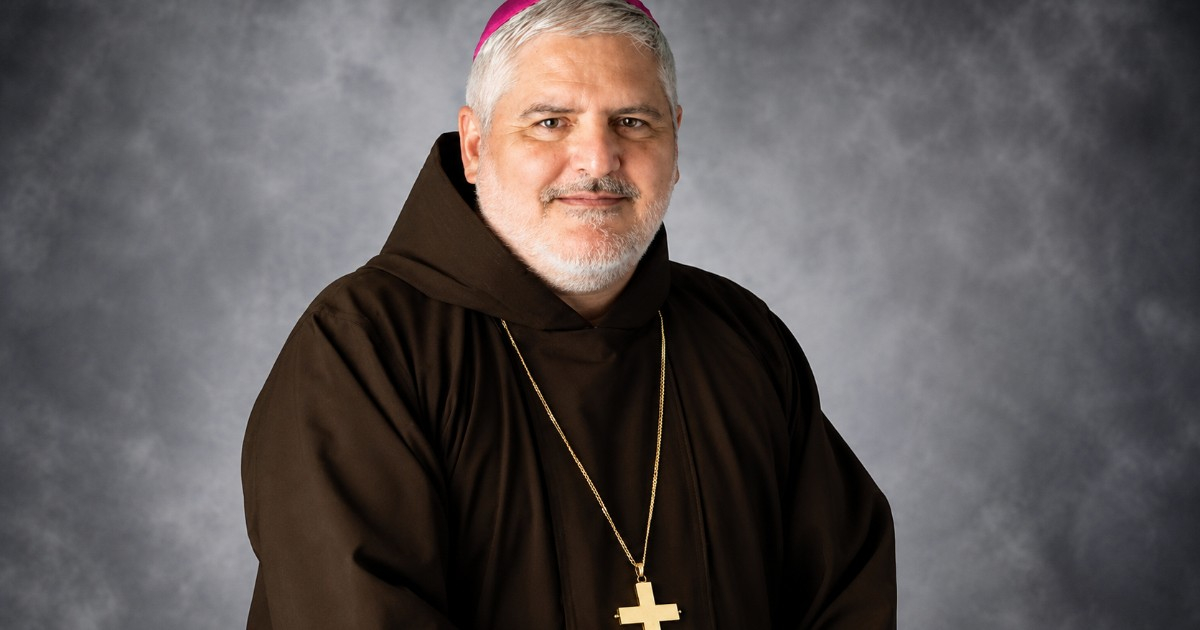
Emilio Biosca Agüero, the son of Cuban exiles from Camagüey, has been ordained as bishop and officially took the helm of the Diocese of Venice. The solemn ceremony unfolded on Saturday at St. John XXIII Catholic Church in Fort Myers, Florida.
The liturgy was led by Miami's Archbishop Thomas Wenski, with Cardinal Seán Patrick O'Malley and Bishop Emeritus Frank J. Dewane assisting. The event resonated deeply, drawing hundreds of faithful to witness the poignant occasion.
A particularly moving moment occurred when Biosca Agüero's parents, Emilio Biosca and María del Carmen Agüero, both from Camagüey, bestowed their blessing on their newly consecrated son.
“The Biosca family continues to chart memorable chapters in our ecclesial history,” remarked a Facebook user, highlighting the parental blessing as the emotional pinnacle of the day.
One attendee encapsulated the collective experience, stating, "I had never attended a bishop's ordination Mass before. It was beautiful, and every detail was flawlessly executed."
From Colorado Springs to Global Missionary Work
Biosca Agüero, aged 61, was born on December 15, 1964, in Colorado Springs, Colorado, as the third of seven siblings, with his two elder sisters born in Cuba. He joined the Order of Capuchin Franciscans in 1987 and was ordained a priest in 1994.
His missionary path led him first to Papua New Guinea for over ten years, where he mastered Tok Pisin, a Melanesian language, and later to Cuba, where he served for twelve years: one year in Havana, three years as a parish priest in Santa Clara, and eight years in La Purísima Concepción parish in Manzanillo, within the Diocese of Bayamo-Manzanillo.
Since 2019, Biosca Agüero had been serving as the pastor of the Shrine of the Sacred Heart in Washington D.C., a parish comprising about 5,000 families with masses celebrated in five languages: English, Spanish, Haitian Creole, Vietnamese, and Portuguese.
Reflecting on this community, the new bishop remarked, "No matter where they come from or what language they speak, we know they are brothers and sisters, and we welcome them in the name of the Lord Jesus Christ."
An Appointment Amidst Political Tensions
Pope Leo XIV—Robert Francis Prevost, the first American pontiff with Cuban maternal roots—announced Biosca Agüero’s appointment on May 13, 2026. This coincided with the acceptance of the resignation of the 76-year-old Bishop Frank J. Dewane, who had led the diocese since 2006.
Biosca Agüero becomes the third bishop of the Diocese of Venice since its establishment in 1984 by Pope John Paul II, and the second active Capuchin Franciscan bishop in the United States.
However, the occasion was overshadowed by the Cuban regime. The day before the ordination, Cuban authorities barred Father Castor José Álvarez Devesa, a parish priest in Camagüey and a vocal critic of the government, from leaving the country. He was stopped at Santiago de Cuba's Antonio Maceo Airport en route to the ceremony.
The regime invoked a travel ban under the new Migration Law (Law 171), enacted in May 2026, citing vague reasons like "national security" and "public interest."
Álvarez Devesa had previously been summoned by State Security in January 2026, alongside Father Alberto Reyes, both noted for their critical stances.
The Diocese of Venice encompasses 10 counties in southwest Florida, with 61 parishes, 195 priests, and over 242,000 baptized faithful, including a significant Cuban-American community who proudly celebrated the consecration of one of their own on Saturday.
Frequently Asked Questions about the Diocese of Venice and Bishop Emilio Biosca Agüero
Who is Emilio Biosca Agüero?
Emilio Biosca Agüero is the newly ordained bishop of the Diocese of Venice, Florida. He is the son of Cuban exiles and has served in various international missionary roles.
What is the geographical scope of the Diocese of Venice?
The Diocese of Venice covers 10 counties in southwest Florida, including 61 parishes and a vibrant Catholic community.
Why was Father Castor José Álvarez Devesa prevented from traveling?
The Cuban government barred Father Álvarez Devesa from traveling under a new migration law citing "national security" and "public interest," likely due to his critical views of the regime.