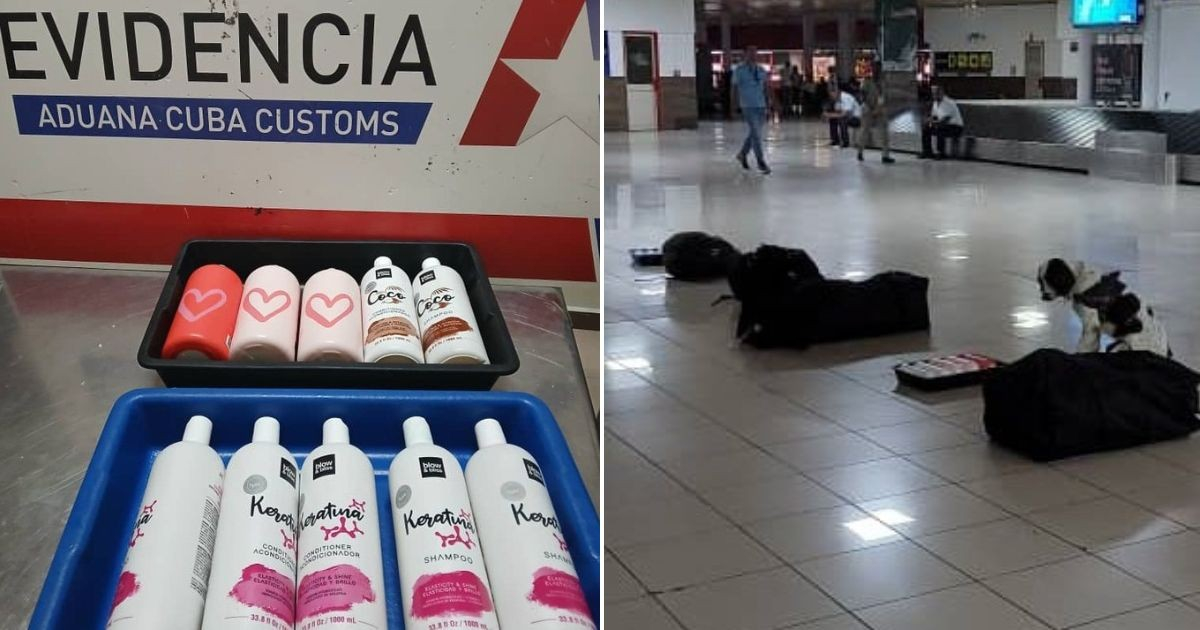
Over 10 kilograms of liquid cocaine concealed in shampoo, conditioner, and keratin containers were seized at Havana's José Martí International Airport, as reported on Monday by Wiliam Pérez González, the First Deputy Chief of the General Customs of the Republic.
The confiscated items included one-liter bottles from the brands "Blow & Bliss" Keratin line and "Coco," which were found to contain the liquid drug.
Pérez shared, "More than 10 kg of liquid cocaine hidden in bottles of shampoo, keratin, and conditioner detected at Havana Airport," and took the opportunity to commend the Customs officers and the anti-drug unit "on this new anniversary of the DTI."
Anniversary of the Technical Investigations Department
The discovery occurred concurrently with the 67th anniversary of the founding of the Technical Investigations Department (DTI), a branch of the Ministry of the Interior focused on combating crime through covert intelligence methods, established on July 13, 1959.
Emerging Smuggling Methods in Latin America
The technique of dissolving cocaine hydrochloride into water or other solvents to smuggle it in personal hygiene containers is a growing trend along Latin American smuggling routes.
This drug can be reconstituted into a solid form through evaporation with heat, making it especially challenging to detect with standard X-ray scanners. Thus, K-9 units and laboratory tests are crucial tools.
Previous Seizures and Smuggling Attempts
Seizures like this one have been reported throughout 2026. In January, Cuban Customs discovered cocaine concealed in Nivea creams and Herbal Essences shampoo on a flight from Panama. More arrests followed in April when two individuals in Ecuador attempted to send two kilograms of cocaine to Havana, hidden in hair product boxes.
Noteworthy incidents also occurred in 2025: cocaine was found hidden in tuna cans and within the frame of a suitcase in August, and a young man was apprehended in July with over a kilogram hidden inside a religious figure of Eleguá.
José Martí Airport: A Major Entry Point for Narcotics
The José Martí Airport is the primary entry point for narcotics into Cuba, accounting for 77% of trafficking cases detected at the country's four main border points in 2022. In 2024, Cuban authorities seized a total of 1,051 kilograms of drugs nationwide.
Frequently Asked Questions about Drug Smuggling in Cuba
How is liquid cocaine typically smuggled?
Liquid cocaine is often dissolved in water or solvents and hidden in containers such as shampoo, conditioner, or other personal care products, making it difficult to detect with standard scanning equipment.
What tools are used to detect liquid cocaine?
K-9 units and laboratory tests are essential for detecting liquid cocaine, as it is challenging to identify with conventional X-ray scanners.
Why is José Martí Airport significant in drug trafficking?
José Martí Airport is a major entry point for drugs into Cuba, responsible for 77% of trafficking cases at the country's primary border points. It plays a significant role due to its international connections and volume of traffic.