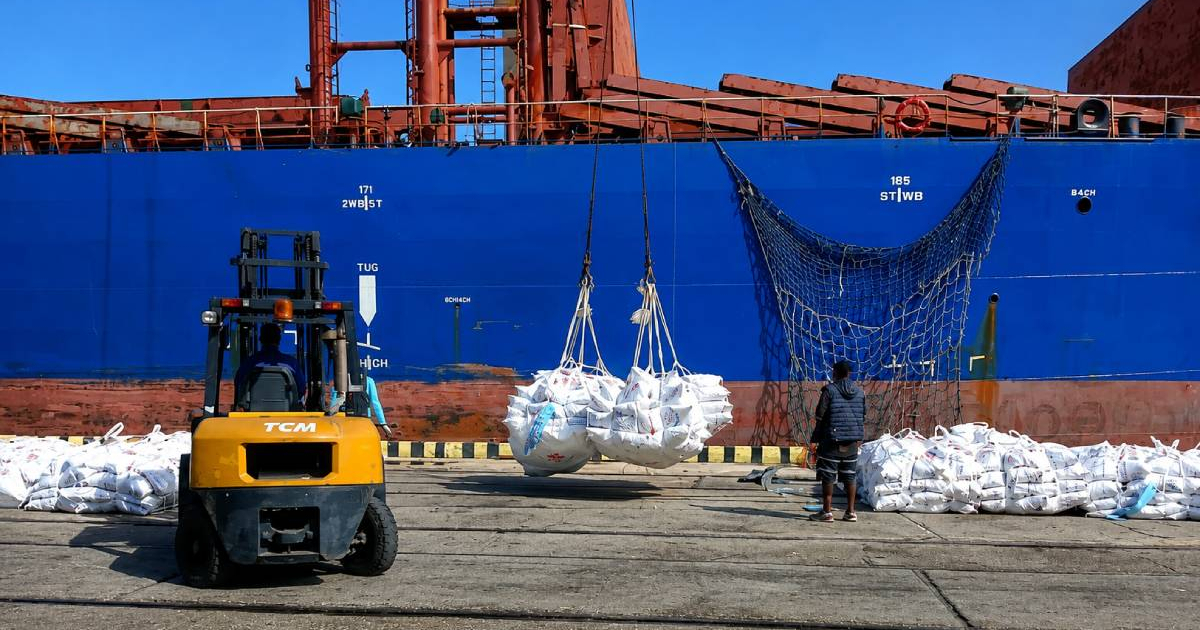
On Monday, the Brazilian government commenced the shipment of 48 tons of powdered milk to Cuba as part of a humanitarian aid initiative. This action, detailed in a statement from Brazil's Presidential Communication Office, addresses the severe shortages plaguing the island nation.
The operation involves two flights by the Brazilian Air Force, both headed to Santiago de Cuba. The inaugural flight took off at 2:10 PM on Monday from Canoas Air Base in Rio Grande do Sul, carrying 16 tons. The subsequent flight is scheduled for Tuesday, departing from Porto Alegre International Airport with the remaining 32 tons. Both are expected to arrive by Wednesday, July 15.
This decision was made during a July 9 meeting led by President Luiz Inácio Lula da Silva, alongside key figures such as Chief of Staff Miriam Belchior, Defense Minister José Múcio Monteiro, Foreign Minister Mauro Vieira, Agrarian Development Minister Fernanda Machiaveli, Air Force Commander Lieutenant Brigadier Marcelo Damasceno, and the head of the National Supply Company (Conab), Sílvio Porto.
The Brazilian Cooperation Agency (ABC), under the Ministry of Foreign Affairs, coordinates the operation, with Conab supplying the food products. According to the presidential statement, "further donations of food and medicine are under consideration by the Brazilian government."
Santiago de Cuba, the designated recipient of these flights, also bears the scars of Hurricane Melissa. The Category 3 storm struck in October 2025, leaving a trail of devastation that still impacts the eastern region of the country.
This shipment is part of a broader humanitarian aid package Brazil announced on March 19, which included 170,000 tons of rice, 150 tons of black beans, and 500 tons of powdered milk, distributed through the World Food Program (WFP). In May, President Lula's administration also sent medications sufficient to treat a thousand patients on the island.
Nonetheless, Brazil's aid has not been free from controversy. In March, allegations emerged suggesting that donated goods from Brazil, Mexico, and Chile were being sold in dollar-denominated stores managed by Cuban military personnel, accusations that the Cuban regime denied.
Furthermore, Cuba owes Brazil a significant debt of $676 million. The island is experiencing its most severe energy and food crisis in decades. The cessation of Venezuelan oil supplies—following Nicolás Maduro's capture in a U.S. military operation—and reduced Mexican shipments left Cuba without fuel reserves as of May 2026.
The electrical deficit exceeds 2,000 MW, resulting in blackouts ranging from 20 to 36 hours daily in several provinces. About 33.9% of Cuban households report that at least one family member went to bed hungry, and gasoline prices can reach nine dollars per liter on the black market.
Key Questions About Cuba's Ongoing Crisis
Why is Brazil sending powdered milk to Cuba?
Brazil is sending powdered milk to Cuba as part of a humanitarian effort to alleviate the severe food shortages on the island.
What is causing the energy crisis in Cuba?
Cuba's energy crisis is primarily due to the halt in Venezuelan oil supplies and reduced shipments from Mexico, leaving the country without fuel reserves.
What are the implications of the Cuban debt to Brazil?
Cuba's $676 million debt to Brazil complicates the bilateral relations and might influence future aid and trade agreements.
How has the Cuban government responded to allegations regarding the misuse of donated goods?
The Cuban government has denied accusations that donated goods were being sold in military-run stores, maintaining that the allegations are unfounded.