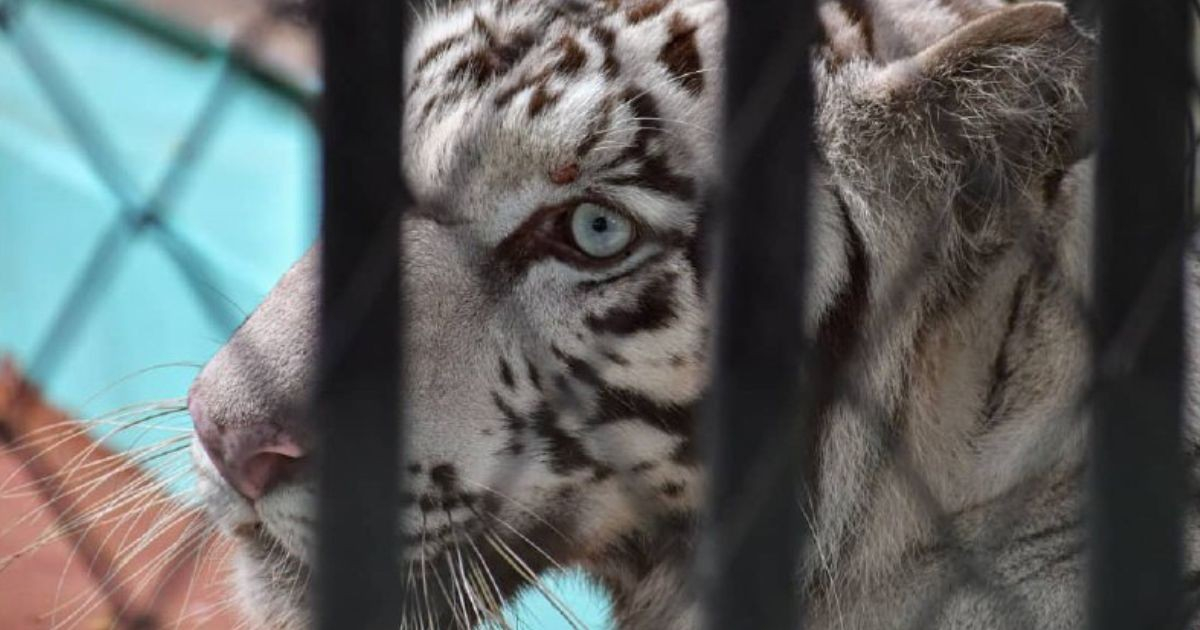
This past Monday, the Ciego de Ávila Zoo proudly introduced a white-coated Bengal tigress to the public for the first time. The impressive feline was recently relocated from the 26 Zoo in Havana.
The arrival of this six-year-old tigress at the zoo is not a random event; it symbolizes the revival of a species that the institution had lost years ago.
Understanding Leucism in Tigers
Biologist Zaily Lázara Alfonso Castro provided insights into the genetic condition known as leucism that this tigress exhibits. This condition strips away the yellow pigment typical of the species but leaves the black stripes and eye color unchanged.
The expert highlighted that the tigress should not be mistaken for an albino animal: “She retains blue eyes and a pink nose, unlike the red eyes seen in albinism.” Leucism eliminates the orange or yellow pigment, known as pheomelanin, while preserving eumelanin, which gives the stripes their dark hue and the eyes their striking blue color.
Challenges of Relocation and Care
Currently, fewer than 200 white tigers exist globally, nearly all in captivity with no known wild populations.
The transfer from Havana was executed with painstaking care, beginning 24 hours before the tigress arrived. This included a quarantine period and continuous monitoring throughout the journey. Her new habitat was prepared two weeks in advance by a dedicated team of specialists, veterinary technicians, and zoo staff, who welcomed her on the night of her arrival.
Ángel Daniel Rojas Ojeda, head of Animal Welfare at the zoo and a veterinarian with 42 years of experience, pointed out the complexities of keeping the animal. The tigress requires seven kilograms of meat daily, necessitating support from provincial bodies and the Ministry of Agriculture to ensure her dietary needs are met.
Public Behavior and Zoo Challenges
During the tigress's unveiling, zoo specialists also addressed the behavior of visitors. A Rhesus macaque named Mauro recently engaged in self-harm due to visitors' loud behavior, prompting experts to urge families to act respectfully toward captive animals.
This presentation comes on the heels of the National Zoo of Cuba celebrating the birth of four Bengal tiger cubs, including a white one, described as "a small miracle" by caretaker Ángel Cordero, who has 44 years of experience.
However, the zoo is operating under significant constraints, receiving only a quarter of the diesel needed—five liters daily instead of the required 20. This shortage forces workers to use horse-drawn carriages and electric tricycles for transporting food.
The situation in Cuban zoos is dire. In April, severe neglect and malnutrition were reported in three lions at Camagüey's Casino Campestre zoo, and the National Botanical Garden shut its doors due to a lack of fuel.
The 26 Zoo in Havana, where the tigress originated, has faced numerous complaints regarding neglect, malnutrition, and significant reductions in its animal collection.
FAQs About White Bengal Tigers and Cuban Zoos
What is leucism in Bengal tigers?
Leucism is a genetic condition that causes a reduction in pigmentation, resulting in a white coat while maintaining the black stripes and blue eyes, unlike albinism which affects all pigmentation.
How many white Bengal tigers are there in the world?
There are estimated to be fewer than 200 white Bengal tigers worldwide, primarily in captivity, with no known wild populations.
What challenges do Cuban zoos face?
Cuban zoos are grappling with severe resource shortages, including fuel for operations and food for animals, leading to conditions of neglect and malnutrition.